 Milan-Cortina 2026 Olympic Winter Games: freestyle skiing women's freeski slopestyle qualification
Orange Jordan Sponsors Al Hussein Technical University’s "Leadathon"
The CEO of Orange Jordan Visits Yarmouk University President to Strengthen the Strategic Partnership
*Orange Jordan Showcases Fabrication Lab Innovations at the Makers’ Forum
3 Winners at Orange Summer Challenge 2024 Join the “Social Innovation” Journey Fostering "Tech4Impact”
Estarta Named Cisco Systems' Distinguished Supplier of the Year 2024
Milan-Cortina 2026 Olympic Winter Games: freestyle skiing women's freeski slopestyle qualification
Orange Jordan Sponsors Al Hussein Technical University’s "Leadathon"
The CEO of Orange Jordan Visits Yarmouk University President to Strengthen the Strategic Partnership
*Orange Jordan Showcases Fabrication Lab Innovations at the Makers’ Forum
3 Winners at Orange Summer Challenge 2024 Join the “Social Innovation” Journey Fostering "Tech4Impact”
Estarta Named Cisco Systems' Distinguished Supplier of the Year 2024
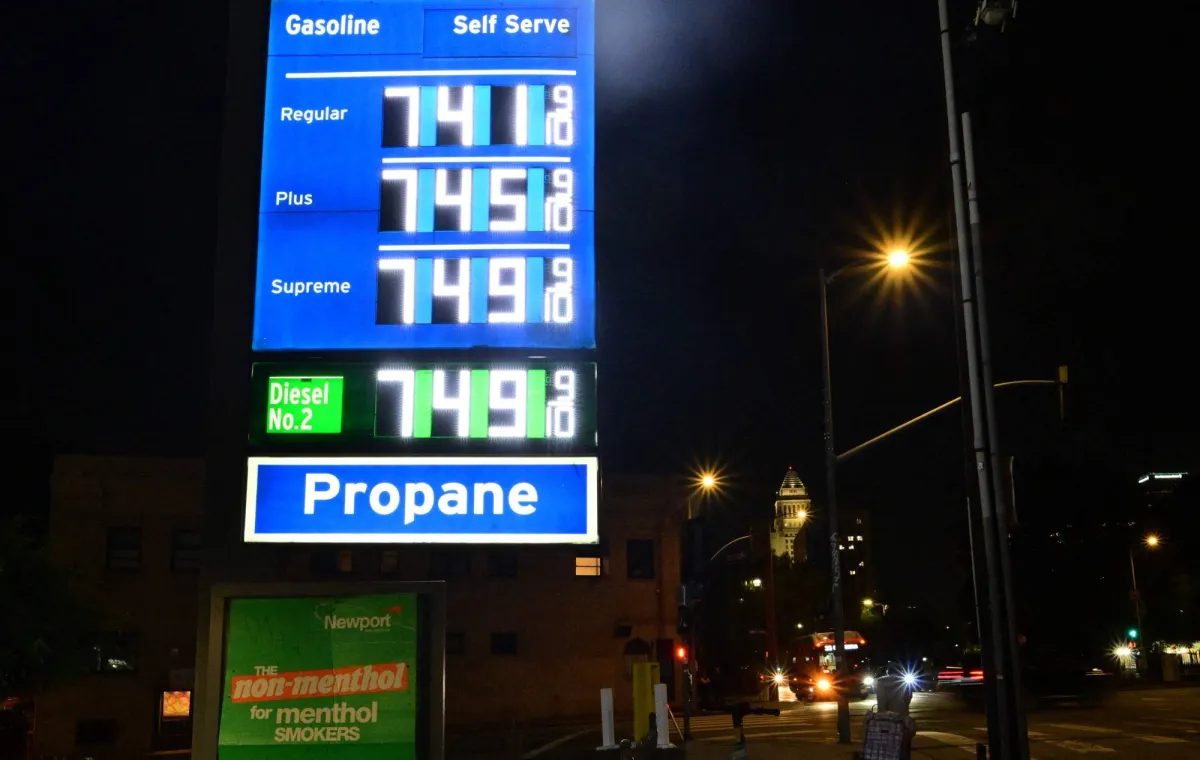
Oil prices continued their upward trajectory for a third consecutive day on Tuesday, fueled by escalating tensions in the Middle East and growing concerns over maritime traffic through the Strait of Hormuz. The geopolitical uncertainty has heightened fears of potential supply disruptions from the crucial oil-producing region.
West Texas Intermediate (WTI) crude futures rose by $1.17, or 1.6%, to settle at $72.40 a barrel. During the previous session, the contract initially reached its highest level since June 2025 before retreating to close up 6.3%.
Adding to the apprehension, insurance companies have reportedly canceled coverage for vessels navigating the waterway, leading oil tankers and container ships to avoid the area. Consequently, global oil and gas shipping rates have spiked. Heightening these concerns, Iranian media outlets quoted a senior official from the Islamic Revolutionary Guard Corps on Monday, who warned of a potential closure of the Strait and threatened to fire upon any vessel attempting to pass through it.
Analysts anticipate that oil prices will remain elevated in the near term as markets closely monitor the unfolding consequences of the escalating conflict in the Middle East. Bernstein, on Monday, revised its Brent crude price forecast for 2026 upwards from $65 to $80 a barrel. However, the firm projects prices could surge to between $120 and $150 in the event of a prolonged conflict.
The potential for disruptions extends beyond crude oil, as refined product futures are also experiencing upward pressure. The Middle East is a major supplier of fuel, and its refining facilities are vulnerable to the ongoing tensions.
European diesel futures also reflected these concerns, rising 4.3% to $925 per metric ton, following an 18% surge on Monday.
Toni Sycamore, a market analyst at IG, noted in a memo that the risk of further price increases remains elevated. He stated that with no signs of a swift de-escalation, a virtual closure of the Strait of Hormuz, and Iran's demonstrated willingness to target energy infrastructure in the region, the upside risks are increasing as the conflict continues.
ING analysts stated in a Tuesday note that the market continues to absorb the risks of escalation in the Middle East. They added that the greatest risk to the market is Iran targeting additional energy infrastructure in the region, which could lead to longer supply disruptions.
Approximately 20% of global oil and gas transits through the Strait of Hormuz.
U.S. low-sulfur diesel futures climbed 4.2% to $3.0207 a gallon, after reaching a two-year high on Monday, while gasoline futures rose 1.7% to $2.4113 a gallon, after rising 3.7% in the previous session.