 Milan-Cortina 2026 Olympic Winter Games: freestyle skiing women's freeski slopestyle qualification
Orange Jordan Sponsors Al Hussein Technical University’s "Leadathon"
The CEO of Orange Jordan Visits Yarmouk University President to Strengthen the Strategic Partnership
*Orange Jordan Showcases Fabrication Lab Innovations at the Makers’ Forum
3 Winners at Orange Summer Challenge 2024 Join the “Social Innovation” Journey Fostering "Tech4Impact”
Estarta Named Cisco Systems' Distinguished Supplier of the Year 2024
Milan-Cortina 2026 Olympic Winter Games: freestyle skiing women's freeski slopestyle qualification
Orange Jordan Sponsors Al Hussein Technical University’s "Leadathon"
The CEO of Orange Jordan Visits Yarmouk University President to Strengthen the Strategic Partnership
*Orange Jordan Showcases Fabrication Lab Innovations at the Makers’ Forum
3 Winners at Orange Summer Challenge 2024 Join the “Social Innovation” Journey Fostering "Tech4Impact”
Estarta Named Cisco Systems' Distinguished Supplier of the Year 2024
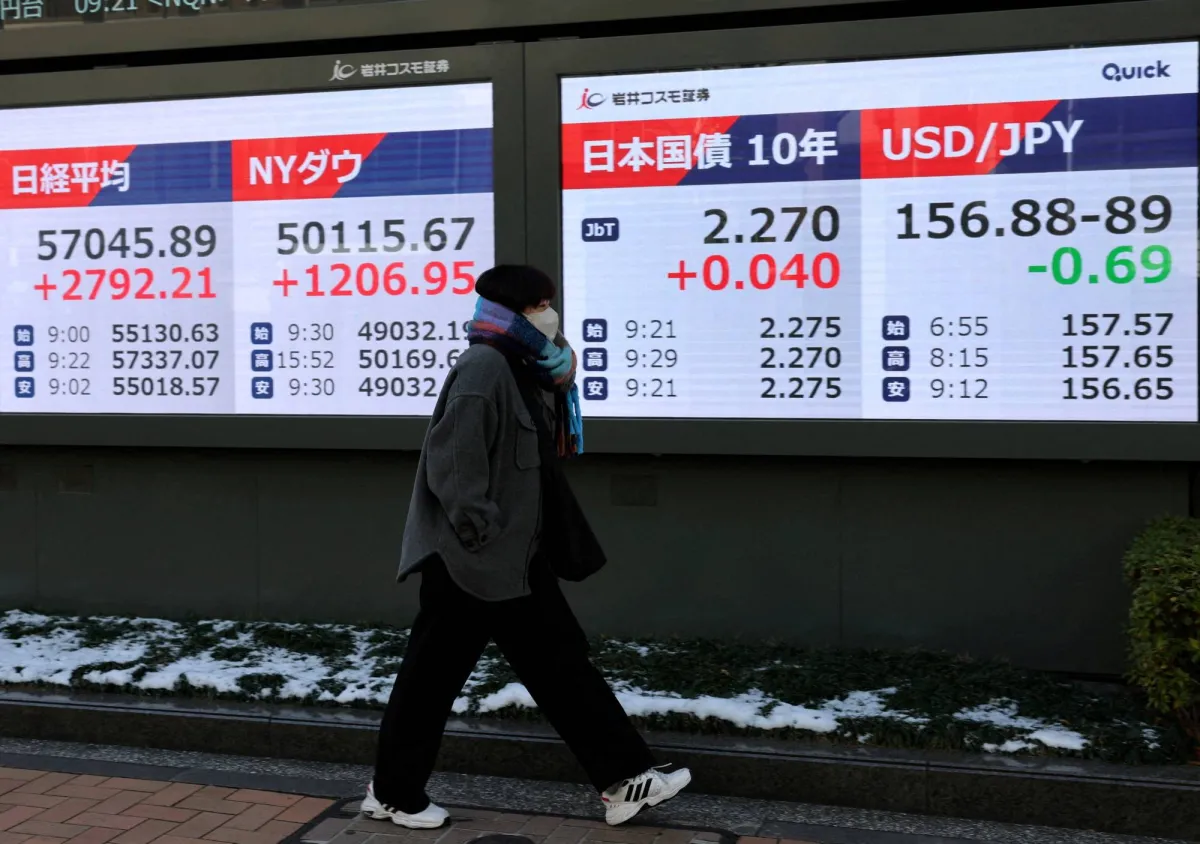
Tokyo's Nikkei index closed at a record high, propelled by strong corporate earnings expectations and marking its most significant monthly gain in recent times.
The Nikkei average ended the session up 0.16% at 38,850.27, recovering from earlier losses. The broader Topix index also saw gains, rising 1.5% to 2,938.68.
The Nikkei's performance throughout February showcased a robust 10.4% increase, its best monthly showing since October. The Topix mirrored this upward trend, also jumping 10.4% during the month, achieving its largest monthly gain since November 2020.
Hiroyasu Mori, chief research officer at Okachi Securities, noted investor caution regarding the Nikkei's rapid ascent towards the 40,000 mark. However, he added that optimism prevails due to expectations of Japanese corporate earnings growth exceeding 10% in the coming fiscal year.
Individual stocks contributing to the Nikkei's rise included Fast Retailing, owner of the Uniqlo brand, which climbed 1.62%.
Sony Group provided the biggest boost to the Topix, surging 7.2% after the electronics and entertainment conglomerate increased its share buyback plan to 250 billion yen ($1.60 billion) from 150 billion yen. Software stocks also rebounded, with Nomura Research and NEC adding around 5% each.
Conversely, Advantest, a chip-testing equipment maker, weighed on the Nikkei, falling 4.53% following a 5.5% drop in Nvidia shares overnight, which triggered declines in other U.S. chip stocks. The Philadelphia Semiconductor index declined 3.2%.
Tokyo Electron, a chip-making equipment manufacturer, declined 2.87%, and SoftBank Group, a technology investor, fell 2.6%. Across the Tokyo Stock Exchange's main board, 90% of the stocks advanced, while 7% declined.
In the bond market, foreign investors heavily purchased Japanese government bonds last week, driven by a relative increase in yields following a sharp sell-off in January, and in hopes that the Bank of Japan would not accelerate interest rate hikes.
Data from the Ministry of Finance showed that investors bought 1.89 trillion yen ($12.13 billion) in long-term Japanese bonds during the week ending February 21, ending a two-week streak of net selling.
Some analysts suggested that if Japan fulfills its $550 billion U.S. investment commitment agreed upon last year, it could significantly impact the currency swap market used to hedge dollar risks, boosting hedged returns on Japanese government bonds for dollar-based investors.
Foreigners invested 402 billion yen in Japanese stocks, continuing their recent buying streak for the ninth consecutive week.
The Nikkei had reached an intraday record of 39,332.43 on Thursday, as software stocks rose amid easing investor concerns about the impact of artificial intelligence.
Japanese investors sold approximately 1.9 trillion yen of long-term foreign bonds, marking their largest weekly net sales since April 5. However, they purchased a net 408.5 billion yen of foreign stocks, the highest weekly value in three weeks.