 Milan-Cortina 2026 Olympic Winter Games: freestyle skiing women's freeski slopestyle qualification
Orange Jordan Sponsors Al Hussein Technical University’s "Leadathon"
The CEO of Orange Jordan Visits Yarmouk University President to Strengthen the Strategic Partnership
*Orange Jordan Showcases Fabrication Lab Innovations at the Makers’ Forum
3 Winners at Orange Summer Challenge 2024 Join the “Social Innovation” Journey Fostering "Tech4Impact”
Estarta Named Cisco Systems' Distinguished Supplier of the Year 2024
Milan-Cortina 2026 Olympic Winter Games: freestyle skiing women's freeski slopestyle qualification
Orange Jordan Sponsors Al Hussein Technical University’s "Leadathon"
The CEO of Orange Jordan Visits Yarmouk University President to Strengthen the Strategic Partnership
*Orange Jordan Showcases Fabrication Lab Innovations at the Makers’ Forum
3 Winners at Orange Summer Challenge 2024 Join the “Social Innovation” Journey Fostering "Tech4Impact”
Estarta Named Cisco Systems' Distinguished Supplier of the Year 2024
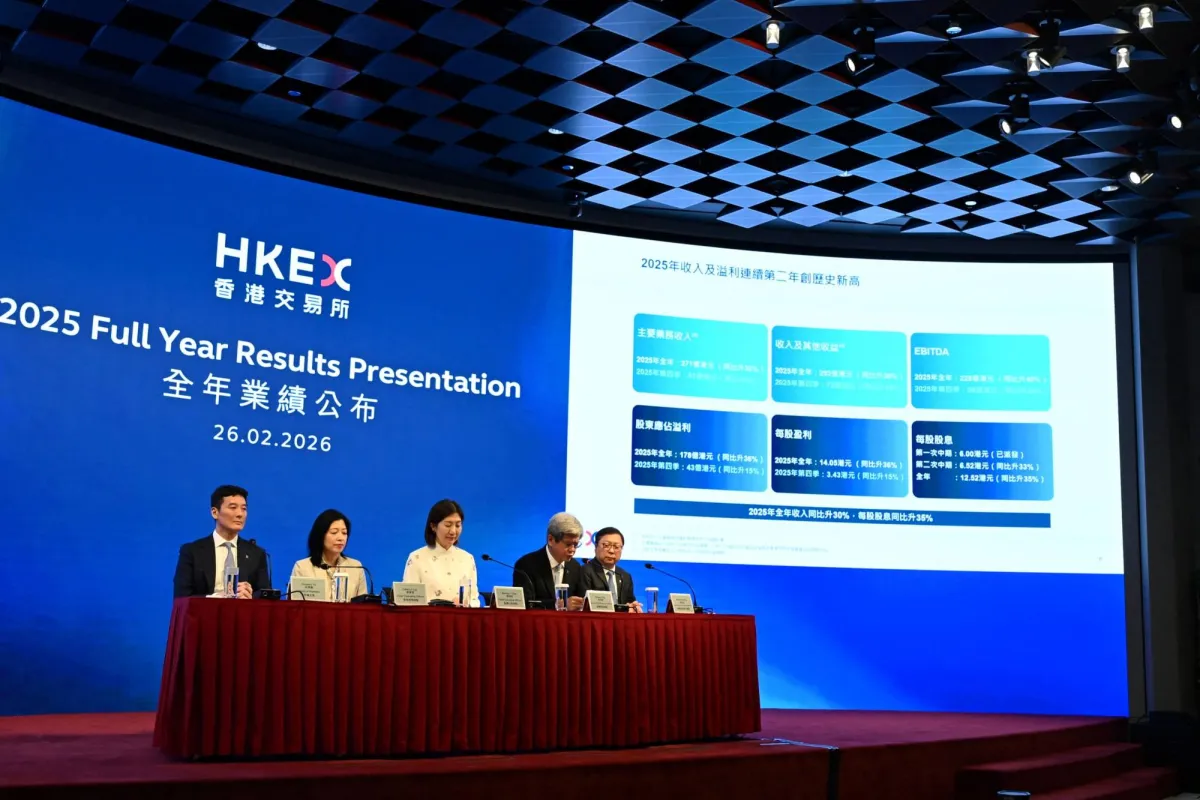
Chinese stocks concluded the week with gains, buoyed by renewed investor confidence in technology and anticipated supportive policies, despite a mixed performance on Friday.
The CSI 300 index of blue-chip stocks experienced a slight dip of 0.3% on Friday. However, the Shanghai Composite index saw a rise of 0.4%. Hong Kong's Hang Seng index also climbed, posting a 1% gain.
The abbreviated trading week, shortened due to the Lunar New Year holiday, saw the CSI 300 index close 1.1% higher, while the Hang Seng index advanced by 0.8%.
Investor sentiment has been improving as local investors rebuild their positions in stocks following the holiday break. Contributing to this positive outlook is the expectation that the upcoming National People's Congress will unveil policies aimed at bolstering technology, innovation, and domestic consumption, according to analysts at Morgan Stanley.
The annual parliamentary meeting, a closely watched event, is scheduled to commence on March 5, according to state media reports from late December.
Major technology stocks listed in Hong Kong experienced a slight rebound but ended the week down by 1.4%. UBS analysts suggest that the recent pullback in the Hang Seng Tech Index indicates a potential shift in investment flows toward consumer discretionary stocks. They noted that sentiment remains positive due to low valuations, trading activities that stimulate inflation, and early strength in sectors such as dairy products and other essential commodities.
Domestic consumer staples shares rose by 0.6%. The Chinese yuan halted its extended gains on Friday after Chinese authorities took their strongest action to date to curb its appreciation by reducing the cost of purchasing dollar futures.
A weaker yuan could facilitate fund inflows into the Hong Kong market through the stock connect program. Shares of domestic semiconductor materials and equipment companies declined by 2.4%, following a drop in shares of U.S. AI leader Nvidia the previous night. The CSI Coal Index, however, rose by 3.5%.
The U.S. International Trade Commission announced on Thursday that it would conduct an investigation into the economic impact of revoking China's permanent normal trade status for six years, a move that could potentially increase tariffs on Chinese imports.
In currency markets, the Chinese yuan's long rally paused on Friday after authorities took their strongest measure yet to halt months of gains. The People's Bank of China (PBOC) kept the currency's trading band steady and adjusted a policy to lower the cost of buying dollar futures.
The PBOC announced a reduction in the risk reserves financial institutions must allocate when purchasing foreign exchange via forwards, from 20% to zero, effective March 2. Following this announcement, the offshore yuan weakened by over 100 basis points, surpassing 6.85 per dollar. This adjustment reverses a previous decision by the PBOC in September 2022 to raise the reserve ratio in an effort to curb rapid yuan losses and capital outflows.
Liu Yang, General Manager of the Financial Market Business Department at Chisaang Development Group, noted that the central bank has historically been cautious about adjusting the foreign exchange risk reserve ratio. He added that this move will unleash some pent-up demand for buying dollars via forwards and signals that the PBOC sees limited downside risks for the yuan, believing the currency still has room to appreciate.
An ANZ bank raised its year-end yuan forecast to 6.75 per dollar from 6.85 on Thursday, citing continued capital inflows and strong exporter dollar selling demand.
The yuan had risen nearly 1% against the dollar in the three days following the Lunar New Year holiday, supported by corporate demand for the currency and strong export expectations. Markets have bet that a U.S. Supreme Court decision against President Trump's tariffs could boost Chinese exports.
Last year, the Chinese currency recorded its largest annual gain against the dollar since 2020, surpassing the psychologically significant level of 7 yuan per dollar.