 Milan-Cortina 2026 Olympic Winter Games: freestyle skiing women's freeski slopestyle qualification
Orange Jordan Sponsors Al Hussein Technical University’s "Leadathon"
The CEO of Orange Jordan Visits Yarmouk University President to Strengthen the Strategic Partnership
*Orange Jordan Showcases Fabrication Lab Innovations at the Makers’ Forum
3 Winners at Orange Summer Challenge 2024 Join the “Social Innovation” Journey Fostering "Tech4Impact”
Estarta Named Cisco Systems' Distinguished Supplier of the Year 2024
Milan-Cortina 2026 Olympic Winter Games: freestyle skiing women's freeski slopestyle qualification
Orange Jordan Sponsors Al Hussein Technical University’s "Leadathon"
The CEO of Orange Jordan Visits Yarmouk University President to Strengthen the Strategic Partnership
*Orange Jordan Showcases Fabrication Lab Innovations at the Makers’ Forum
3 Winners at Orange Summer Challenge 2024 Join the “Social Innovation” Journey Fostering "Tech4Impact”
Estarta Named Cisco Systems' Distinguished Supplier of the Year 2024
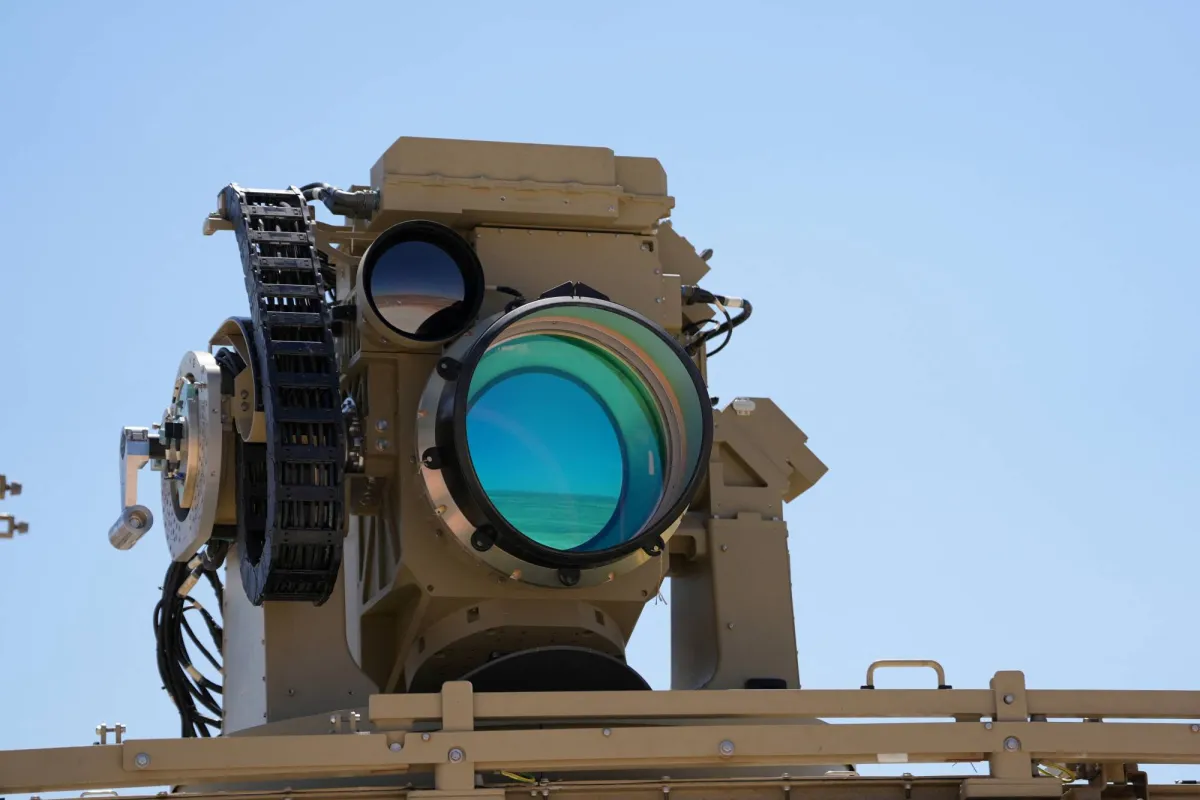
Israel has successfully tested its Iron Beam laser defense system, marking a potential revolution in how it intercepts incoming threats. The system, which uses a silent and invisible laser beam, successfully shot down drones launched from Lebanon, showcasing its capabilities in a real-world operational environment.
According to the Ministry of Defense in Tel Aviv, the Iron Beam system represents an "unprecedented defensive revolution." Developed by Rafael Advanced Defense Systems in collaboration with the ministry, the system recently intercepted an Iranian-made Shahed 101 drone. The drone was downed after being tracked and targeted by the laser for only a few seconds, without the need for a conventional missile.
The Iron Beam system also intercepted a missile fired by Hezbollah, demonstrating its effectiveness against a range of threats. Security officials have hailed this as a strategic turning point, given the cost-effectiveness of the laser system. While an Iron Dome interception costs approximately $50,000, a laser beam strike costs only a few dollars, potentially making aerial defense cheaper, faster, and more adaptable.
Recent tests in the southern desert saw the system successfully intercept around 40 drones, as well as smaller projectiles. The system utilizes a 100-kilowatt electric laser and advanced optics to prevent beam dispersion in challenging weather conditions, according to the ministry.
Engineers at the secret David Institute have been working for years to transform the technology into a viable weapon. The ministry indicated this is just the beginning, with Israel developing a vehicle-mounted version. Long-term plans include the potential use of an aerial or space-based laser to intercept ballistic missiles.
Israel began developing the weapon in partnership with the United States and Britain several years ago, with the three countries conducting tests. Israel has been anticipating its deployment in actual combat. Engineers from Rafael joined reserve forces stationed on the Lebanese border, anticipating Hezbollah's potential involvement in the conflict with Iran and subsequent missile launches toward Israel. To ensure redundancy, the Iron Dome system was used alongside the laser cannon, and all Hezbollah missiles fired in the initial barrage were detonated.
A military official noted that various Israeli, American, and other weapons are being tested, which increases their sale price.
During the conflict in the Gaza Strip, the Israeli army deployed 30 new types of American weapons and 41 new types of Israeli weapons.
An official from the aviation industry in Tel Aviv revealed that representatives from various arms factories participate in field battles to monitor the performance of new weapons and identify their strengths and weaknesses. This is done to correct any deficiencies, identify new military needs, plan for the creation of new weapons, and ensure the army is supplied with necessary ammunition. The Israeli military industries monitor the needs of the 34 countries that purchase weapons from them, exporting 66% of their arms to these countries, with only 34% used by the Israeli army. Israel's revenue from arms sales is approximately $15 billion, according to statistics, and it seeks to expand this further.
According to internal data from the Ministry of Defense, there are official requests worth $100 billion from these industries, including $14 billion for Germany and $8 billion for India.
In comparison, Israeli arms sales in 2000 were approximately $2.4 billion, jumping to $7.4 billion in 2010, and reaching $9 billion in 2017. After declining in the following two years, sales rose again in 2020 to $8.5 billion, reaching $11 billion in 2021, $12.5 billion in 2022, $13 billion in 2023, and $14.9 billion.
The largest share of Israeli arms exports is concentrated in air defense systems, including missiles and rocket launchers, accounting for 36%. Radar systems, electronic warfare, launch vehicles, and shooting systems account for 11% of export volume. Manned aircraft upgrades and avionics account for 9%, followed by ammunition and weapons at 8%. Surveillance, electronics, vehicles, and communications account for 5%, while information intelligence, cyber, drones, information technology, and communication systems account for 4%. Satellites and space account for 2%, and naval platforms and systems account for 1%.