 Milan-Cortina 2026 Olympic Winter Games: freestyle skiing women's freeski slopestyle qualification
Orange Jordan Sponsors Al Hussein Technical University’s "Leadathon"
The CEO of Orange Jordan Visits Yarmouk University President to Strengthen the Strategic Partnership
*Orange Jordan Showcases Fabrication Lab Innovations at the Makers’ Forum
3 Winners at Orange Summer Challenge 2024 Join the “Social Innovation” Journey Fostering "Tech4Impact”
Estarta Named Cisco Systems' Distinguished Supplier of the Year 2024
Milan-Cortina 2026 Olympic Winter Games: freestyle skiing women's freeski slopestyle qualification
Orange Jordan Sponsors Al Hussein Technical University’s "Leadathon"
The CEO of Orange Jordan Visits Yarmouk University President to Strengthen the Strategic Partnership
*Orange Jordan Showcases Fabrication Lab Innovations at the Makers’ Forum
3 Winners at Orange Summer Challenge 2024 Join the “Social Innovation” Journey Fostering "Tech4Impact”
Estarta Named Cisco Systems' Distinguished Supplier of the Year 2024
China is set to unveil its latest five-year plan, outlining strategies to advance its technological capabilities and integrate achievements in artificial intelligence, space exploration, and robotics into broader industrial applications and capital markets.
The forthcoming plan will be a focal point as global attention hones in on how Beijing intends to bolster its technological advancements, particularly in light of ongoing geopolitical tensions and supply chain vulnerabilities.
The National People's Congress (NPC), China's parliament, will release the annual government work report and budget plans this week, including the framework for the 15th Five-Year Plan (2026-2030). This comprehensive plan will detail the nation's industrial policy priorities and sectors earmarked for substantial funding and political backing.
Last year's report highlighted AI models and technologies powering humanoid robots, indicating areas of strategic focus. The NPC meeting occurs weeks before a scheduled meeting between President Xi Jinping and U.S. President Joe Biden, where technology controls and supply chains are expected to be key discussion points.
The timing also marks a year since Chinese AI developers garnered international recognition for rapid advancements, despite U.S. restrictions on access to advanced chips and manufacturing equipment. DeepSeek, a Chinese startup, is anticipated to launch a next-generation AI model soon.
Alfredo Montufar-Helu of Ancore Consulting noted the shift from initial shock to anticipation regarding China's future technological contributions. The challenge for Beijing lies in translating individual achievements into widespread gains across manufacturing, logistics, and energy sectors.
Shuijing He of Plenum China suggests policymakers will likely promote "AI-powered manufacturing" by leveraging large state-owned enterprises to adopt these technologies and attract specialized startups and suppliers.
However, this strategy is expected to reshape China's industrial structure. Shin Nakamura of Daiwa Steel Tube Industries anticipates that the AI push will benefit large, capital-rich producers capable of absorbing implementation costs, while smaller firms may face structural constraints, potentially widening the gap between large and small-to-medium enterprises and accelerating consolidation.
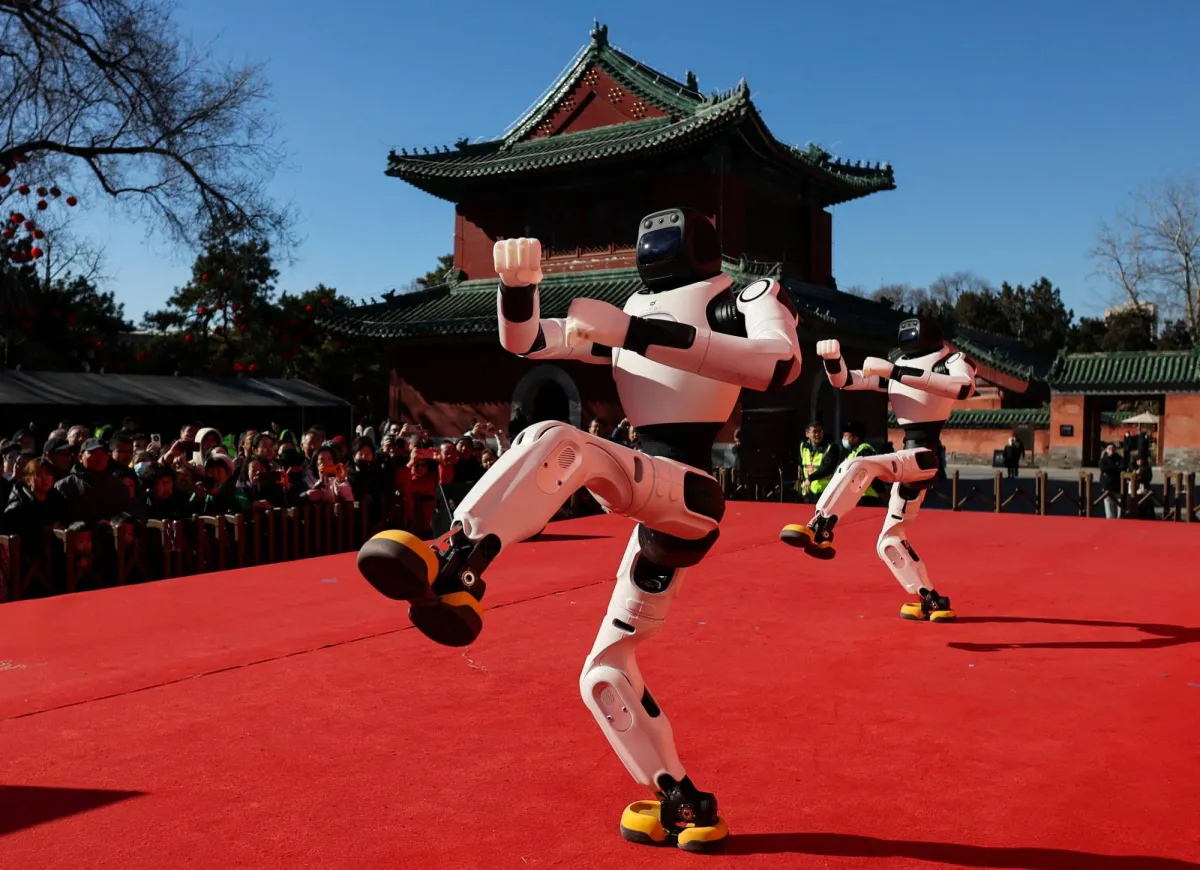
The five-year plan is also expected to emphasize embodied intelligence. China showcased its progress in this area with domestically produced humanoid robots performing dances and martial arts during the Chinese New Year gala on CCTV.
Advancements in hardware technology are bolstering China's confidence in robotics. Mike Nielsen of RealSense, which collaborates with Chinese robotics firm Unitree, noted significant improvements in mechatronics, particularly balance, motion control, and dynamic movement, with early-stage platforms demonstrating higher resilience and stability.
Chinese regulators caution against a lack of differentiation among over 150 domestic humanoid robot developers. Analysts suggest consolidation is likely to occur more rapidly than in previous strategic sectors like electric vehicles.
The space sector is another test for Beijing's efforts to translate research into industrial strength. LandSpace, a private rocket launch company, plans another recovery attempt this year for its reusable rocket, Zhuque-3, after conducting a full test of a reusable orbital launch rocket last December.
A report from Rhodium Group indicates that emerging Chinese industries may not generate sufficient investment to achieve 5% GDP growth in the coming years, suggesting continued reliance on exports to support the economy. This implies that Beijing will prioritize sectors with direct commercial impact, such as autonomous driving, according to Plenum's Shuijing He.
Analysts say the five-year plan will also be scrutinized for how Beijing intends to protect the industrial foundations underpinning its technological endeavors, as supply chains become geopolitical leverage tools.
Over the past year, China has expanded its use of export controls, focusing on rare earth elements and low-cost semiconductors, disrupting global supply chains and highlighting Beijing's economic influence.
Doug Friedman of BioMADE suggests that other supply chains vital to the global economy are vulnerable to reliance on China, drawing parallels to the rare earth elements sector and the industrial chemicals industry. As Beijing formulates its next five-year industrial strategy, Friedman emphasized the growing risks, stating that those who double down on investments in the next three to five years will achieve real progress.