الأنباط -
The Middle East hardly has time to catch its breath before it finds itself again at the center of a new conflict. Missiles fall, conflicts continue, and political crises accumulate, while the environmental situation becomes more fragile every day.
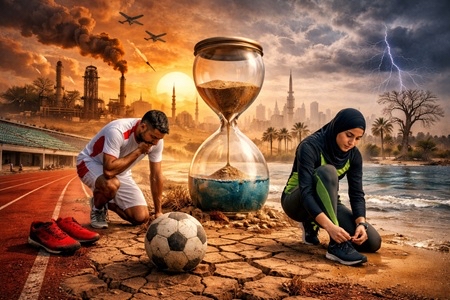
In one of the regions most affected by rising temperatures, water scarcity, and climate instability, political challenges intersect with climate challenges. This creates increasing pressure on societies and daily life, including sports, which often reflect the reality people live in.
Although the Arab region is scientifically classified as one of the areas most vulnerable to climate change, the Arab sports voice in this discussion is still limited. At the same time, climate has become a direct factor affecting athletes’ performance and safety, the schedules of tournaments and seasons, and even the infrastructure of stadiums and sports facilities.
The paradox is that in Western countries, athletes play a visible role in climate discussions. Many athletes lead initiatives and campaigns and use their fame to call for climate action, even in countries that are among the largest contributors to global carbon emissions.
In contrast, the situation in the Arab world seems more complex. Between accelerating climate challenges and political and economic crises, the connection between sports and the environment is still in its early stages. Often, it remains limited to individual initiatives or small efforts that do not always reach the public.
This reality raises an important question: Why is the Arab sports voice absent from an issue that directly affects the future of sports and athletes in the region, when climate has become a factor that cannot be ignored in competition itself?
⸻
Arab Sports Media Still Far from Understanding Climate Impact
Muhannad Mahadin, the director of the sports department at AlMamlaka TV, tried to answer this question.
He explained that it is difficult to say that Arab media is failing to turn climate change into a sports public issue. Instead, the problem is a lack of specialization and knowledge about the topic.
According to him, some journalists do not fully understand the effect of climate and environment on different sports. High temperatures, drought, and lack of rainfall affect each sport differently, as well as carbon emissions that influence athletes’ health, match schedules, and tournament calendars.
He also pointed out that editorial policies in some media institutions may consider climate issues less important or not attractive to sports audiences.
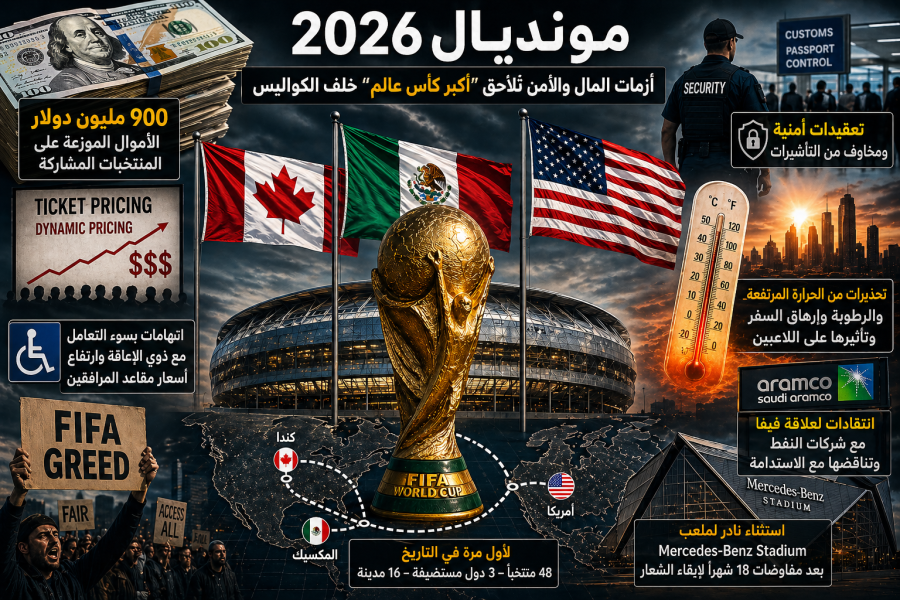
Mahadin noted that climate change has already affected global sports events. For example, organizers of the 2026 FIFA World Cup had to adjust match schedules to avoid extremely high temperatures.
He stressed that awareness of climate issues should involve journalists, players, sports federations, and organizations working together as one system.
He added that it is rare to find sports journalists who connect sports with environmental issues in the same way they link sports with economics or politics.
Mahadin also emphasized that sports federations should educate athletes and raise awareness about their broader role. Athletes are not only competitors; they also have social, humanitarian, and political influence. They can become ambassadors who promote awareness of climate change and its effects on sports.
However, he believes that many federations still focus mainly on results and competitions rather than long-term sustainability strategies.
⸻
Sports, Disability, and the Role of Arab Athletes
One inspiring Arab example is Michael Haddad.
Haddad is a Lebanese weightlifting athlete and environmental activist who has suffered partial paralysis since childhood. He moves using an exoskeleton designed by a team of doctors and scientists to support his chest and legs, allowing him to walk and carry his weight of about 110 kilograms.
Despite being considered disabled, he achieved remarkable accomplishments. He holds a world record in walking and climbing using snowshoes and has walked more than 19 kilometers on mountain trails to support the reforestation of Lebanon’s cedar forests. He also climbed the famous Raouché Rock to highlight the importance of fighting climate change.
Haddad said that people with disabilities must also have a voice in climate conferences because they are among the groups most affected by environmental changes.
He added that the Arab sports voice remains weak compared with the West, even though the region faces major climate challenges such as heat, water scarcity, and food dependence on other countries.
⸻
Integrating Climate Change into Sports Planning
Rymthaa Al Busaidi, a football player, analyst, and environmental activist, explained that her awareness of the relationship between sports and climate began through her personal experience playing football and climbing mountains.
She realized that weather elements such as heat, humidity, wind, and the nature of the environment directly affect an athlete’s psychology, focus, and ability to continue performing.
Her experience in Antarctica deepened this awareness even more. It helped her understand how fragile nature is and how limited human ability is to adapt.
She explained that climate change is no longer just an environmental issue. It has become an important factor in sports planning. Sometimes it requires reconsidering training locations, sports seasons, and even the continuation of certain activities.
In the Arab region, this reality is clear. Extremely high temperatures sometimes force teams to move training to higher and cooler areas such as Jebel Akhdar.
She also emphasized that Arab youth have the awareness and desire to participate in climate issues, but they need opportunities and spaces to contribute and lead change.
Finally, she warned that ignoring climate change will directly affect sports—from athlete safety and performance quality to the regular organization of competitions and the cost of managing sports facilities.
She concluded that climate adaptation in sports is not just a theoretical idea imported from outside the region. It is a daily reality in the Arab world and should become part of long-term strategies for the future of sports.


 مصادر للانباط: الشيباني إلى القاهرة الاسبوع المقبل تمهيدا لتقارب سياسي واقتصادي