 Milan-Cortina 2026 Olympic Winter Games: freestyle skiing women's freeski slopestyle qualification
Orange Jordan Sponsors Al Hussein Technical University’s "Leadathon"
The CEO of Orange Jordan Visits Yarmouk University President to Strengthen the Strategic Partnership
*Orange Jordan Showcases Fabrication Lab Innovations at the Makers’ Forum
3 Winners at Orange Summer Challenge 2024 Join the “Social Innovation” Journey Fostering "Tech4Impact”
Estarta Named Cisco Systems' Distinguished Supplier of the Year 2024
Milan-Cortina 2026 Olympic Winter Games: freestyle skiing women's freeski slopestyle qualification
Orange Jordan Sponsors Al Hussein Technical University’s "Leadathon"
The CEO of Orange Jordan Visits Yarmouk University President to Strengthen the Strategic Partnership
*Orange Jordan Showcases Fabrication Lab Innovations at the Makers’ Forum
3 Winners at Orange Summer Challenge 2024 Join the “Social Innovation” Journey Fostering "Tech4Impact”
Estarta Named Cisco Systems' Distinguished Supplier of the Year 2024
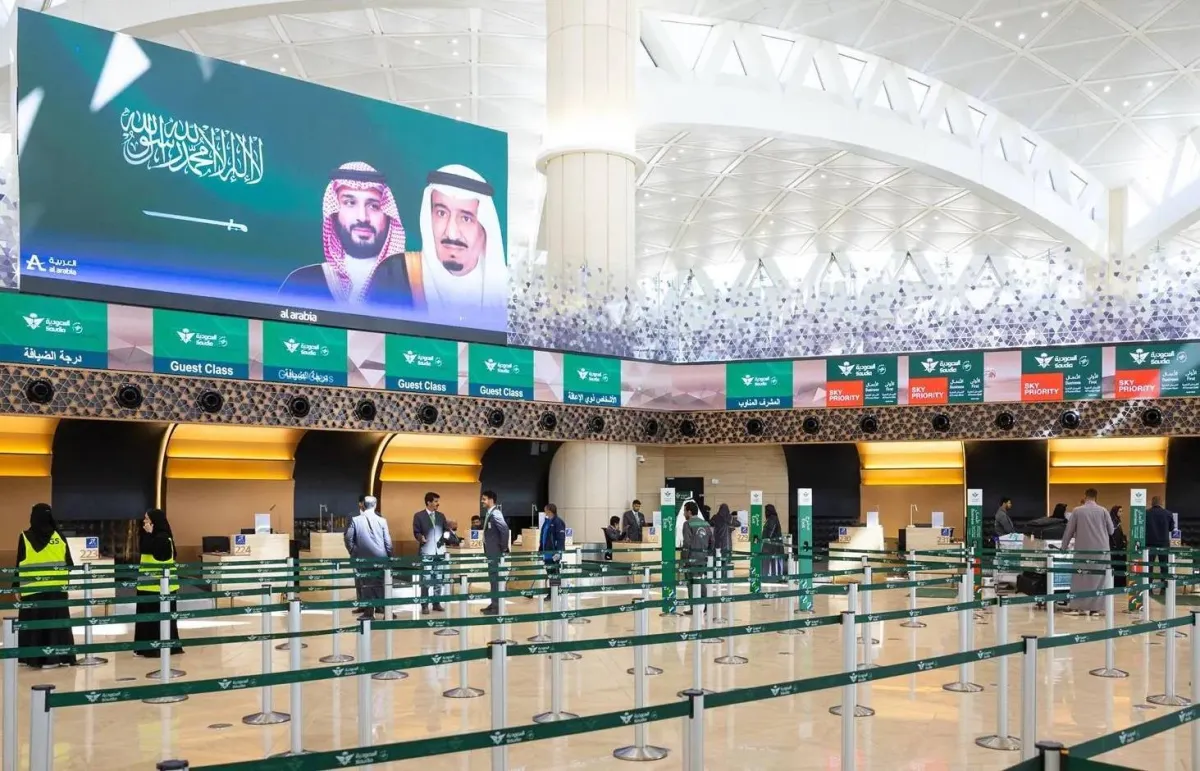
RIYADH - King Khalid International Airport in Riyadh has successfully completed a large-scale relocation of its operational terminals, a move designed to significantly enhance efficiency, improve passenger experience, and accommodate the growing number of travelers.
The relocation, executed between Feb. 16 and Feb. 25, represents the most substantial change at the airport since its establishment.
The comprehensive plan, developed in coordination with all airport partners, involved redistributing airline flights across the terminals to optimize infrastructure use. This aims to reduce transit times between domestic and international terminals for national carriers and decrease waiting periods, especially for transit passengers.
Terminals 1 and 2 are now dedicated to international flights operated by national carriers, while Terminals 3 and 4 handle domestic flights for the same airlines. Terminal 5 is designated for international flights operated by foreign carriers.
According to Ayman Aboabah, CEO of Riyadh Airports Company, the successful operational relocation across all terminals is attributed to meticulous planning and the stability in flight operations and scheduling adherence. He also acknowledged the support from the Ministry of Transport and Logistics Services, the General Authority of Civil Aviation, and مطارات Holding Company, as well as the efforts of all airport staff, including security and airline personnel.
Aboabah highlighted the deployment of over 650 guides to assist passengers, answer inquiries, and ensure seamless coordination between various operational systems. Free parking for the first hour, complimentary transportation between terminals via taxis and the Riyadh Metro, and frequent shuttle buses every four minutes further facilitated the relocation process.
During the relocation period, the airport handled 1,046,016 arriving and departing passengers across more than 7,650 flights in all terminals. This operational shift is expected to increase the capacity of Terminals 3 and 4 from 16 million to 25 million passengers annually, supporting continued growth in air travel.
The relocation aims to increase the airport's overall capacity from 42 million in 2025 to 56 million passengers by the end of 2026, representing a growth rate exceeding 33 percent. It will also boost the capacity for transit passengers to 7.5 million annually, reinforcing the airport's position as a regional and international hub.
This development aligns with ongoing development plans at King Khalid International Airport, enhancing its operational integration and solidifying its role as a strategic connecting point between three continents, in line with the objectives of the Saudi Aviation Strategy and Vision 2030.