 Milan-Cortina 2026 Olympic Winter Games: freestyle skiing women's freeski slopestyle qualification
Orange Jordan Sponsors Al Hussein Technical University’s "Leadathon"
The CEO of Orange Jordan Visits Yarmouk University President to Strengthen the Strategic Partnership
*Orange Jordan Showcases Fabrication Lab Innovations at the Makers’ Forum
3 Winners at Orange Summer Challenge 2024 Join the “Social Innovation” Journey Fostering "Tech4Impact”
Estarta Named Cisco Systems' Distinguished Supplier of the Year 2024
Milan-Cortina 2026 Olympic Winter Games: freestyle skiing women's freeski slopestyle qualification
Orange Jordan Sponsors Al Hussein Technical University’s "Leadathon"
The CEO of Orange Jordan Visits Yarmouk University President to Strengthen the Strategic Partnership
*Orange Jordan Showcases Fabrication Lab Innovations at the Makers’ Forum
3 Winners at Orange Summer Challenge 2024 Join the “Social Innovation” Journey Fostering "Tech4Impact”
Estarta Named Cisco Systems' Distinguished Supplier of the Year 2024
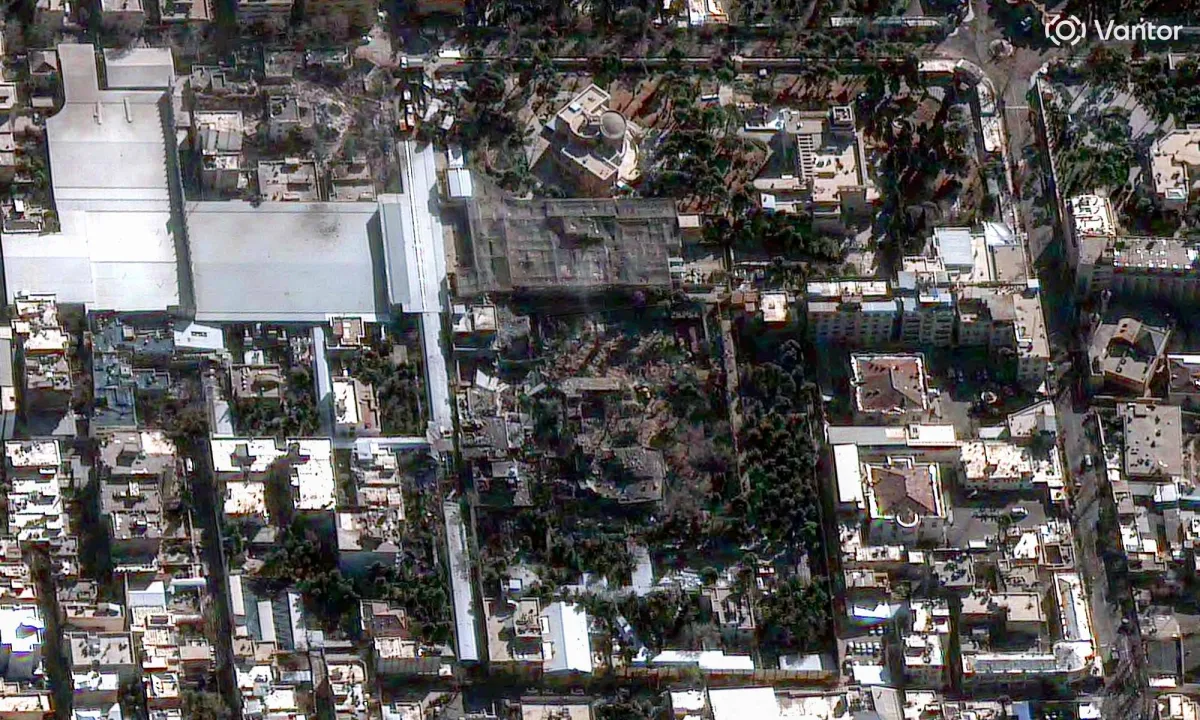
Israeli strikes against Iranian leadership have reportedly achieved surprising success, prompting questions about the effectiveness of Israel's intelligence gathering and military strategies.
According to reports in Hebrew media, despite stringent military censorship, details are emerging about the planning and execution of the joint U.S.-Israeli operation targeting Iran. Israeli pilots involved in the initial strikes expressed astonishment at how easily they achieved their objectives.
The pilots, speaking to official radio, alluded to the first wave of attacks, the extent of Iranian casualties remains unclear. However, the strikes reportedly targeted three key locations where top military and security officials, including Supreme Leader Ali Khamenei, were believed to be convening.
The official radio reported that the pilots were dispatched to eliminate key figures. They allegedly assassinated 42 leaders, including Defense Minister Aziz Nasirzadeh, a veteran military figure who previously held senior positions such as Air Force Commander and Deputy Chief of Staff of the Armed Forces. Nasirzadeh was also reportedly responsible for long-range missile production and the transfer of weapons to the regime's allies, as well as the “Sepand” organization, which advanced projects in the nuclear, biological, and chemical weapons fields.
Other high-profile targets reportedly included Ali Shamkhani, Secretary-General of the Supreme National Security Council, considered by Israel to be a key security decision-maker and Khamenei's personal advisor on security affairs. Shamkhani was allegedly held responsible for the violent suppression of recent protests that resulted in thousands of deaths. Mohammed Bakpour, commander of the Islamic Revolutionary Guard Corps (IRGC), described as a mastermind of the plan to destroy Israel, and Salah Asadi, head of intelligence in the emergency command and senior intelligence officer in the supreme command of Iranian forces, were also reportedly killed.
Adding to the surprise was the reported use of tactics previously employed during the initial phase of conflict months prior. During that earlier operation, an Iranian Air Force General Staff meeting in Tehran was targeted, resulting in numerous casualties. Despite this experience, the Israelis were able to monitor the movements of these leaders for months, utilizing human and electronic intelligence, as well as operations led by Mossad agents operating within Iran.
Hebrew media reports indicate that the scale of the intelligence coup was evident in the fact that the Israelis were aware of three high-level meetings scheduled to take place simultaneously. Most notably, the meeting between Khamenei, the Minister of Defense, and other military leaders was originally planned for Saturday evening but was moved to Saturday morning for security reasons. Israeli intelligence was reportedly aware of this change, and its aircraft were in the air at the time of the meeting, with the strike timed to coincide with Khamenei's arrival.
According to a report in *Yedioth Ahronoth*, the decision to launch the joint U.S.-Israeli operation was made shortly before the attack. Despite ongoing negotiations between the U.S. and Iran, then U.S. President Donald Trump reportedly received a report indicating that the Iranian negotiators were acting in bad faith and aimed to prolong the talks. Trump then allegedly gave the order to proceed with the attack, which had been in the planning stages for months.
The report further stated that Trump had initially wanted to launch the attack earlier but faced pressure to allow more time for negotiations. He then reportedly gave Iran a deadline to conclude the negotiations but felt that the message was not understood.
Israel claims that the timing of the attack was dictated by Iran's actions. Israeli intelligence reportedly obtained information about three meetings scheduled to take place on Saturday morning. Launching a decisive strike on these meetings was deemed the best way to shock the Iranian leadership.
Furthermore, given that the attack took place on Saturday, the Israeli government anticipated that the Iranian response would be less impactful on Tel Aviv, as it is the weekend and religious Israelis typically remain indoors.
The operation also carried religious symbolism, coinciding with the eve of Purim, a Jewish holiday associated with joy and mockery. Purim has historical ties to Persia, as the holiday commemorates the story of Esther, who saved the Jewish people from a plot to annihilate them in ancient Persia.