 Milan-Cortina 2026 Olympic Winter Games: freestyle skiing women's freeski slopestyle qualification
Orange Jordan Sponsors Al Hussein Technical University’s "Leadathon"
The CEO of Orange Jordan Visits Yarmouk University President to Strengthen the Strategic Partnership
*Orange Jordan Showcases Fabrication Lab Innovations at the Makers’ Forum
3 Winners at Orange Summer Challenge 2024 Join the “Social Innovation” Journey Fostering "Tech4Impact”
Estarta Named Cisco Systems' Distinguished Supplier of the Year 2024
Milan-Cortina 2026 Olympic Winter Games: freestyle skiing women's freeski slopestyle qualification
Orange Jordan Sponsors Al Hussein Technical University’s "Leadathon"
The CEO of Orange Jordan Visits Yarmouk University President to Strengthen the Strategic Partnership
*Orange Jordan Showcases Fabrication Lab Innovations at the Makers’ Forum
3 Winners at Orange Summer Challenge 2024 Join the “Social Innovation” Journey Fostering "Tech4Impact”
Estarta Named Cisco Systems' Distinguished Supplier of the Year 2024
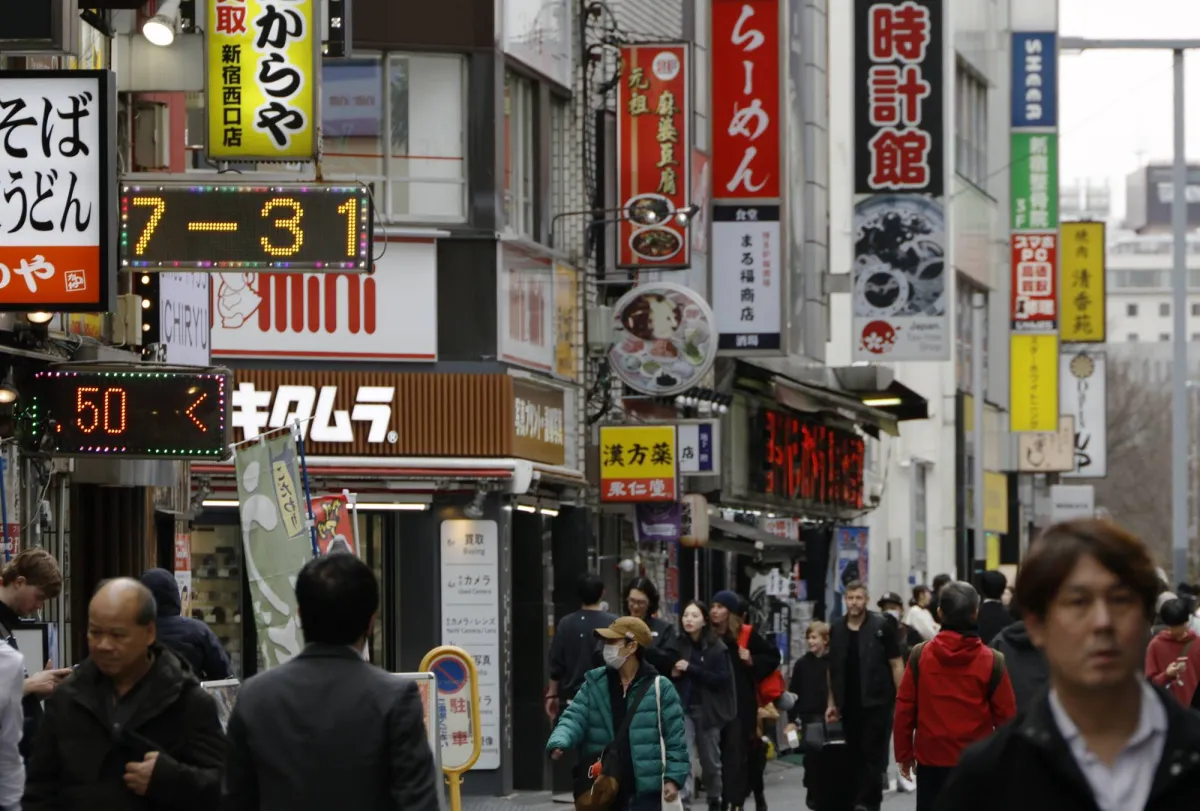
Japan is closely monitoring the yen's recent decline with growing concern, Finance Minister Satsuki Katayama told parliament on Friday, signaling a heightened state of vigilance regarding currency movements.
The government is in close contact with the United States and will continue dialogue to address concerns stemming from the yen's depreciation, Katayama stated in response to a query about whether the weaker yen could hinder wage growth by increasing import costs.
Meanwhile, data released on Friday revealed that Tokyo's core annual inflation slowed in February, falling below the Bank of Japan's (BOJ) 2% target for the first time in 16 months. This development could potentially strain the relationship between the central bank and the government regarding the future path of interest rate hikes.
The Tokyo core consumer price index (CPI), which excludes volatile fresh food prices, rose 1.8% year-on-year in February, following a 2.0% increase in January. This marks the first time the index has fallen below the 2% target since October 2024. The figure aligns with market expectations of a 1.7% increase.
The slowdown reflects the impact of fuel subsidies, the expiration of surcharges on gasoline taxes, and the waning effects of rising food prices. The core-core inflation index, which excludes both fresh food and fuel prices and is closely monitored by the BOJ as a more accurate gauge of inflation trends, rose 2.5% in February compared to the previous year, following a 2.4% increase in January.
Kanako Nakamura, an economist at Daiwa Research Institute, believes that this single result will not influence the BOJ's commitment to raising interest rates, noting that the slowdown in core inflation was anticipated. However, some analysts suggest that the easing of core inflation momentum could provide Prime Minister Sanae Takaichi, known for her dovish stance, with grounds to pressure the BOJ to proceed cautiously with further rate hikes.
Adding to the intrigue, the Mainichi newspaper reported that Takaichi expressed reservations about additional interest rate hikes during a meeting with BOJ Governor Kazuo Ueda last week, hinting at potential disagreements over monetary policy.
Masato Koike, chief economist at Sompo Institute Plus, suggests that if the BOJ were to deviate from its course of raising interest rates, it would be easier to frame the shift as a data-driven reassessment, specifically influenced by weak GDP and CPI figures, rather than succumbing to government pressure.
Separate government data released on Friday showed that Japan's factory output rose 2.2%, marking its first increase in three months, driven by a growth in automobile production exceeding 10%. However, this increase fell short of even the most pessimistic economists' expectations, with the median forecast anticipating a jump of 5.3%.
Japanese manufacturers anticipate a further decline in output in February and March. The BOJ raised interest rates to a 30-year high of 0.75% in December, signaling confidence that Japan is progressing towards achieving its 2% inflation target sustainably and indicating a willingness to continue raising rates if economic and price forecasts are met.