 Milan-Cortina 2026 Olympic Winter Games: freestyle skiing women's freeski slopestyle qualification
Orange Jordan Sponsors Al Hussein Technical University’s "Leadathon"
The CEO of Orange Jordan Visits Yarmouk University President to Strengthen the Strategic Partnership
*Orange Jordan Showcases Fabrication Lab Innovations at the Makers’ Forum
3 Winners at Orange Summer Challenge 2024 Join the “Social Innovation” Journey Fostering "Tech4Impact”
Estarta Named Cisco Systems' Distinguished Supplier of the Year 2024
Milan-Cortina 2026 Olympic Winter Games: freestyle skiing women's freeski slopestyle qualification
Orange Jordan Sponsors Al Hussein Technical University’s "Leadathon"
The CEO of Orange Jordan Visits Yarmouk University President to Strengthen the Strategic Partnership
*Orange Jordan Showcases Fabrication Lab Innovations at the Makers’ Forum
3 Winners at Orange Summer Challenge 2024 Join the “Social Innovation” Journey Fostering "Tech4Impact”
Estarta Named Cisco Systems' Distinguished Supplier of the Year 2024
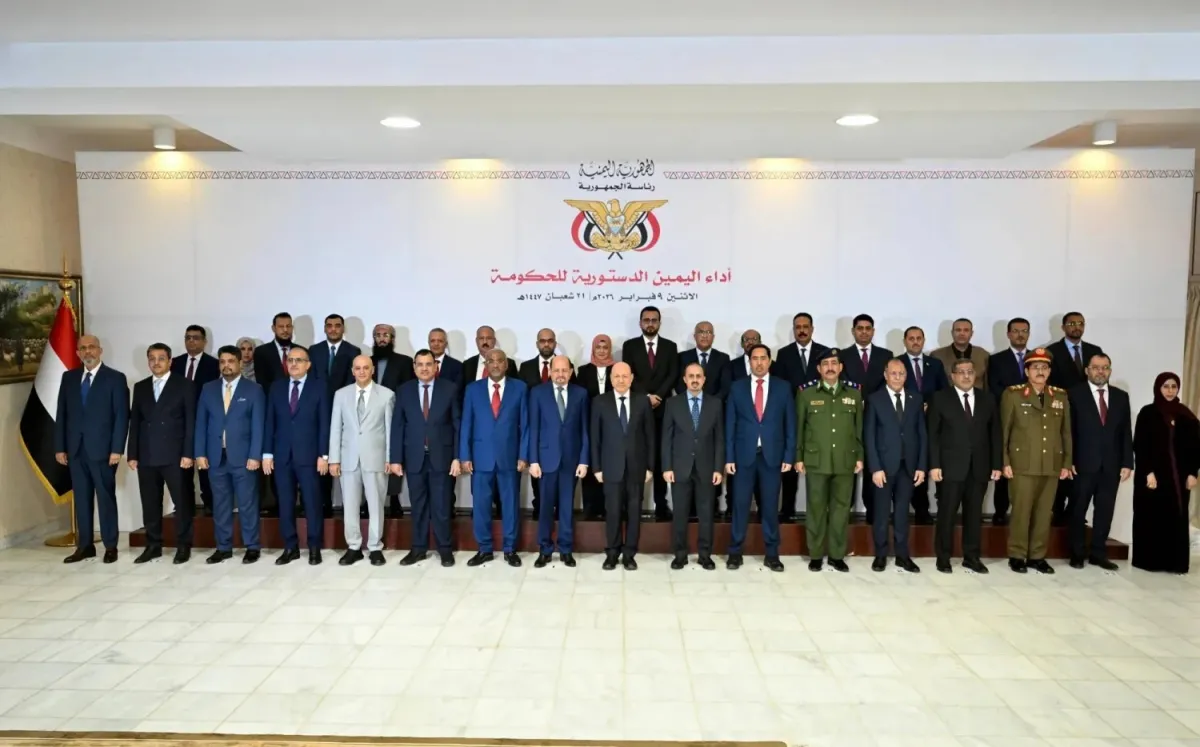
Yemen's new government, led by Prime Minister Shaya al-Zindani, faces a formidable challenge in tackling widespread corruption, a problem exacerbated by years of conflict and institutional decay. The government's commitment to financial and administrative reforms is aimed at restoring both domestic and international confidence, but experts warn that the issue goes beyond political will, touching the very structure of the nation's economic and political system.
Yemen's standing in Transparency International's Corruption Perceptions Index reflects the scale of the problem. The country ranked 177 out of 182, highlighting a breakdown in governance and accountability, as well as rampant bribery and illegal taxation.
The new government is under pressure to deliver tangible results, particularly as international support is tied to financial and institutional reforms. Prime Minister al-Zindani pledged to prioritize the fight against corruption, improve institutional performance, and enhance living conditions for citizens.
Fares al-Najjar, an advisor to the Yemeni Presidential Office for Economic Affairs, emphasized the need for a comprehensive overhaul of financial governance and institutional structures. This includes linking fiscal and monetary policy and promoting transparency and accountability in public finance management.
Al-Najjar stated that the government is working with international partners, such as the International Monetary Fund and the World Bank, focusing on reforming public financial administrations, controlling spending, and improving revenue collection mechanisms.
However, Yemen's judicial and administrative oversight institutions remain weak and lack full independence, making it difficult to enforce anti-corruption measures and apply laws effectively.
Yousef Shamsan, a Yemeni academic specializing in the political economy of war, argues that corruption has become a structural component of the war economy, rather than simply an administrative deviation.
According to Shamsan, corruption was used to perpetuate structural imbalances by undermining laws and turning institutions into tools to protect the political and economic elite. The war has deepened the problem, with corruption becoming a major source of revenue and funding for armed groups, particularly in key sectors such as the military, security, oil, gas, public finance, and humanitarian aid.
The conflict has seen the creation of ghost military and security forces, double salaries, corruption in supply contracts, fuel and weapons smuggling, and non-transparent contracts in the energy sector. Humanitarian aid has also been diverted into rent-seeking and black markets.
Economist Abdul Hamid al-Masajidi noted that Yemen's low ranking in the Corruption Perceptions Index is not surprising, but rather a reflection of the collapse of state institutions. He pointed to the proliferation of financial and monetary institutions, unproductive spending, and a lack of discipline in revenue management as key factors.
Al-Masajidi also highlighted the economic consequences of corruption, including currency depreciation, increased import costs, reduced investment, and higher sovereign risk.
While al-Najjar noted that cooperation programs with Saudi Arabia include conditions for governance and spending mechanisms, Shamsan stressed that genuine reform requires breaking the cycle that has made corruption part of the war economy.
Al-Masajidi suggested that improvement hinges on unifying financial institutions, strengthening the central bank's independence, activating oversight bodies, digitizing revenues, and ensuring full transparency in sovereign resources. He also called for linking external support to measurable reforms.
Ultimately, the new government's success in combating corruption will depend on its ability to assert control over violence, revenue, and decision-making, and to dismantle the structural incentives that have allowed corruption to flourish in Yemen's war-torn environment.