 Milan-Cortina 2026 Olympic Winter Games: freestyle skiing women's freeski slopestyle qualification
Orange Jordan Sponsors Al Hussein Technical University’s "Leadathon"
The CEO of Orange Jordan Visits Yarmouk University President to Strengthen the Strategic Partnership
*Orange Jordan Showcases Fabrication Lab Innovations at the Makers’ Forum
3 Winners at Orange Summer Challenge 2024 Join the “Social Innovation” Journey Fostering "Tech4Impact”
Estarta Named Cisco Systems' Distinguished Supplier of the Year 2024
Milan-Cortina 2026 Olympic Winter Games: freestyle skiing women's freeski slopestyle qualification
Orange Jordan Sponsors Al Hussein Technical University’s "Leadathon"
The CEO of Orange Jordan Visits Yarmouk University President to Strengthen the Strategic Partnership
*Orange Jordan Showcases Fabrication Lab Innovations at the Makers’ Forum
3 Winners at Orange Summer Challenge 2024 Join the “Social Innovation” Journey Fostering "Tech4Impact”
Estarta Named Cisco Systems' Distinguished Supplier of the Year 2024
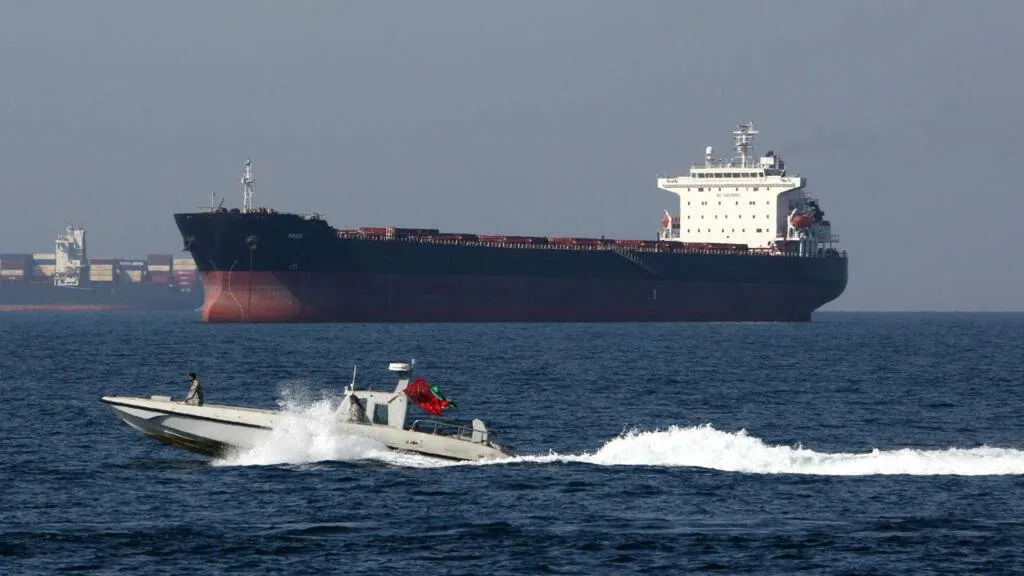
Heightened geopolitical tensions in the Middle East have spotlighted the strategic importance of the Strait of Hormuz, a critical waterway for global oil exports.
The Strait, located between Oman and Iran, serves as the only sea passage from the Persian Gulf to the open ocean, making it one of the world's most strategically important chokepoints. It connects the oil-producing countries of the Middle East with markets in Asia, Europe, and North America.
Approximately one-fifth of the world's total oil consumption passes through the Strait of Hormuz. Data from Vortexa indicates that over 20 million barrels of crude oil, condensates, and fuels transit the Strait daily.
Saudi Arabia, Iran, the United Arab Emirates, Kuwait, and Iraq, all members of OPEC, export the majority of their crude oil via the Strait, primarily to Asia. Qatar, a major exporter of liquefied natural gas (LNG), ships almost all of its LNG production through this strategic waterway.
In response to recent instability, Saudi Arabia and the UAE, key producers within OPEC+, have increased oil exports as part of contingency plans. They have also explored alternative routes to bypass the Strait, with approximately 2.6 million barrels per day of untapped pipeline capacity available via Saudi and Emirati pipelines, according to the U.S. Energy Information Administration.
The U.S. Fifth Fleet, based in Bahrain, is responsible for ensuring the freedom of navigation in the region.
Adding to the tensions, Iran has been involved in the seizure of ships in or near the Strait of Hormuz, with three vessels detained since 2023. Some of these seizures followed the U.S. interdiction of tankers linked to Iran. In the past, Iran has also considered closing the Strait in response to perceived threats.