 Milan-Cortina 2026 Olympic Winter Games: freestyle skiing women's freeski slopestyle qualification
Orange Jordan Sponsors Al Hussein Technical University’s "Leadathon"
The CEO of Orange Jordan Visits Yarmouk University President to Strengthen the Strategic Partnership
*Orange Jordan Showcases Fabrication Lab Innovations at the Makers’ Forum
3 Winners at Orange Summer Challenge 2024 Join the “Social Innovation” Journey Fostering "Tech4Impact”
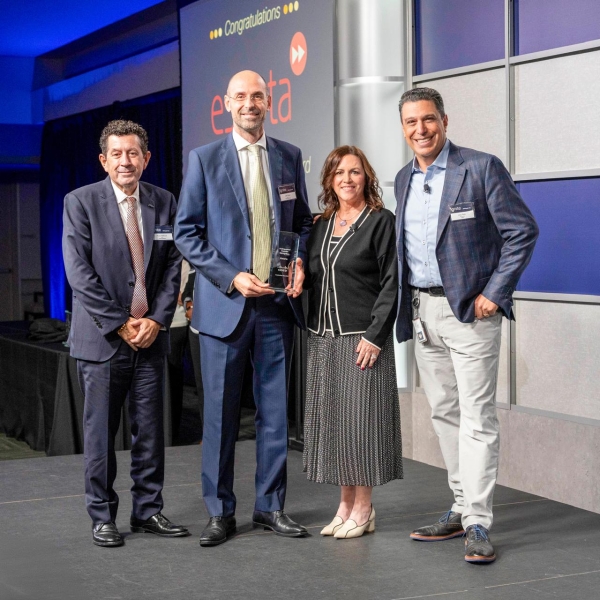
Estarta Named Cisco Systems' Distinguished Supplier of the Year 2024
Milan-Cortina 2026 Olympic Winter Games: freestyle skiing women's freeski slopestyle qualification
Orange Jordan Sponsors Al Hussein Technical University’s "Leadathon"
The CEO of Orange Jordan Visits Yarmouk University President to Strengthen the Strategic Partnership
*Orange Jordan Showcases Fabrication Lab Innovations at the Makers’ Forum
3 Winners at Orange Summer Challenge 2024 Join the “Social Innovation” Journey Fostering "Tech4Impact”
Estarta Named Cisco Systems' Distinguished Supplier of the Year 2024
Microsoft has issued a stark warning about the security risks associated with increasingly autonomous artificial intelligence (AI) agents, highlighting potential vulnerabilities that could be exploited by malicious actors.
The tech giant's report underscores a significant shift in the cybersecurity landscape, as AI agents transition from simple chatbots to sophisticated tools capable of performing complex tasks on behalf of users, such as accessing email, calendars, and databases.
This new level of autonomy, while boosting productivity, also presents unprecedented security challenges.
One of the primary threats identified by Microsoft is indirect prompt injection, where attackers embed malicious instructions within seemingly innocuous emails or documents. When an AI agent processes this content, it unwittingly executes the hidden commands, potentially leading to data breaches or other harmful actions.
Another concern is the over-privileging of AI agents, where companies grant them excessive access rights to simplify their tasks. This can turn a compromised agent into a master key, unlocking sensitive data and systems across the organization.
The rise of shadow AI, where employees use unauthorized AI agents from external sources, further complicates the security landscape. These agents often operate outside the purview of IT departments, transmitting sensitive data to external servers with inadequate security controls.
Microsoft also highlighted vulnerabilities like "EchoLeak," which allows attackers to extract sensitive information from an agent's memory, including past chat logs and contextual data.
To mitigate these risks, Microsoft recommends a new security model based on three core principles: mandatory human-in-the-loop approval for high-risk actions, the principle of least privilege to limit an agent's access rights, and continuous monitoring to detect anomalous behavior.
Microsoft emphasizes that while AI agents hold immense potential for boosting productivity, robust security measures are essential to prevent them from becoming a Trojan horse within organizations.
In the age of AI agents, security is no longer optional but a fundamental requirement for digital survival.