
 Milan-Cortina 2026 Olympic Winter Games: freestyle skiing women's freeski slopestyle qualification
Orange Jordan Sponsors Al Hussein Technical University’s "Leadathon"
The CEO of Orange Jordan Visits Yarmouk University President to Strengthen the Strategic Partnership
*Orange Jordan Showcases Fabrication Lab Innovations at the Makers’ Forum
3 Winners at Orange Summer Challenge 2024 Join the “Social Innovation” Journey Fostering "Tech4Impact”
Estarta Named Cisco Systems' Distinguished Supplier of the Year 2024
Milan-Cortina 2026 Olympic Winter Games: freestyle skiing women's freeski slopestyle qualification
Orange Jordan Sponsors Al Hussein Technical University’s "Leadathon"
The CEO of Orange Jordan Visits Yarmouk University President to Strengthen the Strategic Partnership
*Orange Jordan Showcases Fabrication Lab Innovations at the Makers’ Forum
3 Winners at Orange Summer Challenge 2024 Join the “Social Innovation” Journey Fostering "Tech4Impact”
Estarta Named Cisco Systems' Distinguished Supplier of the Year 2024
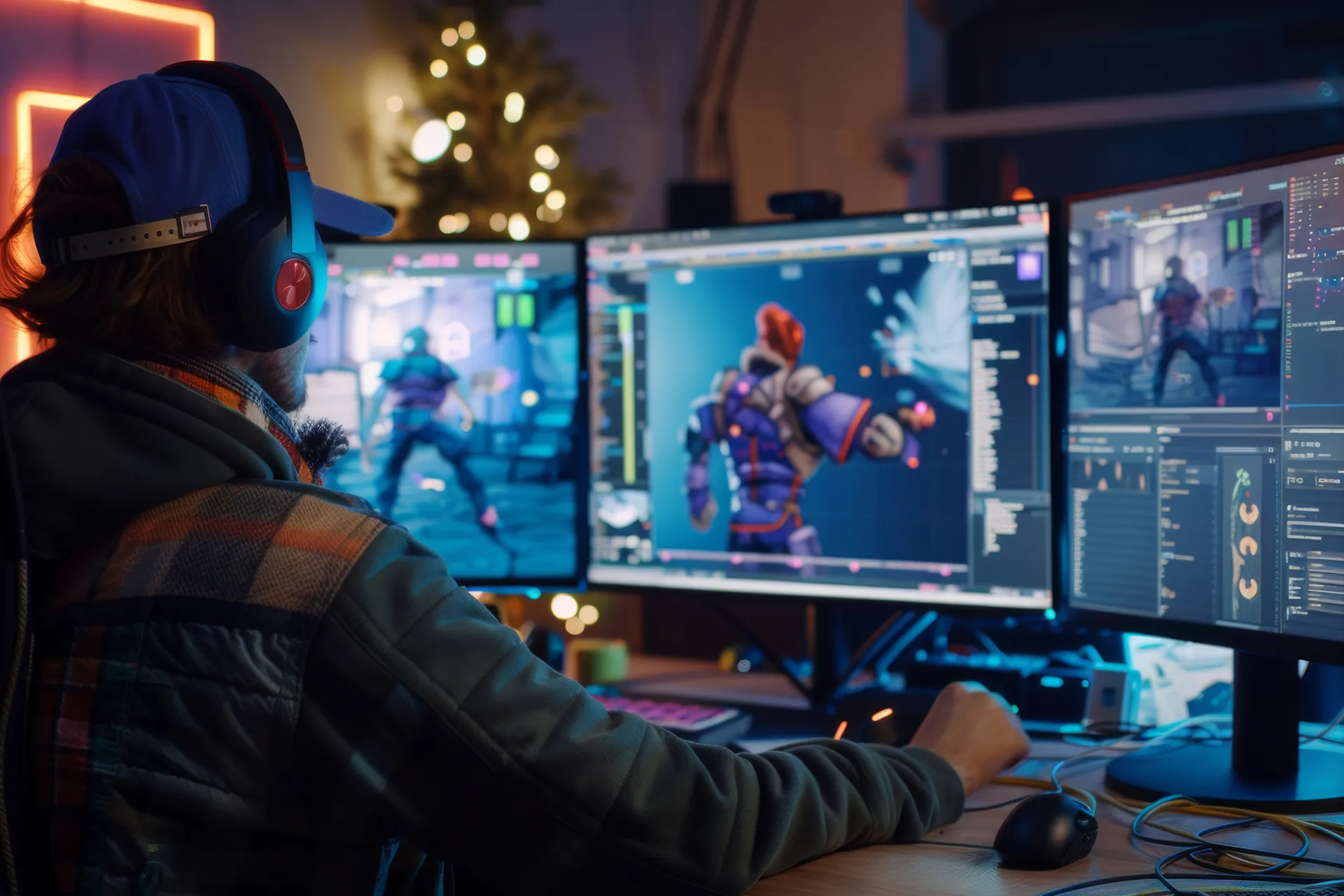
The rise of artificial intelligence (AI) in the gaming industry is sparking a heated debate: Will it democratize game creation, or decimate creative jobs? As AI tools become more sophisticated, developers are grappling with the implications of this technological shift.
The core concern revolves around automation. Reports indicate a significant number of developers fear job displacement as AI-powered tools can generate concept art and content in seconds at near-zero cost. Major companies have already begun scaling back concept art and side content departments, raising anxieties about widespread unemployment and the devaluation of human creativity.
Critics caution against the potential for homogenized content. They argue AI, by its nature, is a statistical engine that recycles existing data, leading to a lack of originality and the unique human touch that defines exceptional games. The fear is that games will become formulaic, lacking the innovative spark that comes from breaking rules rather than following statistical patterns.
Another major challenge is the issue of intellectual property rights. Current AI models are trained on vast datasets of art and code created by humans over decades, often without their consent or compensation. This raises ethical questions about the fairness of AI competing with artists whose work has contributed to its development.
This situation has created a divide between developers and management. Management often views AI as a means to cut administrative costs and increase profits, while creators feel their intellectual rights are being violated to build tools that will ultimately replace them.
On the other hand, AI offers the potential to democratize game production by breaking budget constraints. Tools like procedural generation, powered by machine learning, allow independent developers to create vast, detailed worlds that would previously have required years of manual labor.
AI is also making inroads into dynamic storytelling. Generative dialogue engines enable non-player characters (NPCs) to interact with players in real-time and unpredictably, moving beyond pre-written and repetitive dialogues. This innovation enhances immersion, transforming games from linear paths into living, breathing experiences.
Experts suggest the key to success lies in a harmonious hybrid model. AI can handle tedious and routine tasks like debugging or texture coloring, while creative leadership and philosophical decisions remain in the hands of humans.
Ultimately, AI is not just a tool but a partner. The industry may be facing a redefinition of creativity, where developers transition from executors to creative supervisors.
Observers emphasize that unions and companies must enact laws to protect intellectual property and prevent this technology from becoming a tool for profit maximization at the expense of human talent. Games are, after all, a form of art, and art needs a heart that feels, not just a processor that calculates.