 Milan-Cortina 2026 Olympic Winter Games: freestyle skiing women's freeski slopestyle qualification
Orange Jordan Sponsors Al Hussein Technical University’s "Leadathon"
The CEO of Orange Jordan Visits Yarmouk University President to Strengthen the Strategic Partnership
*Orange Jordan Showcases Fabrication Lab Innovations at the Makers’ Forum
3 Winners at Orange Summer Challenge 2024 Join the “Social Innovation” Journey Fostering "Tech4Impact”
Estarta Named Cisco Systems' Distinguished Supplier of the Year 2024
Milan-Cortina 2026 Olympic Winter Games: freestyle skiing women's freeski slopestyle qualification
Orange Jordan Sponsors Al Hussein Technical University’s "Leadathon"
The CEO of Orange Jordan Visits Yarmouk University President to Strengthen the Strategic Partnership
*Orange Jordan Showcases Fabrication Lab Innovations at the Makers’ Forum
3 Winners at Orange Summer Challenge 2024 Join the “Social Innovation” Journey Fostering "Tech4Impact”
Estarta Named Cisco Systems' Distinguished Supplier of the Year 2024
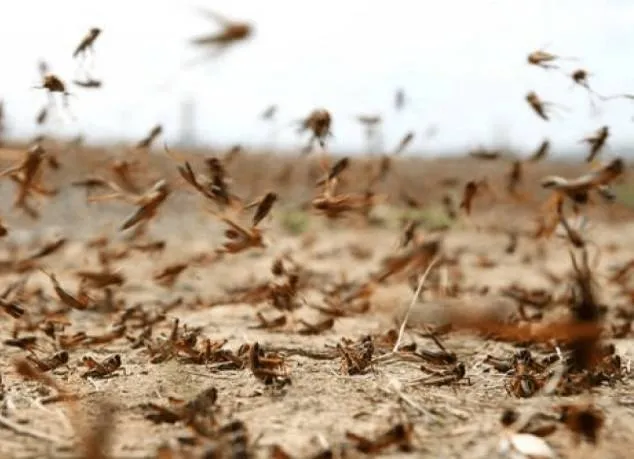
Algeria has initiated an urgent plan to counter a potential locust invasion in its southern regions, prompted by concerning locust swarm movements in southern Morocco and Mauritania.
The Algerian government is reinforcing its preventative measures to safeguard agricultural areas, particularly in the southwest, following alerts from the Food and Agriculture Organization of the United Nations (FAO). A ministerial meeting was convened to address the threat of desert locust invasion, emphasizing a state of high regional alert.
The meeting addressed the readiness of the preemptive action plan designed to contain locust spread in several southern-western provinces, according to the Prime Minister's office. It stressed the necessity for continuous assessment of the risks and evolution of desert locust proliferation in the region, in line with updates from the FAO, and leveraging national satellite capabilities.
Presentations were made during the meeting regarding the preparedness of field action plans, which had proven effective in the past. The readiness of vigilance and monitoring systems was enhanced in southern border provinces, forming the primary defense line. Ground and air intervention resources, especially those belonging to the Ministry of National Defense, were also reinforced.
The national response relies on an early warning system supported by spatial data provided by the Algerian Space Agency. Processing these images helps identify desert areas with temporary vegetation growth, creating suitable environments for locust breeding and aggregation.
Sector officials affirmed the readiness of local action plans, previously tested in prior campaigns. The field network in southwestern provinces near the borders with Morocco and Mauritania has been strengthened, serving as the first line of defense against locust swarms advancing towards northern agricultural areas.
The government plan includes reactivating the army's resources, keeping air units on standby for extensive spraying operations upon reaching specific intervention levels. This support complements field teams from the National Institute for Plant Protection, equipped to monitor larvae and isolated individuals in high-risk areas.
The plan encompasses 30 field exploration teams and 50 mobile processing units to cover identified areas. Helicopters from the Ministry of Defense and drones are mobilized to monitor locust movements in vulnerable provinces.
According to the FAO, winged locust groups and small swarms have been observed in Mauritania and nearby desert regions. Winds could carry these groups towards Algeria's Tindouf and Bechar provinces. Local rainfall expected in April and May could create favorable conditions for rapid breeding in southern Algeria during the spring, experts predict.
The FAO issued an alert regarding suspicious movements of desert locust swarms coming from Mauritania towards the Moroccan border. A report indicated that swarms threatened to invade green spaces in the kingdom's southern regions, exploiting their rapid movement and favorable breeding conditions. It emphasized that delaying proactive intervention could jeopardize regional food security, urging heightened aerial and ground surveillance and coordinated cross-border efforts to contain this transcontinental pest.
To avoid a locust plague similar to the one Algeria experienced in the early 2000s, which caused significant agricultural losses and financial costs, authorities have adopted a proactive approach. The current plan covers 14 southern provinces, focusing on intervening at the larval stage to eliminate hotspots before aggressive swarms form.
A senior Ministry of Agriculture official stated that the government has been mobilizing significant resources to combat desert locusts for years, deploying capabilities to counter locust movements from neighboring countries through preventative measures to maintain food security. The ministry continuously provides the necessary resources to the National Institute for Plant Protection to combat this destructive insect, including treating thousands of hectares annually in southern regions.
Locust swarms migrate from neighboring countries towards Algeria, both to the far south and southeast. Since the initial swarms were detected in border province, field teams have been assigned for treatment in collaboration with the Ministry of National Defense, before the phenomenon spread to border provinces.
Authorities have stockpiled large quantities of pesticides, periodically verifying their effectiveness for use when needed. Efforts are being intensified and coordinated with various stakeholders to prevent and combat this insect, protecting national agricultural resources and food security. Tunisia was also supplied with substantial quantities of pesticides to combat locusts that invaded southern regions of the country.