 Milan-Cortina 2026 Olympic Winter Games: freestyle skiing women's freeski slopestyle qualification
Orange Jordan Sponsors Al Hussein Technical University’s "Leadathon"
The CEO of Orange Jordan Visits Yarmouk University President to Strengthen the Strategic Partnership
*Orange Jordan Showcases Fabrication Lab Innovations at the Makers’ Forum
3 Winners at Orange Summer Challenge 2024 Join the “Social Innovation” Journey Fostering "Tech4Impact”
Estarta Named Cisco Systems' Distinguished Supplier of the Year 2024
Milan-Cortina 2026 Olympic Winter Games: freestyle skiing women's freeski slopestyle qualification
Orange Jordan Sponsors Al Hussein Technical University’s "Leadathon"
The CEO of Orange Jordan Visits Yarmouk University President to Strengthen the Strategic Partnership
*Orange Jordan Showcases Fabrication Lab Innovations at the Makers’ Forum
3 Winners at Orange Summer Challenge 2024 Join the “Social Innovation” Journey Fostering "Tech4Impact”
Estarta Named Cisco Systems' Distinguished Supplier of the Year 2024
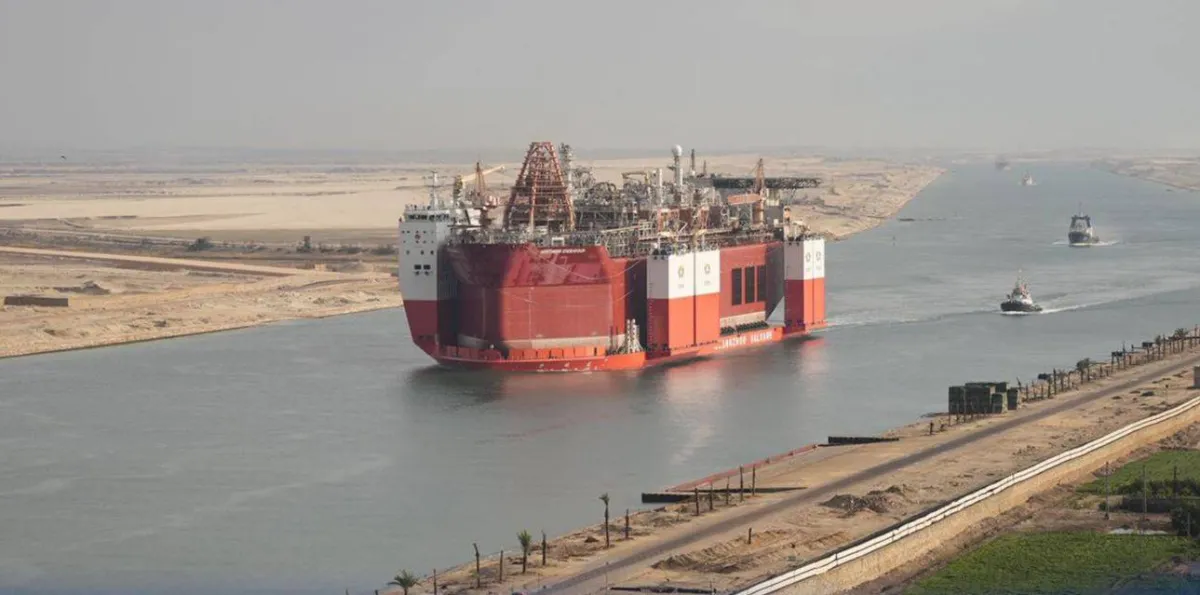
Egypt is bracing for potential economic repercussions stemming from a prolonged regional conflict, with concerns mounting over the impact on Suez Canal revenues. The vital waterway, already struggling to recover from the fallout of the conflict in Gaza, faces renewed threats as tensions escalate.
President Abdel Fattah al-Sisi has directed the government to study all possible scenarios and prepare for potential disruptions. During a meeting in Cairo with World Bank Group President Ajay Banga, Sisi warned of the far-reaching consequences of escalating regional tensions on the stability and economies of the region.
Sisi highlighted the potential impact on energy prices, maritime navigation in the Red Sea, and the overall economic stability of the region. He noted that Egypt has already suffered a loss of approximately $10 billion in Suez Canal revenue due to the conflict in Gaza.
According to a statement from the Egyptian presidency, Sisi also pointed out the economic strain caused by hosting approximately 10.5 million foreigners who have sought refuge in Egypt due to conflicts in their home countries. These individuals receive the same services as Egyptian citizens without any corresponding financial support to Egypt.
These warnings follow a speech Sisi delivered at an annual iftar banquet hosted by the armed forces, where he expressed concerns about the potential impact of the conflict and the closure of the Strait of Hormuz on the Suez Canal. He acknowledged the financial losses incurred by the canal and the disruption to navigation since the start of the Gaza conflict.
Sisi cautioned that a closure of the Strait of Hormuz would affect oil flows and prices, emphasizing the need for the government to prepare for all possible scenarios. While reassuring the public that necessary precautions are being taken, he acknowledged the uncertainty surrounding the duration of the crisis.
The Egyptian president also reflected on the challenges faced by the country since 2020, including the COVID-19 pandemic, the war in Ukraine, the conflict in Gaza, and now the regional conflict. He stressed the importance of unity and resilience in the face of circumstances beyond their control.
Several major shipping companies, including Maersk, Hapag-Lloyd, and CMA CGM, have already announced plans to divert their vessels around Africa to avoid the Suez Canal and the Bab el-Mandeb Strait, following recent events and escalating tensions.
Rakha Ahmed Hassan, former Assistant Foreign Minister, anticipates significant repercussions for the global oil market and the Suez Canal, with the severity increasing with the duration of the conflict. He emphasized the need for de-escalation and diplomatic efforts to end the conflict, warning of dire consequences for all parties involved.
Since late November 2023, numerous global shipping companies have rerouted their vessels to avoid the Red Sea due to attacks by the Yemeni Houthi group targeting ships transiting the vital waterway in response to the Israeli offensive in the Gaza Strip. This has further compounded the challenges faced by the Suez Canal.
Egypt has repeatedly highlighted the impact of regional tensions on Suez Canal traffic. In 2024, canal revenues plummeted by 61%, reaching $3.9 billion compared to $10.2 billion in 2023. The head of the Suez Canal Authority, Osama Rabie, estimated the canal's losses at approximately $12 billion for 2024 and 2025.
Essam El-Din Badawi, Secretary-General of the Arab Sea Ports Federation, noted that the Suez Canal has not yet recovered from the repercussions of the Gaza conflict, despite efforts by the Suez Canal Authority to mitigate the impact of reduced traffic.
He stated that the canal has implemented alternative activities and services to offset the impact of major shipping companies avoiding the canal. While efforts to restore normal operations were showing gradual progress, the regional conflict has disrupted this recovery, underscoring that the only solution is to end the conflict.
Economic expert Dr. Mustafa Badra warned that the Suez Canal faces a new wave of losses if the current conflict continues, predicting a rise in global oil prices and disruptions to fuel supplies. He acknowledged that Egypt has sufficient reserves and has taken measures to diversify fuel sources and stimulate the canal's logistics zone, which may help mitigate the crisis in the short term. However, he cautioned against the dangers of prolonged conflict on Egypt's economic stability.