 Milan-Cortina 2026 Olympic Winter Games: freestyle skiing women's freeski slopestyle qualification
Orange Jordan Sponsors Al Hussein Technical University’s "Leadathon"
The CEO of Orange Jordan Visits Yarmouk University President to Strengthen the Strategic Partnership
*Orange Jordan Showcases Fabrication Lab Innovations at the Makers’ Forum
3 Winners at Orange Summer Challenge 2024 Join the “Social Innovation” Journey Fostering "Tech4Impact”
Estarta Named Cisco Systems' Distinguished Supplier of the Year 2024
Milan-Cortina 2026 Olympic Winter Games: freestyle skiing women's freeski slopestyle qualification
Orange Jordan Sponsors Al Hussein Technical University’s "Leadathon"
The CEO of Orange Jordan Visits Yarmouk University President to Strengthen the Strategic Partnership
*Orange Jordan Showcases Fabrication Lab Innovations at the Makers’ Forum
3 Winners at Orange Summer Challenge 2024 Join the “Social Innovation” Journey Fostering "Tech4Impact”
Estarta Named Cisco Systems' Distinguished Supplier of the Year 2024
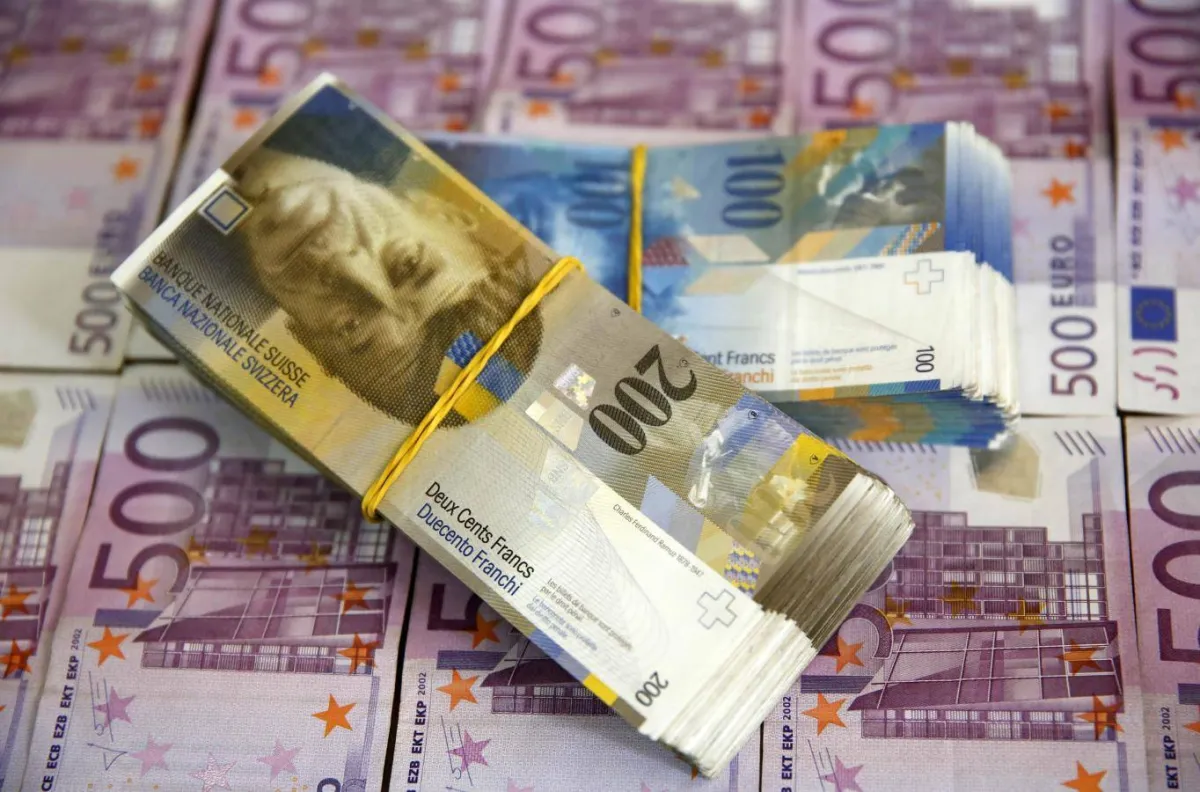
Heightened geopolitical tensions in the Middle East sent ripples through currency markets, triggering a surge in the Swiss franc and increased volatility across various currencies, analysts said Monday.
The Swiss franc climbed to its highest level against the euro in over a decade as investors sought safe-haven assets amid escalating concerns about a widening conflict in the Middle East. This move reflected a broader flight to safety, impacting multiple currency pairs.
The euro fell to 0.9037 francs in early trading, marking its lowest point since the 2015 Swiss franc shock when the Swiss National Bank removed the currency's peg to the euro. The Swiss franc also rose as much as 0.4% to 0.7661 against the dollar.
The Japanese yen initially weakened 0.2% to 156.235 per dollar before recovering, as traders assessed the impact of rising energy prices on Japan's oil import bill and the broader implications of the conflict on interest rate policy.
"We had seen a low probability of a rate hike in March or April, but with the rise in uncertainty relating to developments in the Middle East, the Bank of Japan is likely to take a more cautious approach, reducing the chances of any near-term rate hike," analysts at Morgan Stanley MUFG wrote in a research note.
The Australian dollar, sensitive to risk appetite, initially fell as much as 1.2% before paring losses to 0.3%, trading at $0.7096. The New Zealand dollar also declined 0.2% to $0.5979, after an earlier drop of 0.8%.
The offshore Chinese yuan weakened 0.1% to 6.868 per dollar after the People's Bank of China lowered the daily fixing rate for the currency in the domestic market to curb its appreciation against the dollar. China is a major energy importer and the largest buyer of Iranian oil.
Currencies of energy-exporting nations, such as Canada and Norway, remained stable during Asian morning trade.
"No one knows how long this situation will last, how high oil prices might rise, or how long the Strait of Hormuz might remain closed," said Jason Wong, a strategist at Bank of New Zealand in Wellington. "The initial reaction is to reduce risk slightly and deal with developments day by day."
The euro fell 0.3% to $1.1784, and the British pound also declined by a similar margin to $1.3451 amid concerns about potential disruptions to energy supplies to Europe.
"The euro faces a complex environment," Wells Fargo analysts noted, adding that with the natural gas restocking season approaching in Europe, the EU is entering this phase with historically low storage levels, implying a greater need to purchase energy in a potentially high-price environment.