 Milan-Cortina 2026 Olympic Winter Games: freestyle skiing women's freeski slopestyle qualification
Orange Jordan Sponsors Al Hussein Technical University’s "Leadathon"
The CEO of Orange Jordan Visits Yarmouk University President to Strengthen the Strategic Partnership
*Orange Jordan Showcases Fabrication Lab Innovations at the Makers’ Forum
3 Winners at Orange Summer Challenge 2024 Join the “Social Innovation” Journey Fostering "Tech4Impact”
Estarta Named Cisco Systems' Distinguished Supplier of the Year 2024
Milan-Cortina 2026 Olympic Winter Games: freestyle skiing women's freeski slopestyle qualification
Orange Jordan Sponsors Al Hussein Technical University’s "Leadathon"
The CEO of Orange Jordan Visits Yarmouk University President to Strengthen the Strategic Partnership
*Orange Jordan Showcases Fabrication Lab Innovations at the Makers’ Forum
3 Winners at Orange Summer Challenge 2024 Join the “Social Innovation” Journey Fostering "Tech4Impact”
Estarta Named Cisco Systems' Distinguished Supplier of the Year 2024
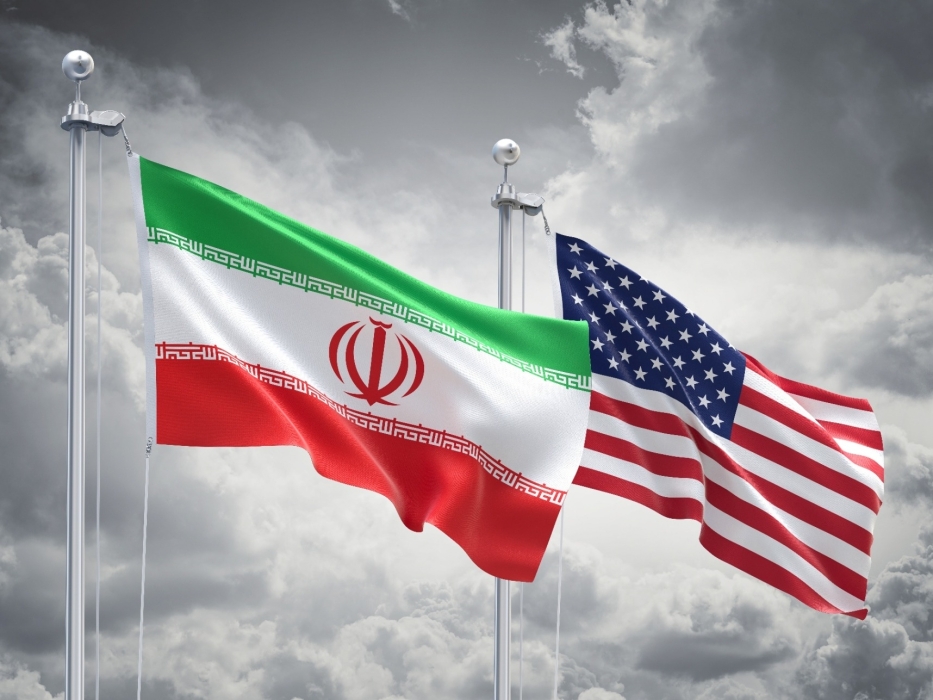
U.S. and Israeli forces have broadened their aerial campaign in Iran, hitting military and nuclear facilities across the country, while Iranian forces launched ballistic missiles and drones at Israel and other Middle Eastern locations. U.S. President Donald Trump has indicated that sending ground troops to Iran remains a possibility, saying it may be necessary.
The escalating conflict has raised concerns about the future leadership of Iran and the potential for a prolonged war. Trump stated that a “big surge” of attacks has yet to occur and claimed the U.S. is unsure who will succeed the late Supreme Leader Ali Khamenei.
Trump, in a phone interview, asserted that the U.S. military is “hitting Iran very hard” and that operations are “going well,” but cautioned that the “big surge hasn’t started yet.” He advised Iranians to stay indoors, warning that the situation is “unsafe” and will become “less safe” as attacks intensify.
Trump characterized Iran's attacks on regional countries as “the biggest surprise,” arguing that those nations “had no reason to be involved.” He reiterated that Iran's nuclear threat has been a “dark cloud” over the region for years and emphasized that “Iran can’t be allowed to have a nuclear weapon.”
According to Trump, initial strikes resulted in the deaths of “49 leaders,” calling the operation a “stunning blow.” He added, “We don’t know who’s leading the country now.” Trump stated that Washington attempted to negotiate with Tehran but “couldn’t make a deal,” citing Iran's refusal to end uranium enrichment. He suggested that military action is the only way to deal with Iran, criticizing the Obama-era nuclear deal as a “path to the bomb.”
General Dan Keane, Chairman of the U.S. Joint Chiefs of Staff, acknowledged that achieving military objectives in Iran will take time and predicted further American casualties. The Pentagon is continuing to deploy additional forces to the Middle East, even amidst the current military buildup. The U.S. Central Command reported that B-2 stealth bombers struck Iranian ballistic missile facilities with 2,000-pound bombs.
Trump stated that nine Iranian warships were sunk and the Iranian navy headquarters was “largely destroyed.” The U.S. military said that Kuwaiti air defenses mistakenly shot down three U.S. F-15E fighter jets during an Iranian attack. Keane told reporters, “This is not an overnight operation. The military objectives that Central Command and the joint forces have been tasked with will take some time to accomplish, and at times the missions will be difficult.”
Defense Secretary Pete Hegseth stated that Washington has not sent any troops inside Iran as part of the joint offensive with Israel but affirmed readiness to escalate the conflict, suggesting the war could last about six weeks. He declined to provide a timeline for the U.S.-Israeli campaign, stating that the duration of military operations is up to President Trump. Hegseth said, “The strikes by U.S. forces have established localized air superiority. That air superiority will not only enhance the protection of our forces, but it will also enable them to continue to operate over Iran.”
Hegseth clarified that military operations against Iran will not lead to “endless war,” emphasizing that the goal is to destroy Tehran's missiles, navy, and other security infrastructure. “This is not Iraq. This is not endless,” he asserted.
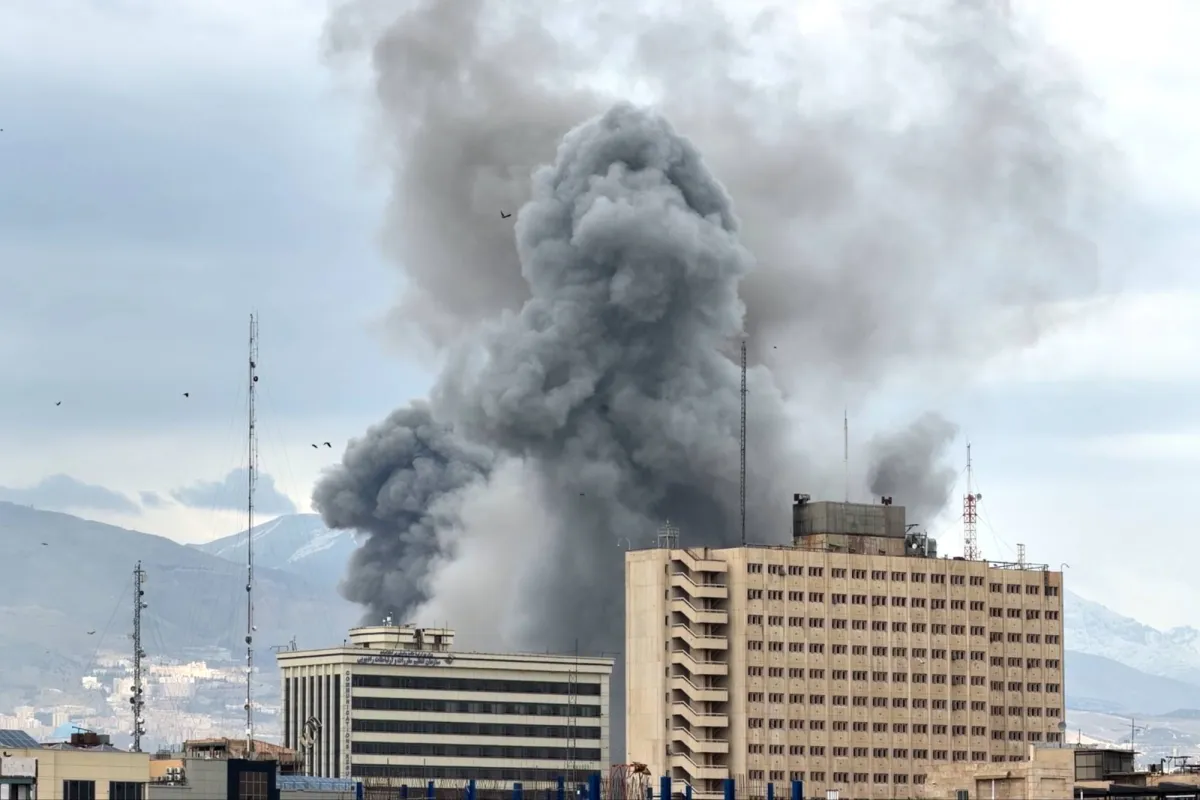
Israel launched new airstrikes targeting Tehran, expanding its military campaign. Iranian state media reported that a new wave of missiles was launched from central Iran toward “enemy positions.” The U.S. military reported that American aircraft and warships have struck over 1,000 Iranian targets since major combat operations began.
Explosions were reported in various parts of Tehran. The U.S. announced the destruction of the Revolutionary Guard headquarters in Tehran. Videos showed extensive damage to the Iranian police headquarters.
Israeli military spokesman Efi Defrin said Israel is expanding its campaign against Iran and will increase strikes against “core elements of the regime.” The strikes within Tehran targeted a wide geographical area, from the north to the east, center, and west of the capital. Strikes appeared to disrupt Iranian state television broadcasts. Iranian media reported that hospitals and residential areas were hit, but no details on material losses were provided.
Targets outside Tehran included Karaj to the west, Tabriz and Urumiyeh in the northwest, Hamadan and Nahavand in the west, Shiraz in the south, and Bandar Abbas on the southern coast. Strikes also hit Chabahar in the southeast and Zahedan, which houses military facilities. Explosions were reported on Kish Island in the Gulf. In the southwest, Ahvaz, Abadan, Ma’shur, and Dezful were struck.
Iran launched a new barrage of missiles toward Israel, according to the Israeli military. Reports indicated developments in Haifa and Beersheba. The Revolutionary Guard stated that the fate of the Israeli Prime Minister is “shrouded in ambiguity” following missile attacks targeting sensitive sites in Israel.
The Revolutionary Guard named its retaliatory operations “True Promise 4,” stating that the tenth wave of the operation opened “wide gates of fire” on Israeli territory. The statement mentioned targeting government complexes in Tel Aviv, military and security centers in Haifa, and an attack on East Jerusalem.
The statement advised “residents of Israel to stay away from military bases, security and government centers and leave the country immediately.” It said that the office of the Israeli Prime Minister and the residence of the Air Force commander were hit with “guided and surprise” Khaibar missiles. The statement claimed that Iranian forces attacked 60 strategic targets and 500 American and Israeli military targets, launching over 700 drones and hundreds of missiles.
The Iranian Army said it carried out missile attacks on U.S. bases in the region, targeting the Ali Al Salem base in Kuwait and military vessels in the northern Indian Ocean, launching 15 cruise missiles. The Iranian military announced that air force fighters were scrambled to secure the capital and other cities.
A video circulating online showed a Revolutionary Guard missile malfunctioning shortly after launch and crashing. The missile was reportedly launched from a platform on the road between Hamadan and Kermanshah.
A senior White House official told Reuters that Trump will speak with the potential new leadership of Iran at some point, but the military campaign will continue for now. Omani Foreign Minister Badr al-Busaidi said, “The door for diplomacy remains open,” noting progress in talks in Geneva. He added, “I still believe in the ability of diplomacy to resolve this conflict. The sooner talks are resumed, the better for everyone.”
However, Iranian National Security Council Secretary Ali Larijani denied reports of Omani mediation and ruled out negotiations with America. Larijani accused Trump of dragging the region into an unnecessary war, arguing that the war only serves the interests of Israeli Prime Minister Benjamin Netanyahu.
President Masoud Pezeshkian stated that he has instructed all ministers and heads of executive bodies to continue providing services to citizens until the end of the war. He announced the appointment of Revolutionary Guard officer Majid Ibn al-Reza as acting Minister of Defense, following the death of his predecessor. Pezeshkian has participated in meetings of the transitional leadership council created after the death of the Supreme Leader.
Council member Ali Reza Arafi called on the Iranian people to unite and sought to project strength, stating, “We are now in a fateful situation that can be successfully overcome with the help of the people.” He assured that all state institutions are operating at full capacity. The council will continue to hold regular meetings to manage the affairs of the country until a new leader is selected.
Iranian Foreign Minister Abbas Araghchi sent a letter to the UN Secretary-General and foreign ministers, outlining Tehran's position on the military operations. Araghchi accused Washington and Israel of committing “war crimes and crimes against humanity,” stating that attacks targeted civilian facilities, including schools, hospitals, and residential areas, resulting in civilian casualties. He called on the UN to take immediate action to stop the attacks and hold those responsible accountable.
The Iranian Red Crescent Society reported that the U.S.-Israeli air campaign has killed at least 555 people so far, with 131 districts attacked. State news agency IRNA reported that airstrikes killed three people in Sanandaj. The Revolutionary Guard said that three of its members were killed in a raid in Lorestan province. An official in East Azerbaijan province stated that the death toll in the province has risen to 38, with 212 injured.
Mansoura Khojasteh Bagherzadeh, the wife of the late Supreme Leader, died from injuries sustained in the attacks. Reports indicated that she had been in a coma since being injured. At least nine hospitals in Iran have sustained “serious damage” from the U.S.-Israeli bombardment. A member of parliament said that five people were killed in an attack targeting Iran Street in Tehran, rendering residential buildings uninhabitable.