 Milan-Cortina 2026 Olympic Winter Games: freestyle skiing women's freeski slopestyle qualification
Orange Jordan Sponsors Al Hussein Technical University’s "Leadathon"
The CEO of Orange Jordan Visits Yarmouk University President to Strengthen the Strategic Partnership
*Orange Jordan Showcases Fabrication Lab Innovations at the Makers’ Forum
3 Winners at Orange Summer Challenge 2024 Join the “Social Innovation” Journey Fostering "Tech4Impact”
Estarta Named Cisco Systems' Distinguished Supplier of the Year 2024
Milan-Cortina 2026 Olympic Winter Games: freestyle skiing women's freeski slopestyle qualification
Orange Jordan Sponsors Al Hussein Technical University’s "Leadathon"
The CEO of Orange Jordan Visits Yarmouk University President to Strengthen the Strategic Partnership
*Orange Jordan Showcases Fabrication Lab Innovations at the Makers’ Forum
3 Winners at Orange Summer Challenge 2024 Join the “Social Innovation” Journey Fostering "Tech4Impact”
Estarta Named Cisco Systems' Distinguished Supplier of the Year 2024
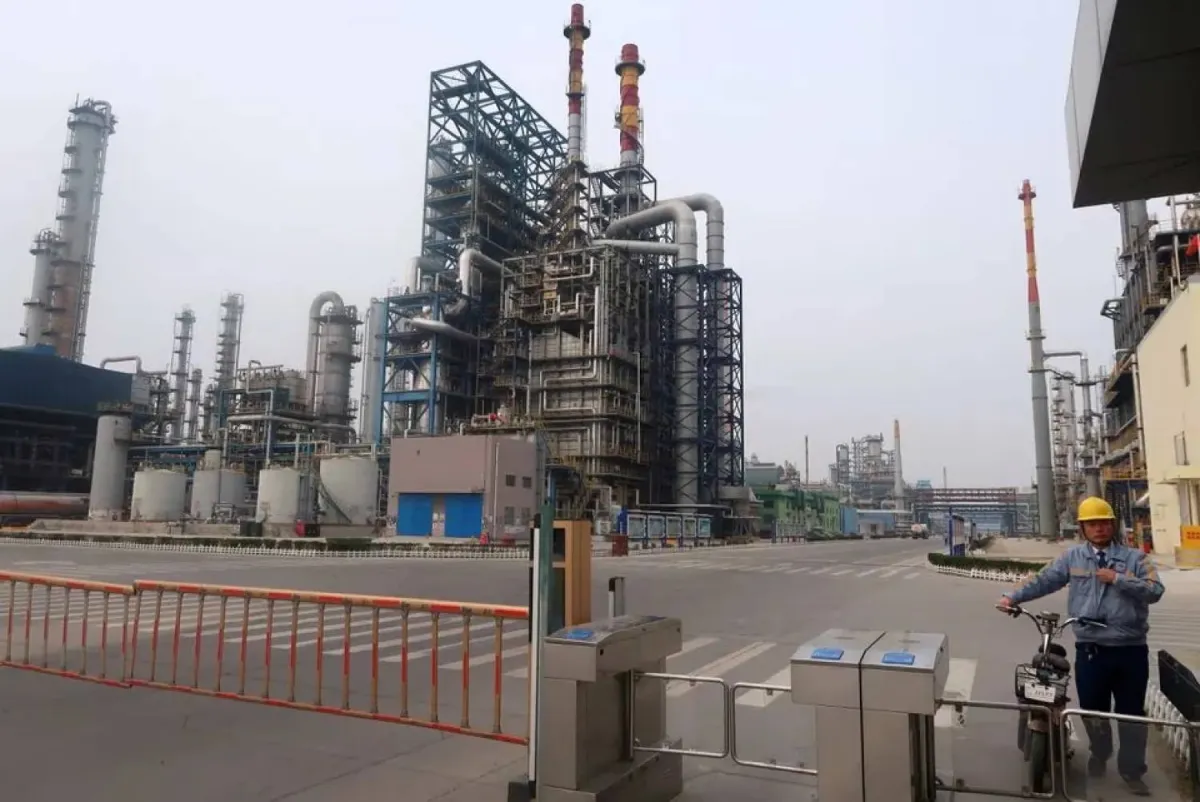
Chinese oil refineries are unlikely to face significant disruptions from the ongoing tensions involving Iran, supported by record shipments of Iranian and Russian crude oil, and substantial government stockpiles, according to traders.
Despite market anxieties triggered by recent attacks and counterattacks involving Iran and its allies, ample supplies and diversified sourcing strategies have shielded China's refining sector from immediate fallout.
The discounts on Iranian crude, which had previously made it a highly profitable option, have narrowed as other sources, including Russia and Brazil, have gained prominence.
China, the world's largest oil importer, relies heavily on Iranian crude, particularly for its independent refineries, often referred to as "teapot refineries." These refineries have been key consumers of Iranian oil, which is sold at discounted rates due to U.S. sanctions that deter many other buyers.
Market speculation suggests that if the military campaign leads to the U.S. gaining control over Iranian oil exports, the Iranian supplies could potentially be removed from the sanctions list.
Imports of Iranian oil have accounted for 11.5% of China's total seaborne imports so far this year, closely followed by Russian oil imports at 10.5%, according to data from Kepler, a company specializing in tracking oil tankers.
Kepler estimated Iranian oil shipments in February at 2.15 million barrels per day, the highest level since July 2018, while Vortexa estimated the volume at 2 million barrels per day. Exporters in Iran reportedly expedited oil shipments in anticipation of potential conflict.
Imports of Russian oil by China are also expected to rise for the third consecutive month to a record high in February, driven by reduced purchases from India. Early deals for Russian ESPO blend shipments scheduled to arrive in April are being sold at substantial discounts.
According to Emma Li, a China analyst at Vortexa, the abundance of Russian and Iranian shipments means that China is unlikely to resort to the mainstream market in the near future.
Fueled by a stockpiling initiative launched by Beijing, China has accumulated approximately 900 million barrels in state-controlled inventories, equivalent to 78 days of imports, as estimated by Vortexa and traders.
Should sanctions on Iranian oil be lifted, Chinese independent refineries are expected to revert to their previous buying patterns, prioritizing Russian oil, along with shipments from Brazil and Canada, as well as domestic offshore production, according to traders.