 Milan-Cortina 2026 Olympic Winter Games: freestyle skiing women's freeski slopestyle qualification
Orange Jordan Sponsors Al Hussein Technical University’s "Leadathon"
The CEO of Orange Jordan Visits Yarmouk University President to Strengthen the Strategic Partnership
*Orange Jordan Showcases Fabrication Lab Innovations at the Makers’ Forum
3 Winners at Orange Summer Challenge 2024 Join the “Social Innovation” Journey Fostering "Tech4Impact”
Estarta Named Cisco Systems' Distinguished Supplier of the Year 2024
Milan-Cortina 2026 Olympic Winter Games: freestyle skiing women's freeski slopestyle qualification
Orange Jordan Sponsors Al Hussein Technical University’s "Leadathon"
The CEO of Orange Jordan Visits Yarmouk University President to Strengthen the Strategic Partnership
*Orange Jordan Showcases Fabrication Lab Innovations at the Makers’ Forum
3 Winners at Orange Summer Challenge 2024 Join the “Social Innovation” Journey Fostering "Tech4Impact”
Estarta Named Cisco Systems' Distinguished Supplier of the Year 2024
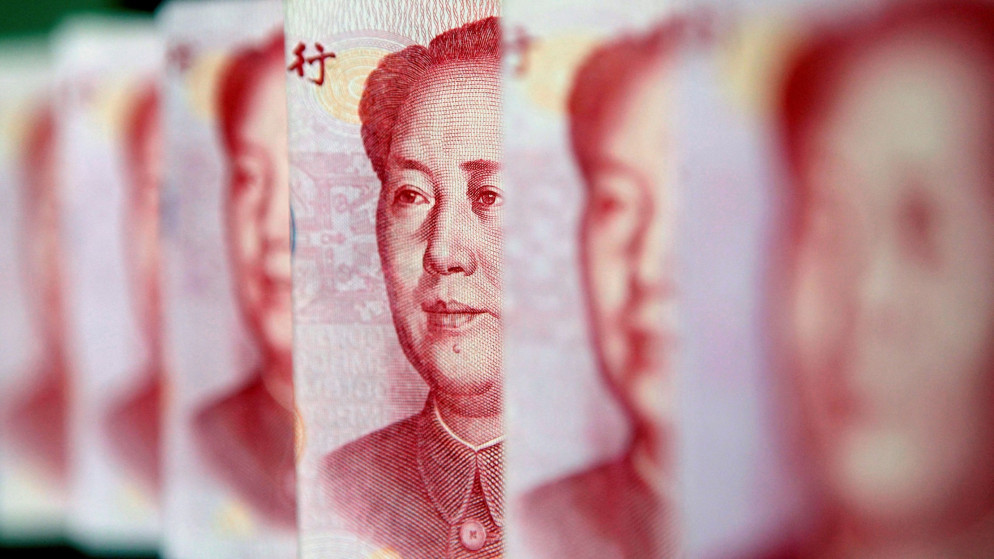
The People's Bank of China (PBOC) has taken measures to moderate the rapid appreciation of the yuan, while the Australian dollar is on track for another strong monthly gain, fueled by expectations of a more hawkish stance from the Reserve Bank of Australia (RBA).
The PBOC announced it would eliminate the reserve requirement for foreign exchange risk on some forward currency sales, a move seen as encouraging dollar purchases. This decision, coupled with a weaker-than-anticipated yuan fixing, led to a 0.2% decline in the onshore yuan to 6.8553 against the dollar, ending a 10-day winning streak. Despite this recent dip, the yuan remains up approximately 2% year-to-date, following a more than 4% increase in the previous year.
Analysts at Maybank noted that the PBOC's actions clearly signal a desire to slow the pace of the yuan's appreciation. Some observers suggest China's influence has grown, particularly after the U.S. Supreme Court's reversal of former President Donald Trump's tariffs. Recent gains in the yuan may reflect this shift.
Meanwhile, the Australian dollar rose 0.3% to $0.7127 and is poised for a monthly gain exceeding 2%. The Aussie has appreciated by over 6% since the start of the year, bolstered by a robust domestic economy that supports expectations of a tighter monetary policy from the RBA.
Currency movements have largely been driven by shifting interest rate expectations this month, as investors weigh geopolitical tensions and the U.S. Supreme Court's decision to overturn Trump-era tariffs.
OCBC currency analyst Sim Moh Siong stated that current pricing reflects the evolving macroeconomic landscape. He added that the focus has shifted from which central banks would cut interest rates to which ones would lead the rate hike cycle.
The Bank of Japan (BOJ) is also contemplating raising interest rates, but this has not significantly benefited the yen. Domestic politics complicate interest rate expectations, despite Governor Kazuo Ueda's indications of openness to near-term rate hikes. The yen rose 0.2% to 155.78 against the dollar in Asian trading but is down 0.45% for the week and 0.64% for the month.
The Japanese government recently nominated two academics known for their strong support of economic stimulus to the BOJ's board, signaling Prime Minister Sanae Takaichi's reluctance to raise interest rates.
Elsewhere, the British pound remained steady at $1.3494 and is on track to end a three-month streak of gains, with a 1.4% decline in February.
The dollar has risen 0.55% this month, supported by a more hawkish stance from the Federal Reserve. Several policymakers at the January meeting indicated their willingness to raise interest rates if inflation remains elevated. However, investors still anticipate two more rate cuts by the Fed this year.
Analysts suggest that the Supreme Court's decision on Trump's tariffs has also strengthened checks on presidential power, contributing to the dollar's rise. The euro remained largely unchanged at $1.1808, heading for a monthly loss of 0.35%.