 Milan-Cortina 2026 Olympic Winter Games: freestyle skiing women's freeski slopestyle qualification
Orange Jordan Sponsors Al Hussein Technical University’s "Leadathon"
The CEO of Orange Jordan Visits Yarmouk University President to Strengthen the Strategic Partnership
*Orange Jordan Showcases Fabrication Lab Innovations at the Makers’ Forum
3 Winners at Orange Summer Challenge 2024 Join the “Social Innovation” Journey Fostering "Tech4Impact”
Estarta Named Cisco Systems' Distinguished Supplier of the Year 2024
Milan-Cortina 2026 Olympic Winter Games: freestyle skiing women's freeski slopestyle qualification
Orange Jordan Sponsors Al Hussein Technical University’s "Leadathon"
The CEO of Orange Jordan Visits Yarmouk University President to Strengthen the Strategic Partnership
*Orange Jordan Showcases Fabrication Lab Innovations at the Makers’ Forum
3 Winners at Orange Summer Challenge 2024 Join the “Social Innovation” Journey Fostering "Tech4Impact”
Estarta Named Cisco Systems' Distinguished Supplier of the Year 2024
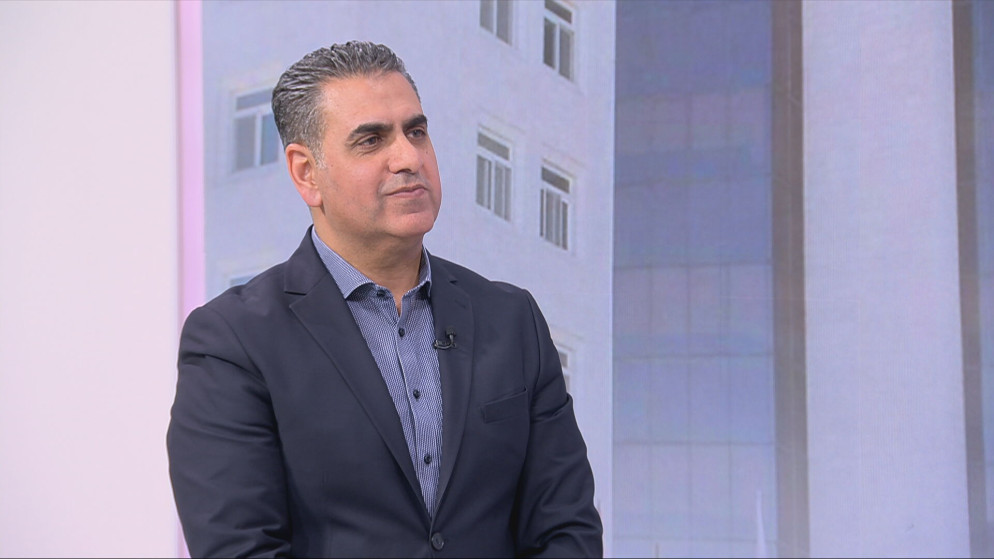
Jordan's proposed social security law amendments aim to strike a balance between the institution's financial sustainability and the rights of contributors, with gradual changes to minimize immediate impact, according to Mohammad Khreis, Director of Research and Studies at the Social Security Corporation.
Prime Minister Jaafar Hassan stated that the government has amended the draft social security law to ensure that it does not affect anyone eligible for early, mandatory, or optional retirement in the next four years.
The application of the law will commence gradually in 2030 and extend over the following ten years until 2040 for mandatory retirement for both men and women, meaning it will not be fully implemented until 14 years after its enactment if approved this year, specifically for mandatory retirement, Hassan said.
Khreis clarified that the gradual increase in the early retirement age, adding six months each year, will continue until 2047 for males to reach 30 years of service and until 2041 for females to reach 25 years of service. The duration of this gradual implementation is 21 years for males and 15 years for females.
According to Khreis, the elements of calculating the pension, whether for mandatory or early retirement, will not undergo any changes in the next four years. Individuals eligible for retirement in 2026 will be able to retire under the same rules currently in effect, which will remain available for the years 2027, 2028, and 2029 without any alteration to the calculation method.
The amendments will gradually introduce increases in the contribution periods and the mandatory retirement age starting in 2030. The current mandatory retirement age is 60 years for males and 55 years for females, with a gradual increase of six months each year, reaching 60 and a half years for males and 55 and a half years for females in 2030. The period required to meet these full conditions is 14 years.
The draft law also includes raising the minimum number of contributions required to receive a mandatory retirement pension from 180 to 240. This increase will be implemented gradually, with 186 contributions required in 2030 for a male reaching the mandatory retirement age of 60.5 years, and similarly for a female reaching the mandatory retirement age of 55.5 years.
Khreis explained that the elements of calculating the mandatory retirement pension are based on a formula that includes a benefit factor multiplied by the number of years of service or contributions, in the average contribution wage or the average wage subject to social security. The basic pension is supplemented by both the general increase and the dependency increase.
Increasing the number of contributions naturally leads to an increase in the pension value. Moving from the minimum of 180 contributions to 186 contributions will result in an increase in the pension. For example, a contributor with an average wage of 300 dinars will see their pension increase by approximately 2.2% with just six additional contributions.
Gradually reaching 240 contributions while completing the progression in the retirement age between 60 and 65 years will lead to an increase in the pension ranging from 25% to 28%, depending on the wage subject to deduction.
Increasing the required contribution period to obtain a retirement pension will benefit those who choose to continue working until the age of 65. The gradual implementation of these amendments will extend from 2030 to 2040 for mandatory retirement, ensuring the financial sustainability of social security without harming the rights of contributors and promoting fairness between generations.
Hassan clarified that for early and optional retirement, the application will also begin gradually after 2030, extending until 2047 for males and 2041 for females, meaning it will be fully implemented after 21 years for males and 15 years for females, regarding early and optional retirement.
Hassan also revealed that the amendments maintain the five-year or 60-contribution difference between women and men in early retirement, as it was and still is for mandatory retirement.
The Social Security Corporation published the results of the eleventh actuarial study on its website, which is conducted every three years according to the provisions of Article (18) of the Social Security Law.
The study results indicated that the insurance funds managed by the corporation are in a very good and sustainable financial position, especially work injury, maternity, and unemployment insurance, reflecting the strength of the corporation's financial position and its ability to meet all its obligations towards contributors and retirees, relying on insurance revenues, investment returns, and assets, while emphasizing the importance of enhancing financial stability to ensure the ability to cover future obligations without the need to use assets or investment returns.
The corporation indicated that the actuarial study showed that the first break-even point will be in 2030, where direct insurance revenues from contributions equal insurance expenses. The temporal distance of the first break-even point is a positive indicator of better stability and sustainability of the corporation's financial position.
The second break-even point is expected in 2038, where insurance revenues and annual investment returns become insufficient to cover the required insurance expenses if the return on investment does not improve.