 Milan-Cortina 2026 Olympic Winter Games: freestyle skiing women's freeski slopestyle qualification
Orange Jordan Sponsors Al Hussein Technical University’s "Leadathon"
The CEO of Orange Jordan Visits Yarmouk University President to Strengthen the Strategic Partnership
*Orange Jordan Showcases Fabrication Lab Innovations at the Makers’ Forum
3 Winners at Orange Summer Challenge 2024 Join the “Social Innovation” Journey Fostering "Tech4Impact”
Estarta Named Cisco Systems' Distinguished Supplier of the Year 2024
Milan-Cortina 2026 Olympic Winter Games: freestyle skiing women's freeski slopestyle qualification
Orange Jordan Sponsors Al Hussein Technical University’s "Leadathon"
The CEO of Orange Jordan Visits Yarmouk University President to Strengthen the Strategic Partnership
*Orange Jordan Showcases Fabrication Lab Innovations at the Makers’ Forum
3 Winners at Orange Summer Challenge 2024 Join the “Social Innovation” Journey Fostering "Tech4Impact”
Estarta Named Cisco Systems' Distinguished Supplier of the Year 2024
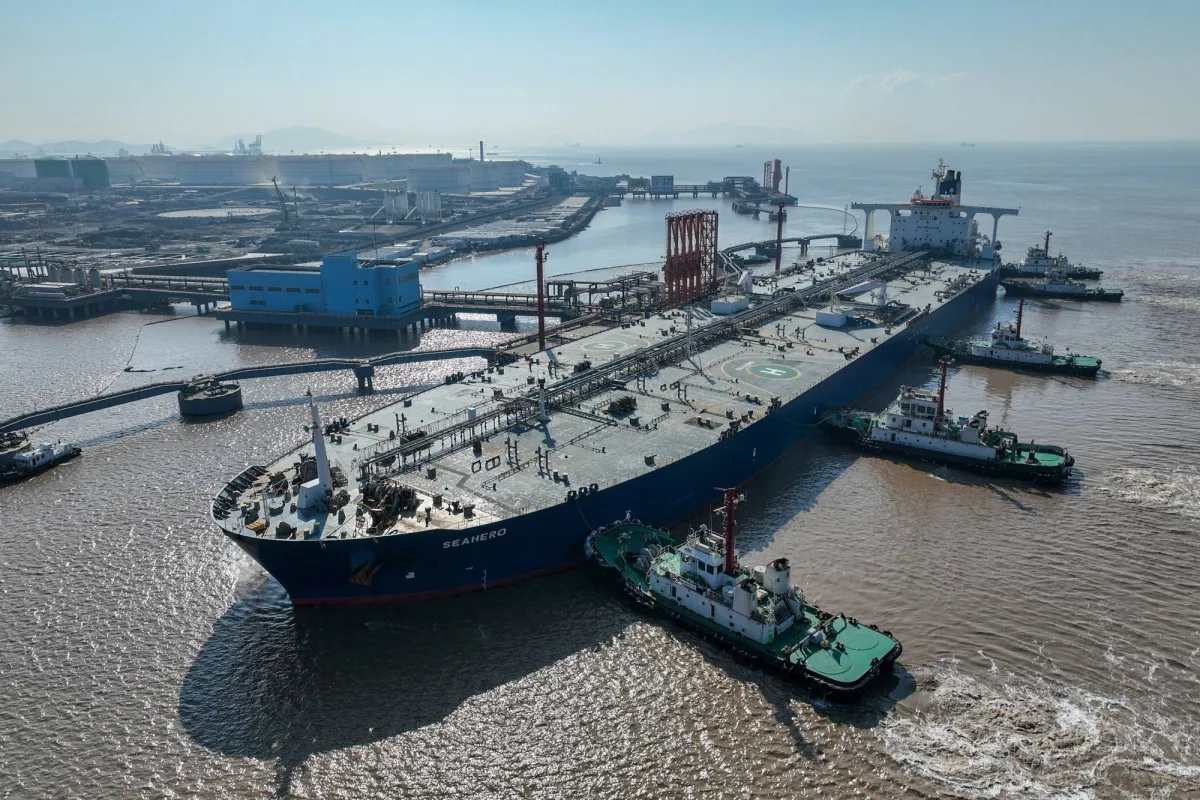
Global oil markets are on high alert as geopolitical tensions in the Middle East escalate, triggering concerns about potential supply disruptions and price surges. Recent events have amplified anxieties surrounding the stability of oil production and transit in the region, a critical hub for global energy supply.
The potential for military conflict involving Iran, a significant OPEC producer, has introduced a new layer of uncertainty. Market analysts are closely monitoring the situation, with some predicting a sharp rise in oil prices if the conflict intensifies and disrupts Iranian oil exports, which currently stand at 1.3 to 1.5 million barrels per day, with a majority heading to China.
Barclays Bank has projected that Brent crude could surge to $80 per barrel in the event of a major supply disruption. The bank cautioned that even a disruption of one million barrels per day would significantly tighten the market and erase the anticipated supply surplus.
Adding to the unease, several major oil and trading companies have reportedly suspended shipments of crude oil and fuel through the Strait of Hormuz, a vital waterway connecting the Persian Gulf to the Gulf of Oman and the Arabian Sea. The strait is a critical chokepoint, with approximately one-fifth of the world's total oil consumption passing through it daily. Data from Vortexa indicates that over 20 million barrels of crude oil, condensates, and fuels transit the Strait of Hormuz on an average day.
The Strait's narrow width, just 33 kilometers at its narrowest point, makes it particularly vulnerable to disruptions. Saudi Arabia, Iran, the United Arab Emirates, Kuwait, and Iraq, all major OPEC producers, rely heavily on the Strait of Hormuz to export their crude oil, primarily to Asian markets. Qatar, a leading exporter of liquefied natural gas (LNG), also ships almost all of its LNG production through the Strait.
Kuwait National Petroleum Corporation sought to reassure markets by stating that production at its refineries was proceeding as normal. However, the broader concerns about regional stability continue to loom large.
These developments coincide with an upcoming meeting of OPEC+, where member states will discuss current production policy. While some analysts anticipate a modest increase in oil production, the potential for a larger adjustment to address supply concerns remains uncertain.
The escalating tensions also raise concerns about a resurgence of global inflation. A sharp increase in oil prices could negatively impact the global economy and potentially weaken U.S. President's position, who has pledged to lower energy prices.
Oil prices had already risen by approximately 2% in anticipation of potential supply disruptions. Brent crude settled at $72.48 a barrel. The market remains highly sensitive to any further escalation of tensions in the region.