 Milan-Cortina 2026 Olympic Winter Games: freestyle skiing women's freeski slopestyle qualification
Orange Jordan Sponsors Al Hussein Technical University’s "Leadathon"
The CEO of Orange Jordan Visits Yarmouk University President to Strengthen the Strategic Partnership
*Orange Jordan Showcases Fabrication Lab Innovations at the Makers’ Forum
3 Winners at Orange Summer Challenge 2024 Join the “Social Innovation” Journey Fostering "Tech4Impact”
Estarta Named Cisco Systems' Distinguished Supplier of the Year 2024
Milan-Cortina 2026 Olympic Winter Games: freestyle skiing women's freeski slopestyle qualification
Orange Jordan Sponsors Al Hussein Technical University’s "Leadathon"
The CEO of Orange Jordan Visits Yarmouk University President to Strengthen the Strategic Partnership
*Orange Jordan Showcases Fabrication Lab Innovations at the Makers’ Forum
3 Winners at Orange Summer Challenge 2024 Join the “Social Innovation” Journey Fostering "Tech4Impact”
Estarta Named Cisco Systems' Distinguished Supplier of the Year 2024
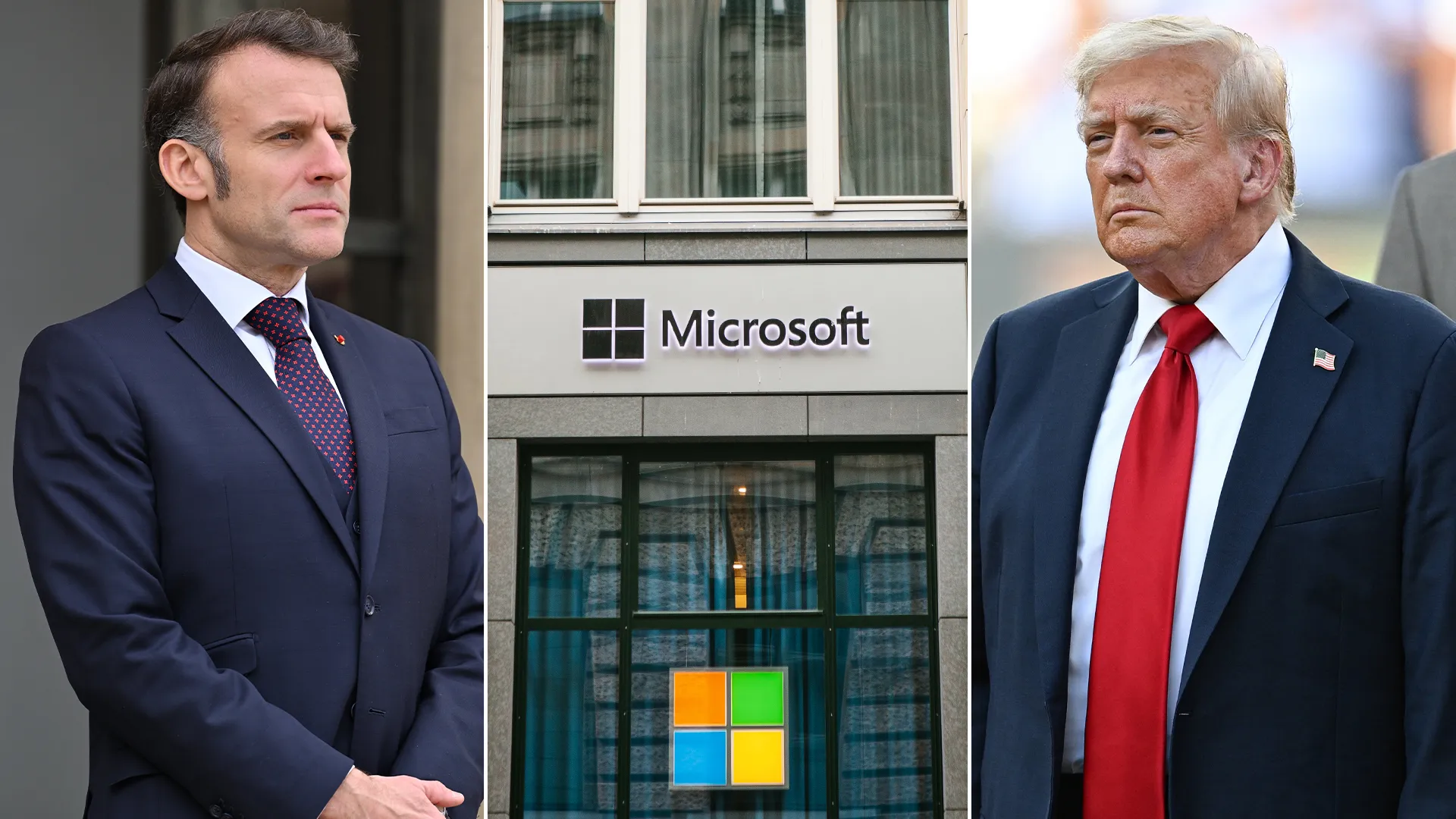
European nations and institutions are accelerating efforts to establish digital sovereignty, spurred by concerns over reliance on U.S. technology and potential political pressure.
This push gained momentum after an incident where the International Criminal Court (ICC) Prosecutor, Karim Khan, found his Microsoft email account completely inaccessible, not due to a hack or technical glitch, but as a result of U.S. sanctions, transforming Microsoft from a service provider into a tool of political leverage.
The incident served as a wake-up call, highlighting the urgent need for Europe to protect and control its digital infrastructure.
The ICC responded decisively by abandoning the entire Microsoft Office suite and migrating to the open-source European platform, Open Desk.
This event ignited a broader European movement. The Austrian army completely replaced Microsoft services, while the French city of Lyon switched to open-source systems. The French government also migrated 5.7 million civil servants to the government-backed Visio platform, as an alternative to Zoom.
France is spearheading Europe's AI ambitions with companies like Mistral AI. French President Emmanuel Macron has publicly urged citizens to download “Lo Chat,” instead of ChatGPT, resulting in over a million downloads in two weeks.
By September, Mistral had raised 1.7 billion euros at a valuation of 11.7 billion euros and announced a 1.2 billion euro investment in Swedish data centers slated to open in 2027.
France, Germany, Italy, and the Netherlands have established an unprecedented legal entity in The Hague called the “European Digital Infrastructure Consortium for Digital Commons,” possessing independent legal status and the authority to enter into contracts and own intellectual property.
The consortium will focus on building open digital commons across five sectors: Artificial Intelligence, Cloud Computing, Cybersecurity, Geomatics (the science and technology of gathering, analyzing, interpreting, and distributing geospatial data using digital space), and Social Networks.
The European Commission has launched its official server on the decentralized Mastodon network, free from “provocation algorithms” and the sale of data to advertisers, extending the revolution to social platforms.
Open protocols are being developed to support platforms competing with X, Instagram, YouTube and WhatsApp.
Despite these advancements, significant challenges remain. Over 70% of digital technologies used in Europe are still imported, and America accounts for 80% of the global technology market value, compared to Europe's 4%.
Despite Mistral’s valuation, it remains small compared to tech giants with operating budgets exceeding the economies of entire countries.
Europe aims to build a fundamentally different architecture: a decentralized federation that is open source and based on standards rather than monopolies. The true battle lies not in replacing one application with another, but in building an infrastructure that no single entity can shut down.