 Milan-Cortina 2026 Olympic Winter Games: freestyle skiing women's freeski slopestyle qualification
Orange Jordan Sponsors Al Hussein Technical University’s "Leadathon"
The CEO of Orange Jordan Visits Yarmouk University President to Strengthen the Strategic Partnership
*Orange Jordan Showcases Fabrication Lab Innovations at the Makers’ Forum
3 Winners at Orange Summer Challenge 2024 Join the “Social Innovation” Journey Fostering "Tech4Impact”
Estarta Named Cisco Systems' Distinguished Supplier of the Year 2024
Milan-Cortina 2026 Olympic Winter Games: freestyle skiing women's freeski slopestyle qualification
Orange Jordan Sponsors Al Hussein Technical University’s "Leadathon"
The CEO of Orange Jordan Visits Yarmouk University President to Strengthen the Strategic Partnership
*Orange Jordan Showcases Fabrication Lab Innovations at the Makers’ Forum
3 Winners at Orange Summer Challenge 2024 Join the “Social Innovation” Journey Fostering "Tech4Impact”
Estarta Named Cisco Systems' Distinguished Supplier of the Year 2024
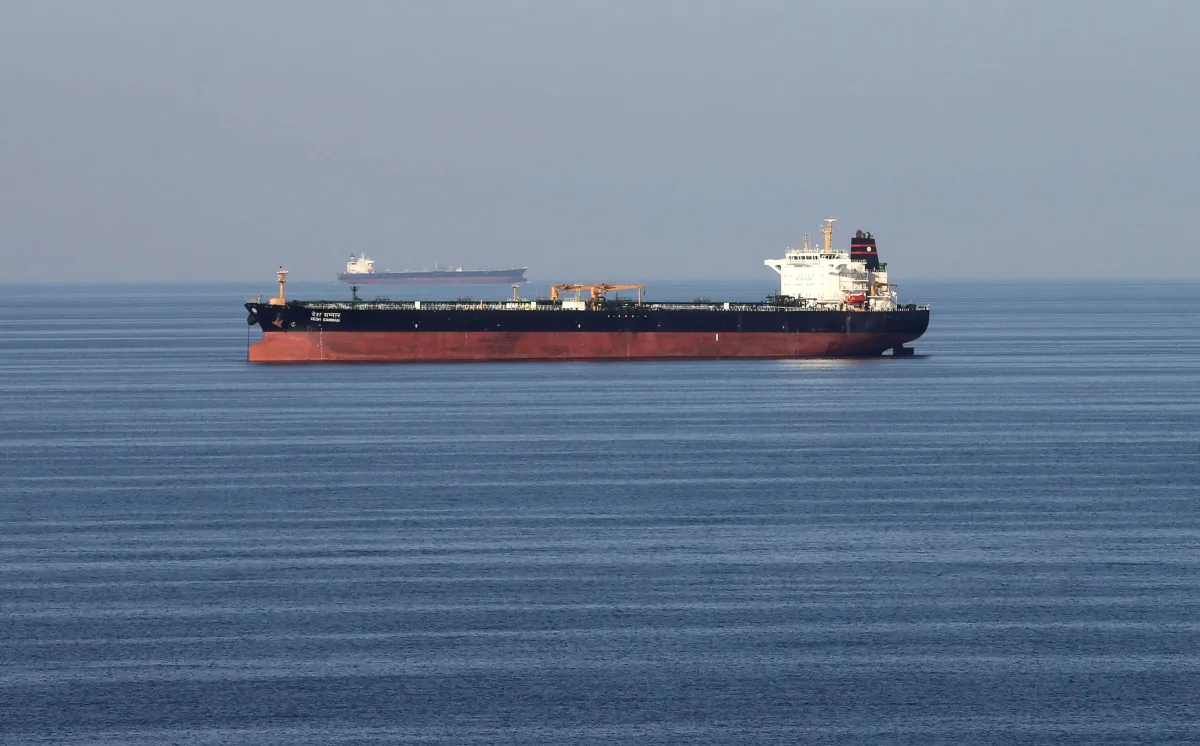
Oil prices jumped on Monday following reports of U.S. and Israeli military actions impacting Iran, sending ripples through global energy markets and disrupting tanker traffic in the Strait of Hormuz.
The critical Strait of Hormuz, a chokepoint for approximately 20% of global oil and gas flows, has become a focal point as tensions escalate. Reports indicate that shipping through the strait has been halted after Iran allegedly attacked three vessels, marking a direct indication of supply disruption.
In early Asian trading, Brent crude surged as much as 9%, while West Texas Intermediate (WTI) crude jumped 7% immediately after markets opened. Both benchmarks later pared gains but remained elevated, trading up 4.7% and 4.2% respectively, at $76.27 and $69.82 per barrel.
The price surge coincided with a broader risk-off sentiment in financial markets. Futures tracking the S&P 500 and Nasdaq 100 indices pointed to an approximate 1% decline on Wall Street as trading resumed, while gold prices jumped roughly 2.6%, reflecting a flight to safe-haven assets.
Analysts at Citi Group, in a pre-trading note on Monday, suggested that Brent crude could trade in the $80 to $90 per barrel range in their base-case scenario, at least for the coming week.
Morgan Stanley has revised its Q2 Brent crude forecast to $80 per barrel, up from $62.50.
U.S. President Donald Trump stated that U.S. and Israeli military actions “will continue until all of our objectives are achieved,” signaling a potentially prolonged conflict.
Citi analysts added that their base-case view assumes either a change in Iranian leadership or a significant shift in the regime's policies to halt the conflict within one to two weeks. Alternatively, the U.S. might de-escalate after witnessing a change in leadership and a rollback of nuclear and missile programs within the same timeframe.
As markets brace for a volatile week, close attention will be paid to any further disruptions, particularly in the Strait of Hormuz. Continued or escalating conflict would likely exert upward pressure on refined product markets, inflation indicators, and financial performance across energy-importing economies.