 Milan-Cortina 2026 Olympic Winter Games: freestyle skiing women's freeski slopestyle qualification
Orange Jordan Sponsors Al Hussein Technical University’s "Leadathon"
The CEO of Orange Jordan Visits Yarmouk University President to Strengthen the Strategic Partnership
*Orange Jordan Showcases Fabrication Lab Innovations at the Makers’ Forum
3 Winners at Orange Summer Challenge 2024 Join the “Social Innovation” Journey Fostering "Tech4Impact”
Estarta Named Cisco Systems' Distinguished Supplier of the Year 2024
Milan-Cortina 2026 Olympic Winter Games: freestyle skiing women's freeski slopestyle qualification
Orange Jordan Sponsors Al Hussein Technical University’s "Leadathon"
The CEO of Orange Jordan Visits Yarmouk University President to Strengthen the Strategic Partnership
*Orange Jordan Showcases Fabrication Lab Innovations at the Makers’ Forum
3 Winners at Orange Summer Challenge 2024 Join the “Social Innovation” Journey Fostering "Tech4Impact”
Estarta Named Cisco Systems' Distinguished Supplier of the Year 2024
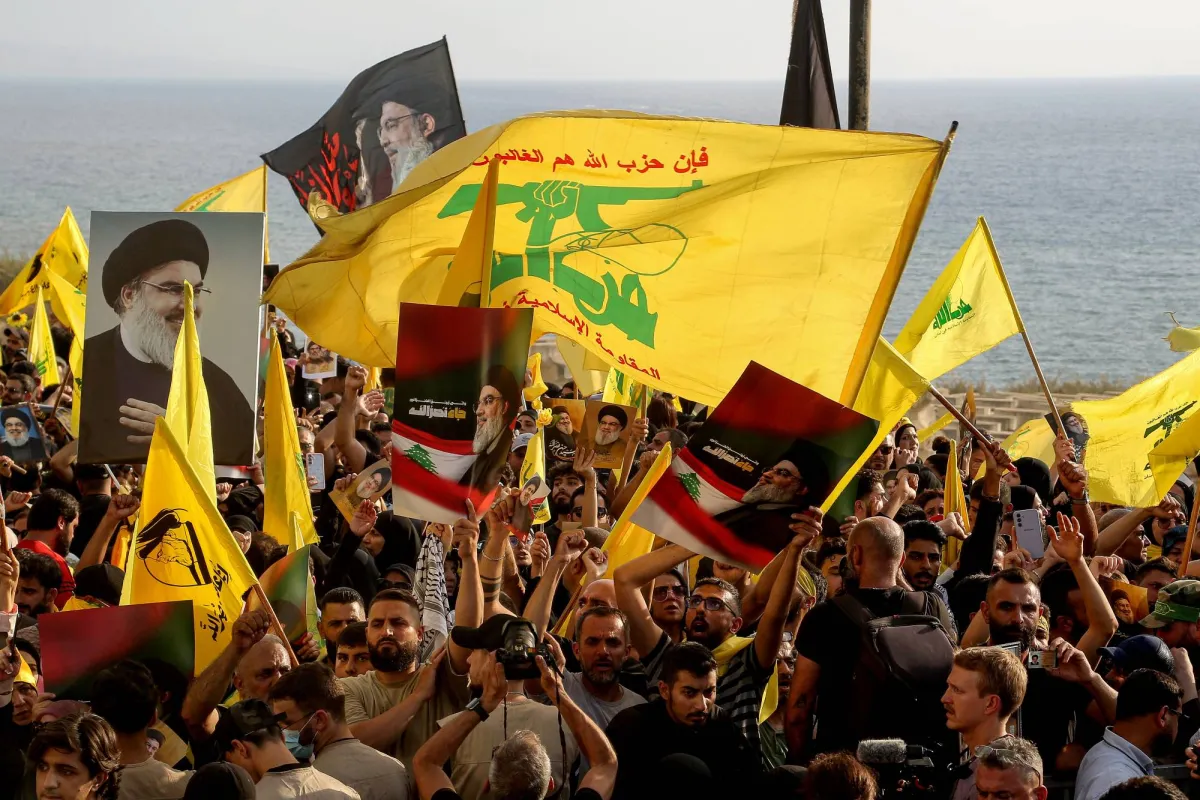
An internal dispute within Hezbollah's military wing has surfaced after rockets were launched into Israel, according to Lebanese sources familiar with the group's activities. This action has triggered a violent response from Israel and exposed a rift between the military and political leadership within Hezbollah.
The rocket launch, which occurred early Monday, contradicted assurances given by Hezbollah to the Lebanese government, via Parliament Speaker Nabih Berri, that it would not engage in a war of support for Iran. The unauthorized military action prompted Israel to retaliate with force, carrying out targeted assassinations and issuing threats that led to the evacuation of several villages.
A source close to Hezbollah's political wing told Asharq Al-Awsat that the political leadership was unaware of the military operation. This was evident in initial media reports that denied Hezbollah's involvement in the rocket launch. The group's subsequent claim of responsibility surprised many within its ranks, revealing internal confusion in dealing with the grave incident.
The statement claiming responsibility for the rocket launch was not disseminated through official Hezbollah media channels. Instead, it appeared on Telegram channels associated with the group's military media, leading Lebanese journalists to initially treat the statement with caution.
The source emphasized the severity of launching rockets without the political leadership's knowledge, particularly concerning relations with the Lebanese state and Nabih Berri, a key ally. This internal discord was evident during a government session where ministers aligned with Berri's Amal movement voted in favor of a resolution to ban Hezbollah's military and security wings.
Sources familiar with Hezbollah's ideology suggest that the internal rebellion provided Israel with a pretext to launch attacks on Lebanon, carry out assassinations, and act without restraint. The response to the assassination of the Iranian Supreme Leader was deemed militarily weak, consisting of only one volley of rockets over 18 hours. This deviates from the group's established practice of coordinating military decisions with political leadership to ensure comprehensive support and preparedness across all fronts.
The lack of further rocket launches in the 18 hours following the initial volley suggests that the action was not sanctioned by the political leadership. This reinforces the belief that the rocket launch was the result of a mutiny by a faction within Hezbollah's military wing.
Unconfirmed reports of assassinations within Hezbollah, including political figures, further support this theory. Had the political leadership been aware of the operation, they would have taken precautionary measures. The absence of such measures suggests that the rocket launch was a unilateral initiative by a rebellious faction within the military wing, independent of the political leadership.
Sources opposed to Hezbollah corroborate this assessment, noting the absence of any signs of preparedness, such as building evacuations or internal directives, which are typically observed during times of conflict. These sources suggest that Hezbollah officials usually take security precautions, which were not apparent in this instance.
One source framed the isolated rocket launch as part of an Iranian strategy of cultivating multiple channels and factions within organizations it supports. This approach has been observed in Gaza, Iraq, and Lebanon during the formation of Hezbollah in the 1980s, where various groups operated independently before uniting under the Hezbollah banner in the early 1990s.
These factors collectively indicate a state of rebellion within Hezbollah, potentially led by the Iranian Revolutionary Guard within the organization.