 Milan-Cortina 2026 Olympic Winter Games: freestyle skiing women's freeski slopestyle qualification
Orange Jordan Sponsors Al Hussein Technical University’s "Leadathon"
The CEO of Orange Jordan Visits Yarmouk University President to Strengthen the Strategic Partnership
*Orange Jordan Showcases Fabrication Lab Innovations at the Makers’ Forum
3 Winners at Orange Summer Challenge 2024 Join the “Social Innovation” Journey Fostering "Tech4Impact”
Estarta Named Cisco Systems' Distinguished Supplier of the Year 2024
Milan-Cortina 2026 Olympic Winter Games: freestyle skiing women's freeski slopestyle qualification
Orange Jordan Sponsors Al Hussein Technical University’s "Leadathon"
The CEO of Orange Jordan Visits Yarmouk University President to Strengthen the Strategic Partnership
*Orange Jordan Showcases Fabrication Lab Innovations at the Makers’ Forum
3 Winners at Orange Summer Challenge 2024 Join the “Social Innovation” Journey Fostering "Tech4Impact”
Estarta Named Cisco Systems' Distinguished Supplier of the Year 2024
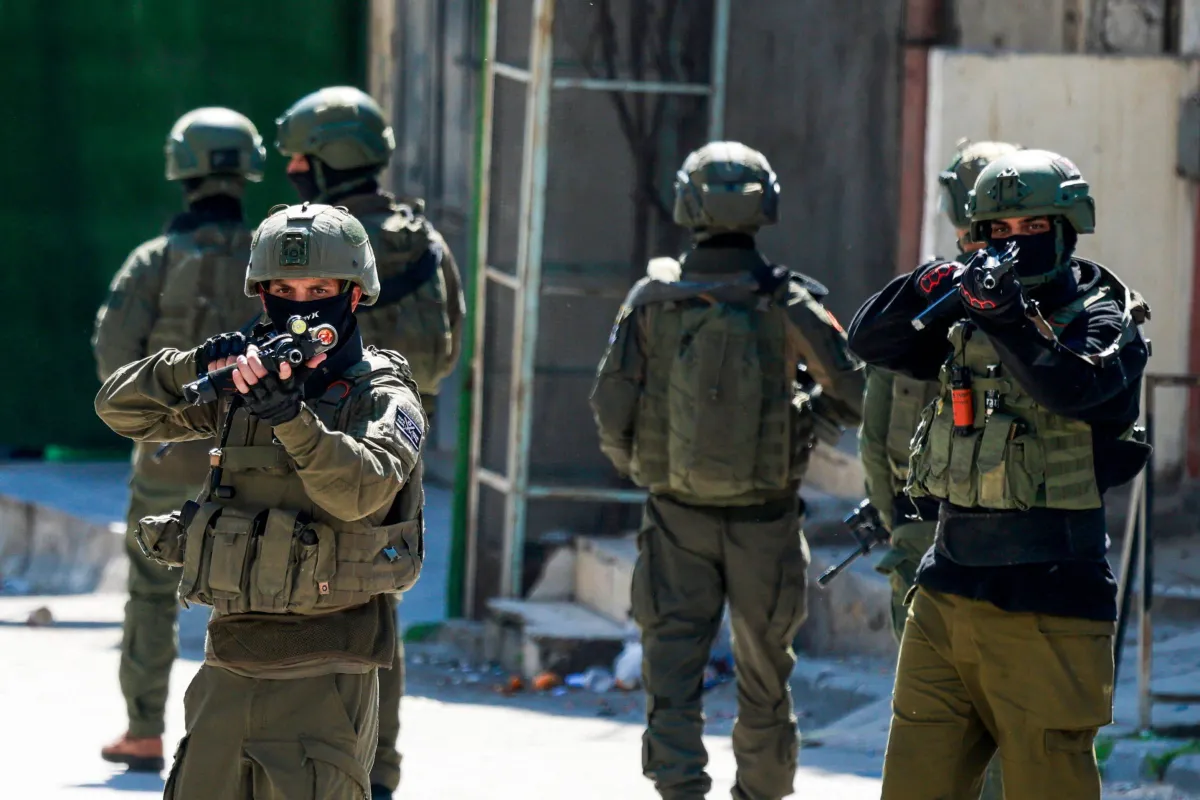
Concerns are mounting in Gaza over a potential famine as the conflict exacerbates existing humanitarian challenges, while settler violence intensifies in the West Bank.
Gazans fear that Israel will exploit the ongoing tensions to prolong the closure of vital crossings, further restricting the entry of commercial goods and essential aid. This situation is particularly dire during the month of Ramadan, placing immense strain on the population.
According to Mohammed al-Shaer, a resident of Gaza City's al-Nasr neighborhood, the distribution of humanitarian aid has been significantly hampered since the recent escalation and subsequent border closures. He expressed concerns that remaining supplies could soon be depleted if the crossings remain shut.
"The majority of Gaza residents fear that the continued closure of crossings will affect the entry of commercial goods and aid, which may herald a new wave of famine, as Israel has done several times during the war," al-Shaer stated.
Jamal al-Owaidat, from Deir al-Balah in central Gaza, told the 'Middle East' that "goods have begun to be scarce in the markets, despite the efforts of the Hamas government to control the situation." He also highlighted concerns that the conflict could be used as a pretext for further strikes in the Strip under security pretexts.
The closure of crossings has also disrupted the evacuation of patients requiring urgent medical treatment abroad via the Rafah crossing, as well as through operations coordinated by the World Health Organization (WHO) to transfer patients via the Karm Abu Salem crossing to Jordan, the Emirates, and other countries.
The Ministry of Health reports that over 20,000 patients in Gaza are awaiting travel for medical treatment abroad, including critical cases in dire need of specialized care. Wael al-Najjar, a father from Gaza whose 14-year-old son Ahmed was injured during the conflict, said his son’s trip for treatment has been postponed twice despite his serious condition, raising concerns about potential deterioration due to further delays.
Meanwhile, field violations continue in Gaza, with several Palestinians killed in recent days. Two individuals were killed in an Israeli artillery shelling in the al-Jaran area of Jabalia al-Balad, northern Gaza Strip.
The number of Palestinian fatalities has risen to over 630 since the ceasefire came into effect last October, bringing the total number of deaths since October 7, 2023, to 72,097.
In the West Bank, settler attacks against Palestinians have escalated, resulting in fatalities and injuries, as well as the seizure of land.
Two Palestinian brothers were killed by settlers in the town of Qaryut, south of Nablus, in an attack involving live ammunition. The Ministry of Health reported the deaths of Mohammed Moamer, 52, who was shot in the head, and his brother Fahim, 47, who was shot in the pelvis.
Eyewitnesses reported that residents of Qaryut mobilized to defend their homes after settlers attacked the village, while others were bulldozing land nearby to seize it. One of the settlers immediately opened fire on the residents with his automatic rifle.
Palestinian officials say that the attack on Qaryut is part of an ongoing and escalating trend aimed at controlling the West Bank and transforming the occupation into a permanent state.
Settler attacks in the West Bank have intensified since October 7, 2023, with a surge in recent weeks following Israeli government decisions favoring the imposition of Israeli sovereignty in the West Bank. These attacks continue despite the ongoing conflict.
Moayad Shaaban, head of the "Wall and Settlement Resistance Authority," stated that "the escalating crimes of settlers come within the framework of a clear exploitation of the cover of war and regional tension to carry out systematic attacks against Palestinian citizens and impose colonial facts by force." He emphasized that "this organized terrorism is taking place with the direct protection of the occupation forces."
The Israeli army acknowledged that approximately 870 settler attacks were recorded in 2025, an increase of nearly 27 percent compared to the approximately 680 incidents recorded in 2024.
However, Palestinians present much higher figures. According to the "Settlement Resistance Authority," settlers carried out 4,723 attacks on Palestinians last year.
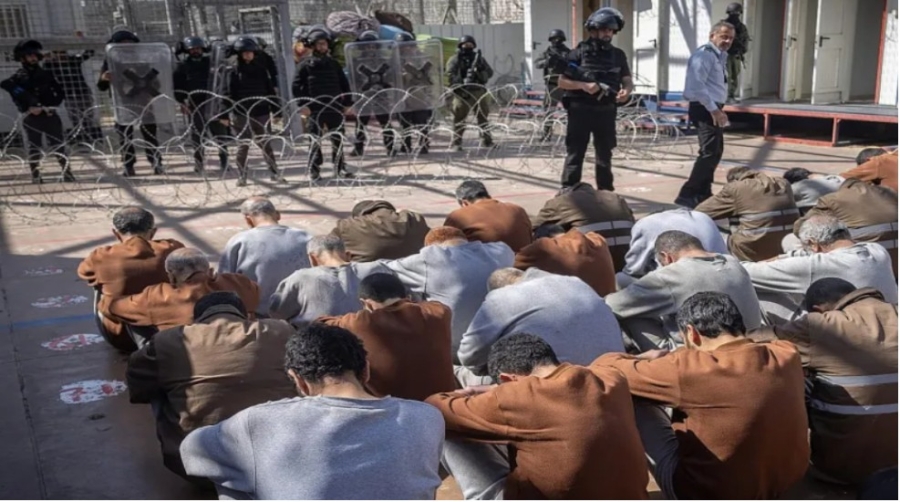
In addition to settler attacks, the Israeli army has launched extensive raids and arrest campaigns in the West Bank, targeting cities, towns, and camps, resulting in the arrest of 44 Palestinians, including children, a girl, and released prisoners.
Israeli forces have also conducted simultaneous raids in towns and camps in the Jenin Governorate, raiding homes, vandalizing their contents, detaining young men, assaulting them, and forcing families to evacuate their homes to turn them into military barracks for up to a month.
Israeli forces have tightened their grip on the West Bank since the start of the offensive. Most checkpoints between the West Bank and Israel, as well as within the West Bank around cities, have been closed. The Al-Aqsa Mosque in Jerusalem and the Ibrahimi Mosque in Hebron have also been closed.
An Israeli military official confirmed the imposition of restrictions on movement inside and around the West Bank "to confront potential terrorist threats." As of Monday, Israel had not eased its measures in the West Bank and kept the Al-Aqsa Mosque and the Ibrahimi Mosque closed, as well as the checkpoints largely closed.
The Jerusalem Governorate reported that the occupation is preventing worshipers from being present in the mosque, citing the declaration of a state of emergency amid the intensive deployment of its forces in its vicinity and the gates of the Old City, and preventing citizens from entering its courtyards.