 Milan-Cortina 2026 Olympic Winter Games: freestyle skiing women's freeski slopestyle qualification
Orange Jordan Sponsors Al Hussein Technical University’s "Leadathon"
The CEO of Orange Jordan Visits Yarmouk University President to Strengthen the Strategic Partnership
*Orange Jordan Showcases Fabrication Lab Innovations at the Makers’ Forum
3 Winners at Orange Summer Challenge 2024 Join the “Social Innovation” Journey Fostering "Tech4Impact”
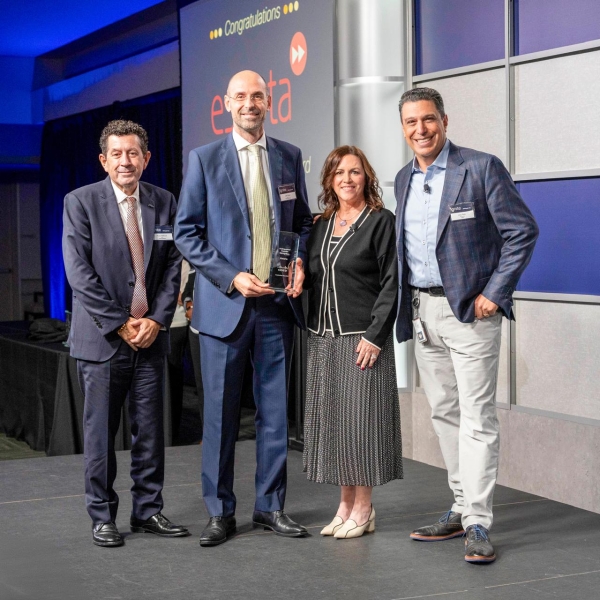
Estarta Named Cisco Systems' Distinguished Supplier of the Year 2024
Milan-Cortina 2026 Olympic Winter Games: freestyle skiing women's freeski slopestyle qualification
Orange Jordan Sponsors Al Hussein Technical University’s "Leadathon"
The CEO of Orange Jordan Visits Yarmouk University President to Strengthen the Strategic Partnership
*Orange Jordan Showcases Fabrication Lab Innovations at the Makers’ Forum
3 Winners at Orange Summer Challenge 2024 Join the “Social Innovation” Journey Fostering "Tech4Impact”
Estarta Named Cisco Systems' Distinguished Supplier of the Year 2024
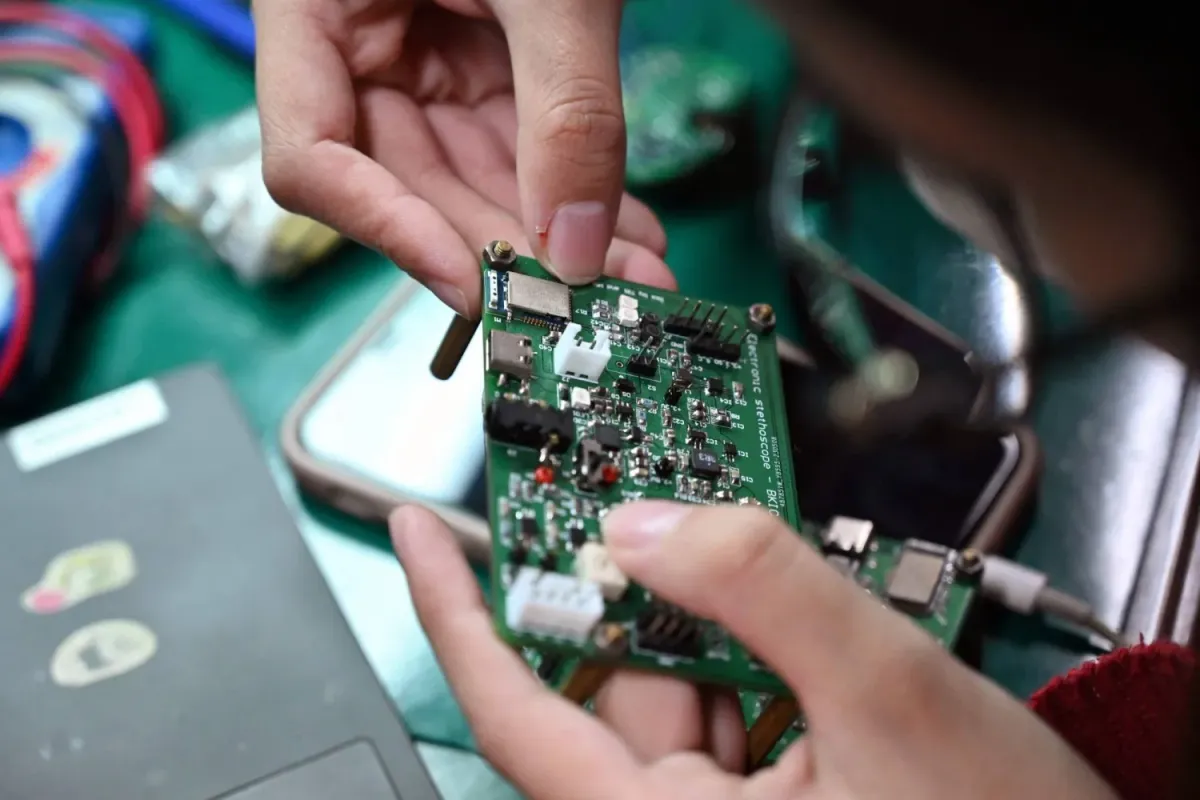
Saudi Arabia is prioritizing collaboration with advanced nations, particularly the United States, to bolster its semiconductor industry, aiming to leverage economic strengths and drive industrial progress, experts say. This strategic move underscores the importance of strengthening international partnerships to achieve the Kingdom's ambitious economic diversification goals.
The focus on semiconductors is expected to attract significant foreign investment, expand industrial supply chains, and stimulate advanced manufacturing jobs, aligning with Saudi Arabia's Vision 2030 objectives. The sector is poised to enhance productivity, competitiveness, and innovation across various key industries within the Kingdom.
According to U.S. investor Dr. Eric Fang, CEO of Sky Towers Global, semiconductor cooperation lays the groundwork for over ten strategic industries, including defense, space, green economy, and hydrogen. It also encompasses cutting-edge technologies in economic, security, and political services.
Saudi Arabia's focus on semiconductors combines economic strengths and industrial advancement. Key industrial and technological sectors reliant on semiconductors are fundamental to modern industrial and technological development across a wide array of vital sectors.
Abdullah bin Zaid Al-Melihi, CEO of Saudi Arabia's Al-Tameez for Technology, emphasized that the Kingdom's focus on semiconductors merges economic strengths with industrial advancement. He noted that key industrial and technological sectors reliant on semiconductors are fundamental to modern industrial and technological development across a wide array of vital sectors.
Al-Melihi added that this includes advanced manufacturing, robotics, defense and space systems, energy, medical technologies, healthcare, smart cities, mobility, logistics, consumer electronics, home technologies, and agricultural technologies.
The recent visit of Crown Prince Mohammed bin Salman to the United States paved the way for cooperation between Saudi Arabia and its partners in the semiconductor field, deepening the strategic relationship between the two countries and achieving mutual benefit, trust, and shared interests, Fang noted.
Fang added that the United States remains the largest investment partner for the Kingdom, representing a quarter of American foreign investments in Saudi Arabia. He stated that the Crown Prince's historic visit and announcement of a trillion-dollar investment commitment have ushered in a new phase of human, economic, and technological relations between the two countries, which will greatly accelerate cooperation in the semiconductor and microchip sectors.
The United States continues to lead globally in semiconductor research, development, and innovation. With the increasing momentum of remanufacturing globally and Saudi Arabia's progress in Vision 2030, the next wave of achievements in semiconductors is expected to remain rooted in America, while the Kingdom emerges as a major hub for applied sciences, technology deployment, and advanced manufacturing, Fang stated.
Fang also highlighted the critical value-add of cooperation in semiconductors for national security. He said that semiconductors are a cornerstone of national security, and enhanced U.S.-Saudi cooperation in this area will bolster supply chain stability, protect vital national infrastructure, and enhance technological resilience.
According to Al-Melihi, the resulting security and economic balance will not only stabilize the two countries but also establish a model for international cooperation based on shared interests and responsible technological leadership, in addition to its positive effects on trade, investment, economic growth, and diversification.
Al-Melihi sees the importance in the fact that the emerging global economy is shaped by strong bilateral technological partnerships that chart the future of growth, and that promoting cooperation in the field of semiconductors will be a strong catalyst for economic transformation in the Kingdom.
Al-Melihi stated that as digital transformation continues globally, electronic chip technologies will contribute to improving efficiency, automation, and productivity, while enabling advances in artificial intelligence, data science, robotics, and education for the next generation.
This enhances the contribution of Saudi-American cooperation to advanced industries in the Kingdom. Saudi Vision 2030 has set the Kingdom on a clear path towards high-value manufacturing, and deepening cooperation with the United States in the field of semiconductors will be a key pillar in accelerating this transformation, Al-Melihi said.
Al-Melihi believes that by combining American strengths in research and development, advanced design, and technological innovation, with the Kingdom's competitive advantages - including its strategic location, leadership in the field of energy, logistical infrastructure, and emerging industrial ecosystems - this partnership will enhance advanced industries in Saudi Arabia and stimulate the development of regional and global markets.