 Milan-Cortina 2026 Olympic Winter Games: freestyle skiing women's freeski slopestyle qualification
Orange Jordan Sponsors Al Hussein Technical University’s "Leadathon"
The CEO of Orange Jordan Visits Yarmouk University President to Strengthen the Strategic Partnership
*Orange Jordan Showcases Fabrication Lab Innovations at the Makers’ Forum
3 Winners at Orange Summer Challenge 2024 Join the “Social Innovation” Journey Fostering "Tech4Impact”
Estarta Named Cisco Systems' Distinguished Supplier of the Year 2024
Milan-Cortina 2026 Olympic Winter Games: freestyle skiing women's freeski slopestyle qualification
Orange Jordan Sponsors Al Hussein Technical University’s "Leadathon"
The CEO of Orange Jordan Visits Yarmouk University President to Strengthen the Strategic Partnership
*Orange Jordan Showcases Fabrication Lab Innovations at the Makers’ Forum
3 Winners at Orange Summer Challenge 2024 Join the “Social Innovation” Journey Fostering "Tech4Impact”
Estarta Named Cisco Systems' Distinguished Supplier of the Year 2024
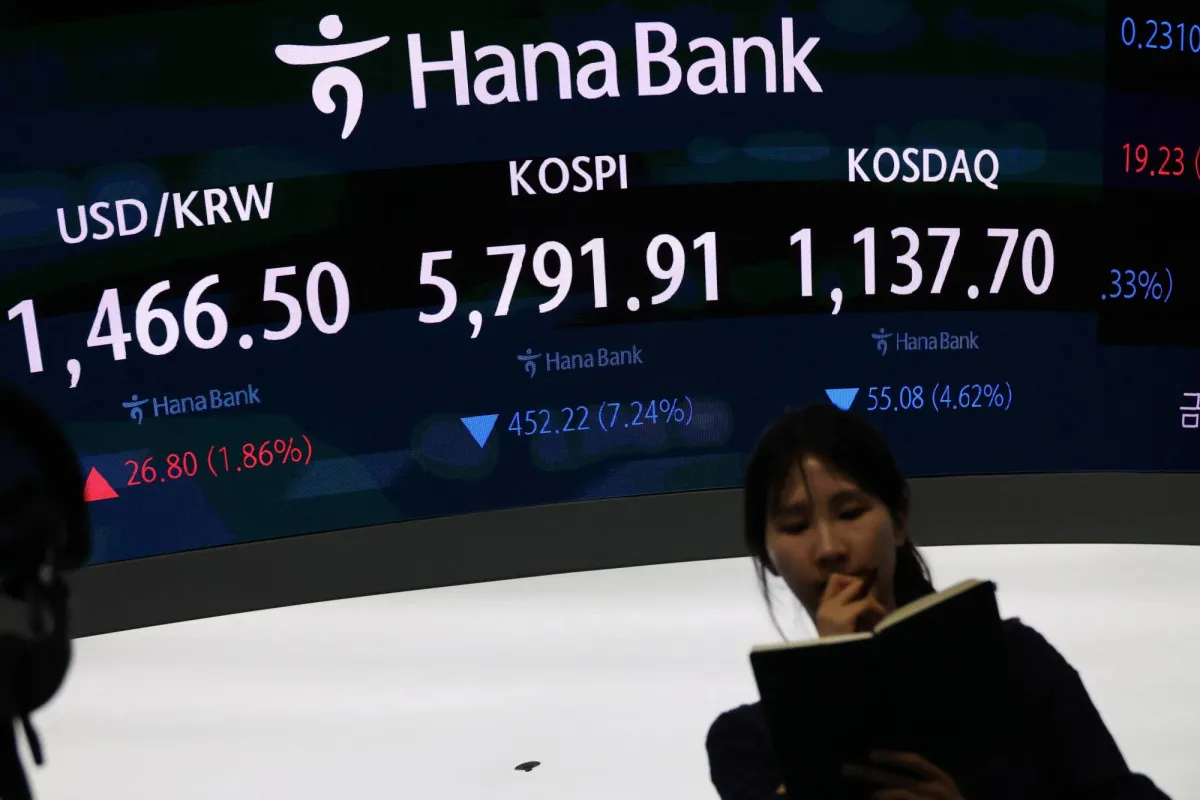
South Korean stocks experienced a sharp decline, leading losses in Asian markets amid growing concerns over a weakening won, falling equities, and the impact of rising oil prices driven by geopolitical tensions.
The Korea Composite Stock Price Index (KOSPI) plummeted, marking its worst session in approximately four months. The steep drop reflects pressures on South Korea's economy, which is heavily reliant on oil imports.
The South Korean won weakened significantly, reaching its lowest level in over three weeks against the U.S. dollar.
The market's downturn was exacerbated by lagged reactions to unfolding events and profit-taking by foreign investors following a recent surge in the index, according to analysts at Daishin Securities.
Authorities from the Finance Ministry, central bank, and regulatory body issued warnings, stating they are closely monitoring financial markets and are prepared to take stabilization measures if necessary.
Foreign investors continued their selling spree for the ninth consecutive session, offloading a substantial amount of local shares, adding pressure to the market.
Major companies listed on the index, including those in the semiconductor and automotive sectors, experienced stock declines. Samsung Electronics and SK Hynix saw significant drops, while Hyundai Motor shares also fell sharply.
In contrast, shares of oil refining companies and shipping firms rose alongside increasing oil and freight prices, respectively. Defense stocks also saw gains, while airline stocks declined.
The KOSPI's recent decline follows a period of growth earlier this year, fueled by optimism surrounding artificial intelligence. However, rising treasury yields, driven by inflation concerns stemming from higher oil prices, added to the negative sentiment.
Separately, South Korea's Ministry of Oceans and Fisheries reported that a number of South Korean vessels were navigating near the Strait of Hormuz. No casualties or damages were reported.
A private sector survey indicated that South Korea's industrial activity continued to expand, supported by strong demand for semiconductors. The S&P Global purchasing managers' index remained above the 50-point threshold, signaling expansion.
The survey highlighted robust external demand, particularly from the United States and China, bolstering the industrial sector's performance. South Korea's exports have continued to grow, exceeding market expectations, driven by strong chip sales.
The Bank of Korea recently raised its economic growth forecast for the year, citing booming semiconductor exports. The central bank has maintained its interest rates, suggesting a period of monetary policy stability in the coming months.