 Milan-Cortina 2026 Olympic Winter Games: freestyle skiing women's freeski slopestyle qualification
Orange Jordan Sponsors Al Hussein Technical University’s "Leadathon"
The CEO of Orange Jordan Visits Yarmouk University President to Strengthen the Strategic Partnership
*Orange Jordan Showcases Fabrication Lab Innovations at the Makers’ Forum
3 Winners at Orange Summer Challenge 2024 Join the “Social Innovation” Journey Fostering "Tech4Impact”
Estarta Named Cisco Systems' Distinguished Supplier of the Year 2024
Milan-Cortina 2026 Olympic Winter Games: freestyle skiing women's freeski slopestyle qualification
Orange Jordan Sponsors Al Hussein Technical University’s "Leadathon"
The CEO of Orange Jordan Visits Yarmouk University President to Strengthen the Strategic Partnership
*Orange Jordan Showcases Fabrication Lab Innovations at the Makers’ Forum
3 Winners at Orange Summer Challenge 2024 Join the “Social Innovation” Journey Fostering "Tech4Impact”
Estarta Named Cisco Systems' Distinguished Supplier of the Year 2024
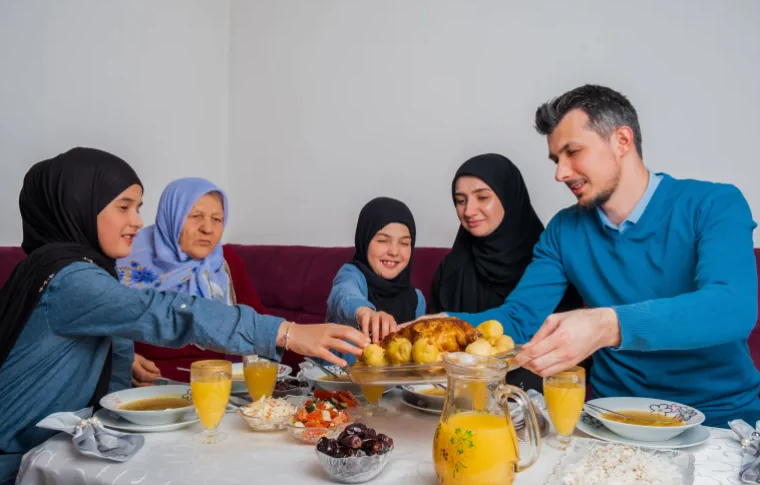
Ramadan, observed by Muslims worldwide as a month of fasting, prayer, and reflection, has undergone significant transformations over the decades, influenced by social, technological, and political shifts. While the essence of fasting as a pillar of Islam remains unchanged, the characteristics of the month in homes, streets, and media have evolved considerably.
For centuries, the sighting of the crescent moon marked the beginning of Ramadan. Today, while many still observe this tradition, astronomical calculations are also employed, reflecting a move from individual observation to scientific institutionalization. This shift, however, has not eliminated annual debates regarding differing lunar sightings.
The ways people celebrate Ramadan have also changed. In the past, iftar meals, the evening meal to break the fast, consisted of simple, home-cooked dishes made from local, seasonal ingredients. Nowadays, Ramadan has become a peak season for food consumption, with increased spending and, according to the Food and Agriculture Organization, food waste. Though the spirit of family gatherings remains, dining habits have shifted from simplicity to excessive variety, and from home cooking to ordering via digital apps.
Entertainment during Ramadan has also been reshaped. Before television, Ramadan evenings were filled with popular storytelling in cafes. The arrival of television in the 1960s altered Ramadan entertainment habits, with families gathering around a single screen to watch specific shows. Today, digital platforms offer on-demand viewing, allowing individuals to watch programs at any time. The International Telecommunication Union reports that the spread of high-speed internet has reshaped media consumption patterns in the Arab region, particularly during Ramadan.
Despite these changes, the spirit of social solidarity and charitable giving remains a constant during Ramadan. From individual initiatives to organized charities, the concept of providing meals for those fasting and paying Zakat al-Fitr (charity given to the poor at the end of Ramadan) continues to be a central aspect of the month. In Qatar, for example, charitable organizations play a significant role in organizing Iftar campaigns both domestically and internationally, while other associations rely on digital donations and online platforms.
Although discussions about "Ramadan of the past" often evoke nostalgia for a simpler time, social researchers point out that each generation reshapes its own experience of the month according to its economic, technological, and political circumstances. From traditional lanterns to electric lights, and from paper greeting cards to digital media, Ramadan has adapted to a changing world. Between the cannon of yesterday and today’s phone notifications, Ramadan remains a special time for reflection and realignment of priorities, regardless of changing details.