 Milan-Cortina 2026 Olympic Winter Games: freestyle skiing women's freeski slopestyle qualification
Orange Jordan Sponsors Al Hussein Technical University’s "Leadathon"
The CEO of Orange Jordan Visits Yarmouk University President to Strengthen the Strategic Partnership
*Orange Jordan Showcases Fabrication Lab Innovations at the Makers’ Forum
3 Winners at Orange Summer Challenge 2024 Join the “Social Innovation” Journey Fostering "Tech4Impact”
Estarta Named Cisco Systems' Distinguished Supplier of the Year 2024
Milan-Cortina 2026 Olympic Winter Games: freestyle skiing women's freeski slopestyle qualification
Orange Jordan Sponsors Al Hussein Technical University’s "Leadathon"
The CEO of Orange Jordan Visits Yarmouk University President to Strengthen the Strategic Partnership
*Orange Jordan Showcases Fabrication Lab Innovations at the Makers’ Forum
3 Winners at Orange Summer Challenge 2024 Join the “Social Innovation” Journey Fostering "Tech4Impact”
Estarta Named Cisco Systems' Distinguished Supplier of the Year 2024
The Arab world is increasingly asserting its digital sovereignty, moving beyond being mere consumers of data to becoming active participants and innovators in the global tech landscape.
For a long time, the region appeared to be a passive recipient of data flows, with Arab languages, values, and aspirations processed in digital factories abroad, creating a state of digital dependency. However, this is changing as the region recognizes data as the 21st century's oil, demanding local control and processing.
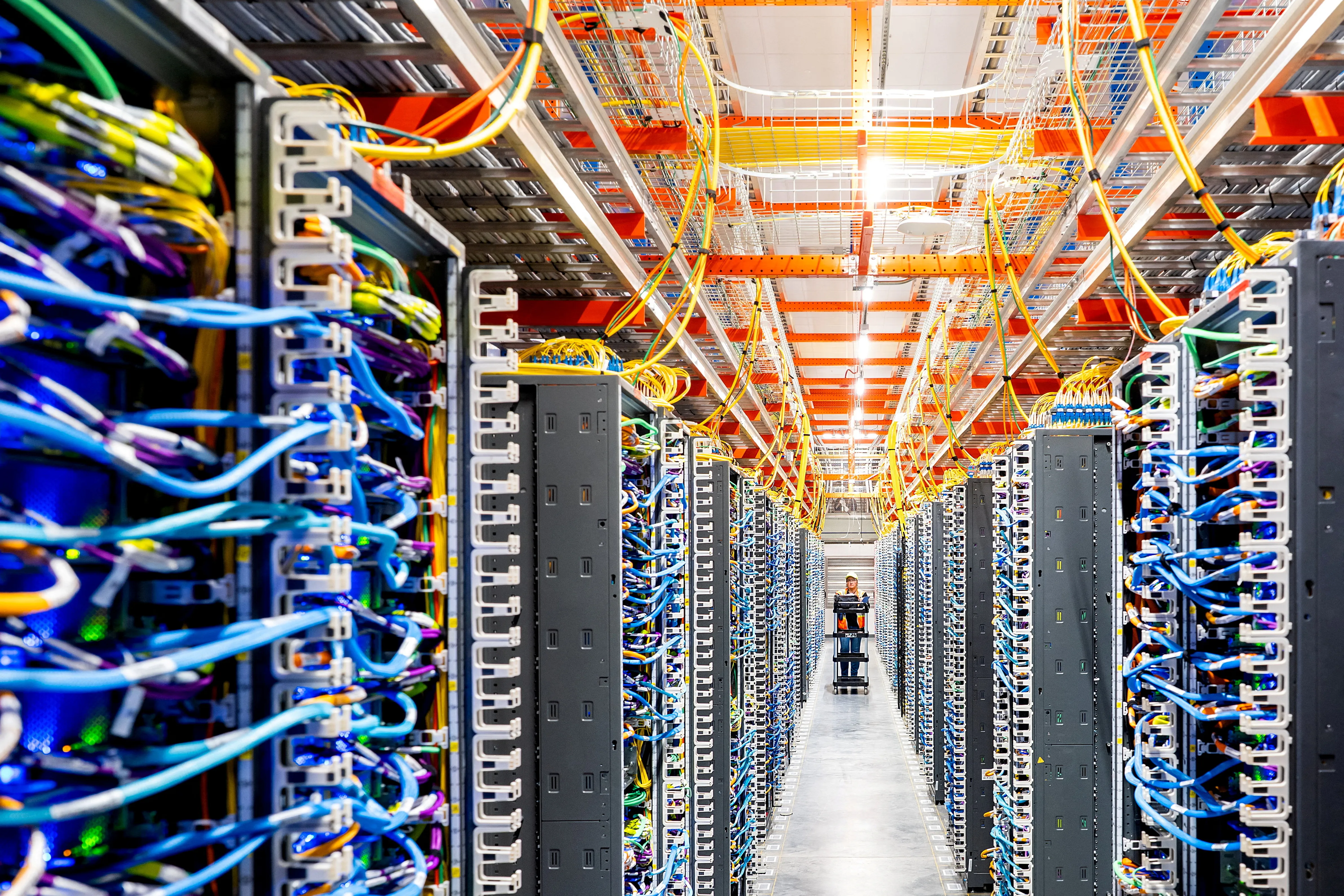
This shift is exemplified by the construction of national data centers and the development of sovereign artificial intelligence (AI) models that understand and reflect Arab culture and values.
The push for local data infrastructure is driven by several factors, including national security concerns. Keeping data within national borders ensures the continuity of essential services during geopolitical tensions and protects citizen and institutional privacy under domestic laws. Furthermore, local data centers reduce latency, crucial for future technologies like smart cities and the industrial internet.
Reports from IDC indicate a trend towards mandatory localization of public cloud services in the Middle East and North Africa, driven by government regulations aimed at safeguarding information security.
One of the key issues with Western language models is their cultural bias, trained on data that reflects a Western worldview. Sovereign AI emerges as a tool for knowledge liberation, with initiatives like Qatar Foundation's FANAR project, a large language model focused on high-quality Arabic content, serving education, media, and research sectors in line with Arab values.
Similarly, the Saudi Data and Artificial Intelligence Authority (SDAIA) launched ALAM, a national model designed to provide Arabic-language AI solutions using local infrastructure. Abu Dhabi’s Technology Innovation Institute developed Falcon, a series of open-source language models, while the Jais language model is designed to understand the cultural, religious, and linguistic context of the Arab world.
Experts emphasize that technology is no longer just a luxury but a sovereign national shield. Abdullah Al-Ghamdi, head of SDAIA, stated that digital sovereignty is not an option but a necessity to ensure that algorithmic values alien to our society are not imposed on us.
The recent Web Summit in Qatar underscored this shift, highlighting that the Middle East recorded the highest global growth rate in software independence. Arab nations are no longer merely importing solutions but now possess over 60% of the cloud processing capabilities for their sensitive data within their national borders, thanks to investments exceeding $50 billion in digital infrastructure across Saudi Arabia, the UAE, and Qatar.
The Arab region has transitioned from data storage to sovereign value generation, with sovereign AI models like Jais 3 and updated versions of Falcon now processing over 55% of government inquiries in Arabic locally, reducing reliance on Western infrastructure and saving billions of dollars in economic data outflow.
With Saudi Arabia possessing one of the largest data centers in the region and Qatar expanding its sovereign language computing capabilities, the Arab world is breaking free from being just consumers of technology, becoming digital decision-makers who own the infrastructure, the AI models, and the future.