 Milan-Cortina 2026 Olympic Winter Games: freestyle skiing women's freeski slopestyle qualification
Orange Jordan Sponsors Al Hussein Technical University’s "Leadathon"
The CEO of Orange Jordan Visits Yarmouk University President to Strengthen the Strategic Partnership
*Orange Jordan Showcases Fabrication Lab Innovations at the Makers’ Forum
3 Winners at Orange Summer Challenge 2024 Join the “Social Innovation” Journey Fostering "Tech4Impact”
Estarta Named Cisco Systems' Distinguished Supplier of the Year 2024
Milan-Cortina 2026 Olympic Winter Games: freestyle skiing women's freeski slopestyle qualification
Orange Jordan Sponsors Al Hussein Technical University’s "Leadathon"
The CEO of Orange Jordan Visits Yarmouk University President to Strengthen the Strategic Partnership
*Orange Jordan Showcases Fabrication Lab Innovations at the Makers’ Forum
3 Winners at Orange Summer Challenge 2024 Join the “Social Innovation” Journey Fostering "Tech4Impact”
Estarta Named Cisco Systems' Distinguished Supplier of the Year 2024
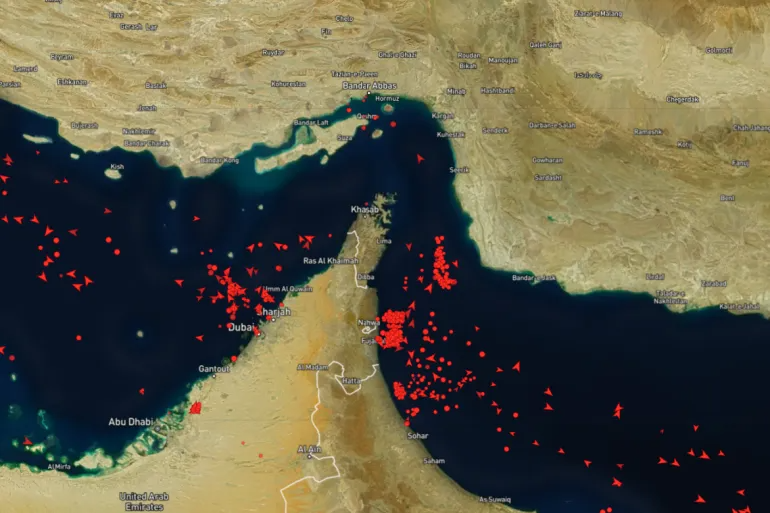
Tensions have escalated in the Strait of Hormuz after Iran declared the vital waterway closed, threatening to halt oil exports in response to perceived Israeli and American aggression. Washington swiftly responded, asserting that the strait remains open and vowing to protect freedom of navigation.
According to Iranian media, a Revolutionary Guard advisor, Ebrahim Jabari, stated that Iran has “closed the Strait of Hormuz” and threatened to “burn any ship trying to cross it.” Jabari further asserted that Iran would not permit oil exports from the region, citing Israeli and American actions.
The U.S. military has refuted Iran's claims, with a military official telling Fox News that the strait is “not closed.”
U.S. Senator Marco Rubio indicated in a press conference that American forces in the region would destroy the Iranian navy if it targeted ships in the strait.
Rubio added that the U.S. would take unspecified actions related to rising oil prices resulting from the conflict with Iran. These actions could include releasing oil from the U.S. Strategic Petroleum Reserve, though sources previously indicated that such a move was not currently under consideration.
The Strait of Hormuz is a critical energy artery, with approximately 20 million barrels of oil passing through it daily, representing about one-fifth of global oil and liquefied natural gas consumption, according to the U.S. Energy Information Administration. Its closure could trigger a significant surge in oil prices, placing pressure on the U.S. and the global economy.
Brent crude futures rose by approximately 6.7% following the reports, settling near $78 a barrel, marking the largest gain since June 2025. Diesel futures also reached their highest level in roughly four years, while West Texas Intermediate crude for April delivery rose by 6.3% to settle at $71.23 a barrel.
Bloomberg has outlined three potential scenarios for the conflict's impact on oil prices and the economy: a ceasefire, the collapse of the Iranian regime, or a continuation of the conflict, potentially escalating with Iranian attacks on energy infrastructure. The agency suggests that continued closure of the Strait of Hormuz could push oil prices to around $108 a barrel.
Bloomberg’s analysis indicates that a 1% loss of supply typically results in a 4% increase in oil prices, based on historical data and market behavior during the Iran-Israel conflict in June 2025. With Iran supplying approximately 5% of global oil, a complete halt to its production could raise prices by about 20%. The closure of the Strait of Hormuz, through which 20% of global oil supplies pass, could trigger an 80% price surge.
While higher oil prices would transfer income from oil-importing to oil-exporting nations, the impact on the United States might be less severe than in the past due to the rise of shale oil production, which has transformed the U.S. into a major oil exporter.
However, U.S. consumers would likely face higher fuel costs, reducing disposable income and limiting spending in other areas. China, Europe, and India, as major oil importers, would be more vulnerable to slower growth and higher inflation.
Net oil exporters such as Russia, Canada, and Norway would be major beneficiaries, while Middle Eastern producers could face a double-edged sword, potentially profiting from higher prices but also incurring increased security costs in response to Iranian actions.