 العمل النيابية تفعّل منصة مقترحات المواطنين حول قانون الضمان
الملك يشارك في اجتماع دولي لبحث التصعيد في الشرق الأوسط
وقف الحرب وإعادة السلام للشرق الأوسط
الأنا والآخر... عندما تصبح الوطنية وجهة نظر
المبعوث الصيني يصل إلى الشرق الأوسط
وزير الزراعة يستقبل السفير الكندي
غارات إسرائيلية تستهدف مناطق عدة في لبنان
الاحتلال يعتقل 24 فلسطينيا بالضفة الغربية
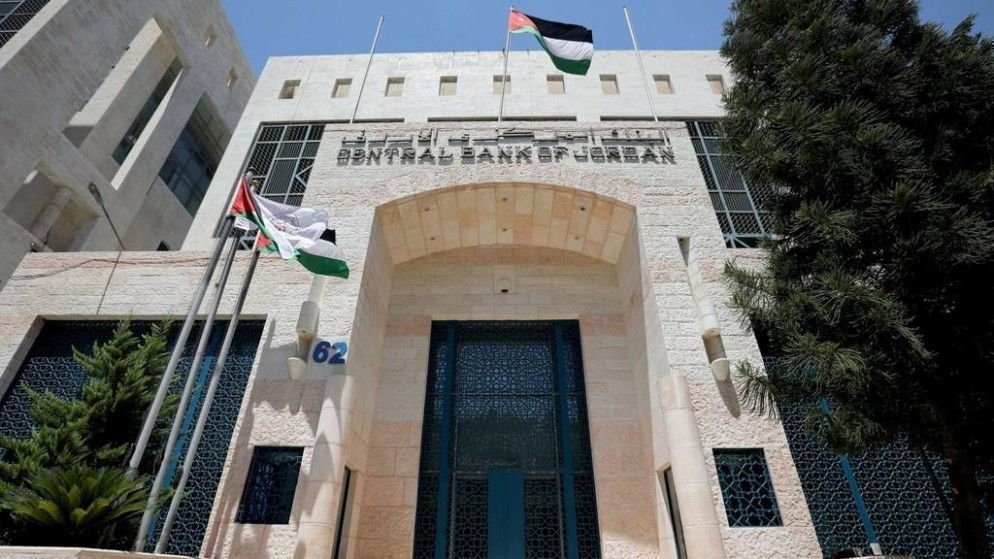
البنك المركزي الأردني: تحسن مؤشر الصحة المالية للأفراد إلى 48% في 2025
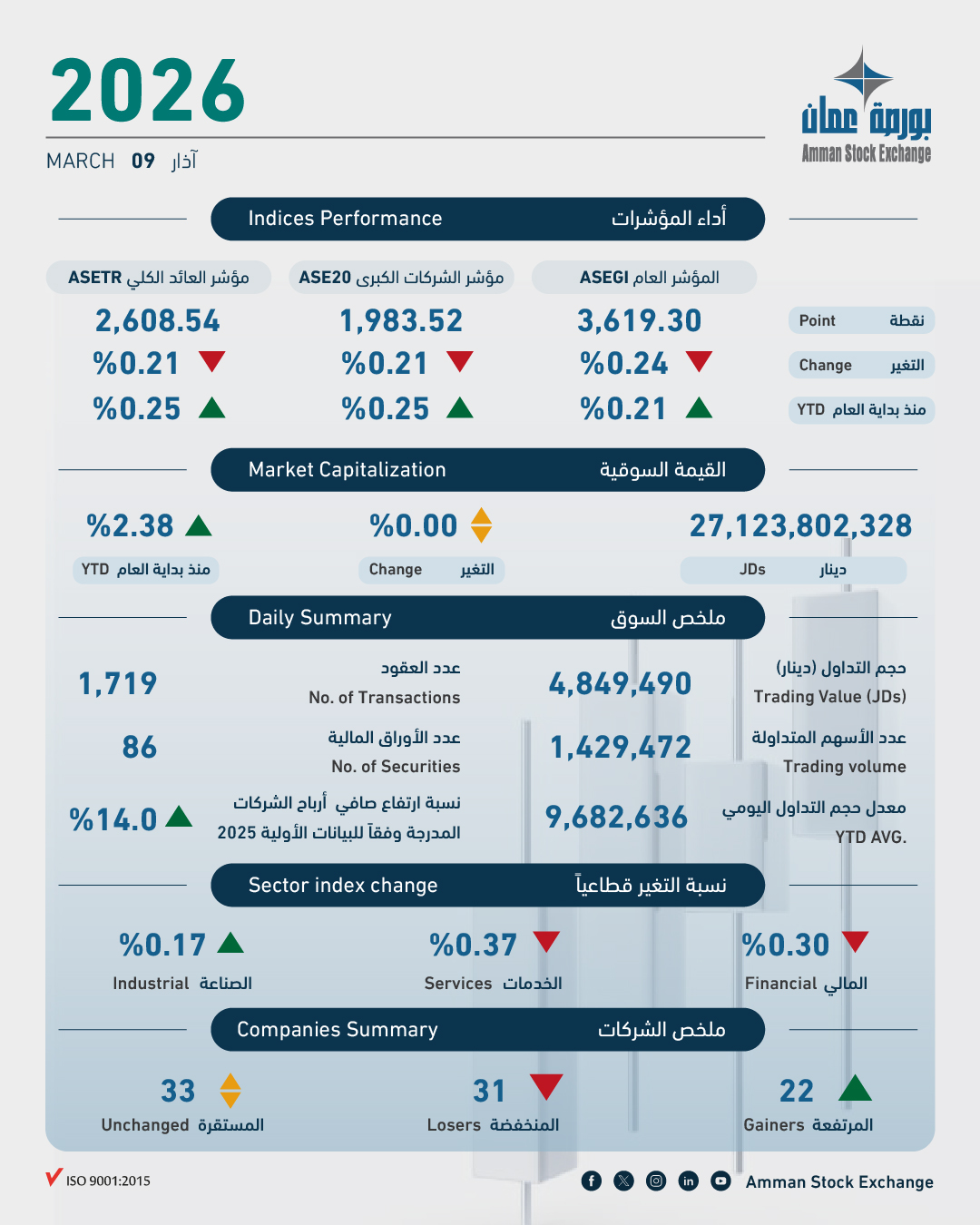
4.8 مليون دينار حجم التداول في بورصة عمان
تركيا: دفاعات الناتو تسقط ثاني صاروخ منذ بدء الحرب قادم من إيران
الداخلية القطرية: تهديد أمني مرتفع وعلى الجميع البقاء في المنازل
رئيس مجلس النواب: أولويتنا حفظ مصالح المواطنين في قانون الضمان
تمديد ولاية البرلمان اللبناني لعامين
الملك يشارك في اجتماع عبر تقنية الاتصال المرئي مع قادة من الاتحاد الأوروبي ودول المنطقة
"التعليم النيابية" تبحث مع وزير التربية مشروع قانون "تنمية الموارد البشرية"
مؤشر "فوتسي 100" يواصل موجة البيع ويهبط مع مخاوف ارتفاع أسعار النفط
البريد الأردني: الطرود البريدية وطرود التجارة الإلكترونية تعمل بشكل اعتيادي
الاقتصاد الرقمي تطلق تحديثا جديدا على تطبيق "سند" وتوسّع نطاق الخدمات الرقمية
المياه تكرم رياديات المياه للدورة الثانية
العمل النيابية تفعّل منصة مقترحات المواطنين حول قانون الضمان
الملك يشارك في اجتماع دولي لبحث التصعيد في الشرق الأوسط
وقف الحرب وإعادة السلام للشرق الأوسط
الأنا والآخر... عندما تصبح الوطنية وجهة نظر
المبعوث الصيني يصل إلى الشرق الأوسط
وزير الزراعة يستقبل السفير الكندي
غارات إسرائيلية تستهدف مناطق عدة في لبنان
الاحتلال يعتقل 24 فلسطينيا بالضفة الغربية
البنك المركزي الأردني: تحسن مؤشر الصحة المالية للأفراد إلى 48% في 2025
4.8 مليون دينار حجم التداول في بورصة عمان
تركيا: دفاعات الناتو تسقط ثاني صاروخ منذ بدء الحرب قادم من إيران
الداخلية القطرية: تهديد أمني مرتفع وعلى الجميع البقاء في المنازل
رئيس مجلس النواب: أولويتنا حفظ مصالح المواطنين في قانون الضمان
تمديد ولاية البرلمان اللبناني لعامين
الملك يشارك في اجتماع عبر تقنية الاتصال المرئي مع قادة من الاتحاد الأوروبي ودول المنطقة
"التعليم النيابية" تبحث مع وزير التربية مشروع قانون "تنمية الموارد البشرية"
مؤشر "فوتسي 100" يواصل موجة البيع ويهبط مع مخاوف ارتفاع أسعار النفط
البريد الأردني: الطرود البريدية وطرود التجارة الإلكترونية تعمل بشكل اعتيادي
الاقتصاد الرقمي تطلق تحديثا جديدا على تطبيق "سند" وتوسّع نطاق الخدمات الرقمية
المياه تكرم رياديات المياه للدورة الثانية
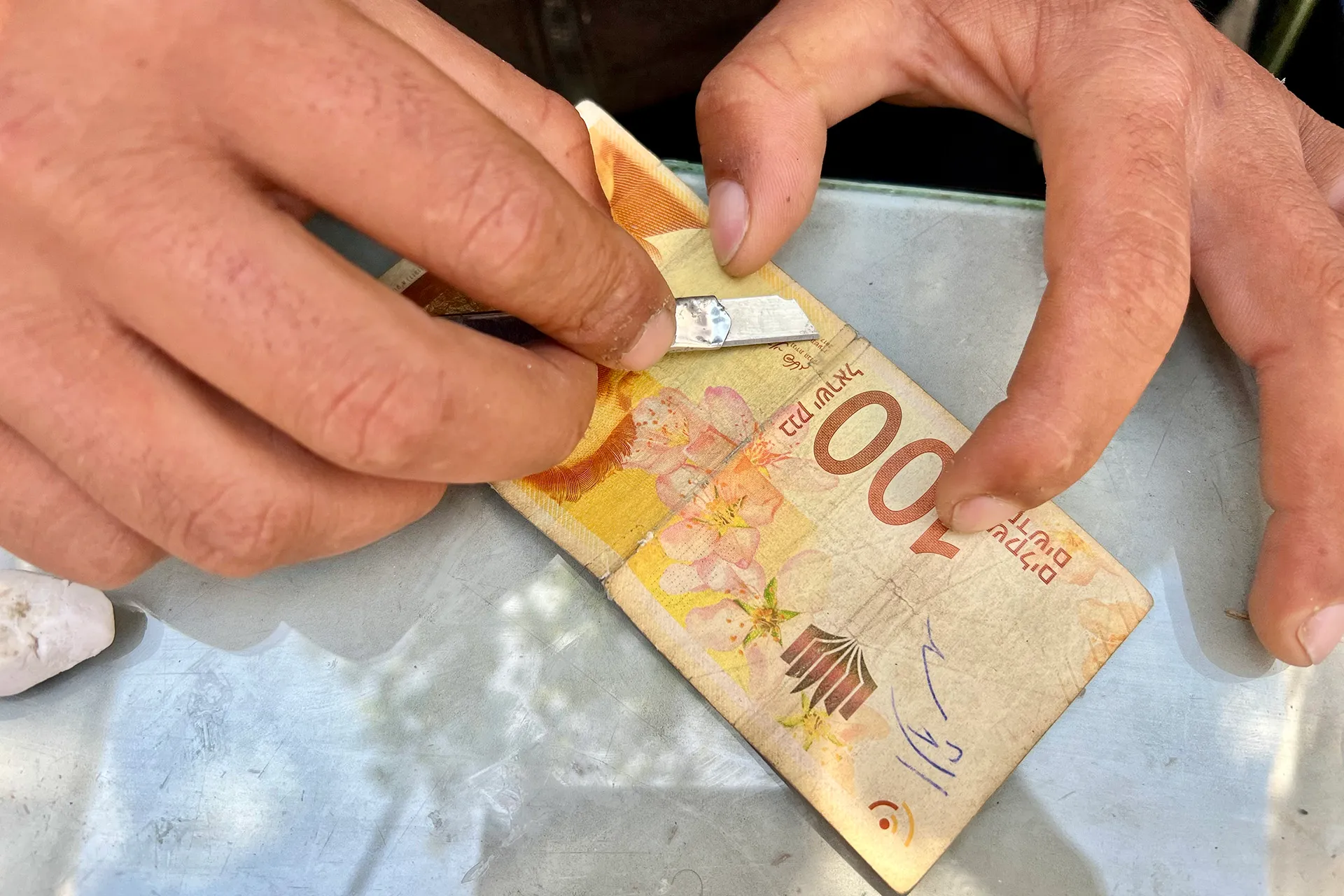
GAZA - The proliferation of worn and damaged banknotes in Gaza has spawned a cottage industry of currency repair, as residents grapple with a deepening liquidity crisis exacerbated by conflict and restrictions on the entry of new currency.
Unable to deposit or exchange damaged money at banks, Gazans are turning to makeshift currency repair services to salvage their rapidly deteriorating cash. The prevalence of damaged currency reflects the broader economic hardship and limited access to financial services in the region.
The situation has become so dire that many merchants are hesitant to accept bills without first inspecting them for tears or damage, often holding them up to the sunlight.
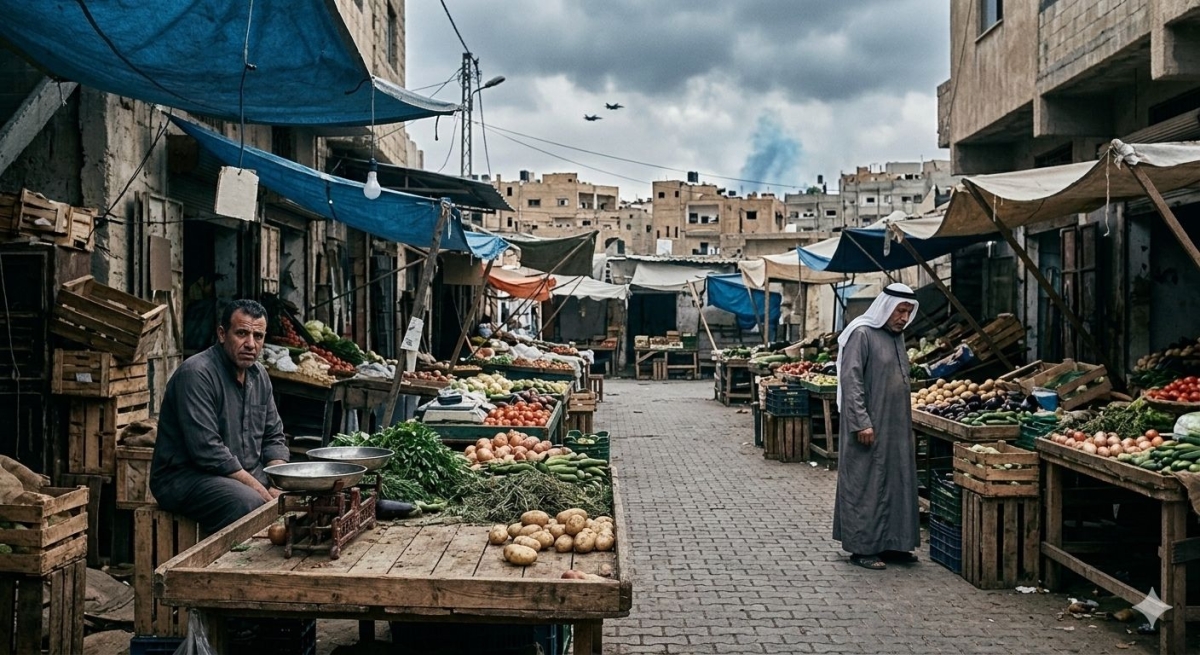
The central market in Nuseirat refugee camp has become a hub for this unusual trade. Um Shareef, a currency repairer, mends higher-denomination banknotes for a small fee, providing a much-needed service in a cash-strapped economy.
The crisis stems from a combination of factors. Restrictions on the entry of new currency into Gaza, coupled with damage to banking infrastructure, has severely limited the availability of fresh banknotes. A World Bank report indicated that over 93% of bank branches have been damaged.
The scarcity of new currency has also led to a decline in the use of smaller denominations. Banks have ceased exchanging old currency, further compounding the problem.
Gazans also face high commission rates, sometimes as high as 20%, when receiving money transfers from abroad, adding another layer of financial strain. Even the money received from abroad is often worn.
Some residents have attempted to use electronic payment methods, but these options are often unreliable due to electricity shortages and poor internet connectivity, hindering transactions.
Economist Maher al-Tabaa notes that while the liquidity crisis in Gaza is not new, it has been significantly worsened by the conflict, which has targeted banks and restricted the entry of funds. He emphasizes the urgent need for new currency and international intervention to revitalize the monetary cycle in Gaza.
The currency repair trade highlights the resilience and adaptability of Gazans in the face of adversity, as they seek solutions to navigate the challenges of a collapsing financial system.